

Weight Watchers in 2026: A Clinical Guide to WW vs. Medical Weight Loss
Editorial TeamFor decades, the name Weight Watchers has been synonymous with structured, community-supported weight loss. But if you've followed a points-based system only to find your progress has stalled, or you're feeling uncertain about how new medical advancements fit into your journey, you are not alone. The frustration of hitting a plateau or the confusion around combining nutrition with treatments like GLP-1 medications is a common and valid concern for many seeking sustainable results.
The landscape of weight management is evolving. Today, the choice is no longer just between different diets; it's between a lifestyle-coaching app and a regulated, clinical programme. Understanding the fundamental differences is crucial for your safety and success. How does the established WW Points system measure up against a modern, medically supervised approach that includes expert-led care and prescription treatments where appropriate?
This guide offers a clear, clinical comparison to help you find your best path forward. We will examine the key distinctions between these two models, empowering you to decide whether the support you need comes from a lifestyle coach or a dedicated clinician. Discover the right approach to achieve your long-term health and wellness goals.
Key Takeaways
- Learn how the modern Weight Watchers programme has evolved beyond simple points-counting into a comprehensive digital wellness platform.
- Understand the crucial difference between behavioural change and medical interventions that target the biological factors of weight management.
- Identify whether a lifestyle-focused app or a clinician-led medical programme is the most effective path for your specific BMI and health needs.
- Recognise the importance of UK-specific regulations like CQC and GPhC when choosing a weight management service to ensure clinical safety.
What is Weight Watchers (WW) and How Has It Changed in 2026?
For decades, Weight Watchers (WW) has been a prominent name in commercial weight management, known for its structured, points-based system and community support. Originally built around in-person meetings, the platform has evolved into a digital-first service centred on its mobile app. By 2026, this transformation is comprehensive, positioning WW less as a traditional "diet" and more as a holistic wellness tool focused on building sustainable habits.
The core philosophy has shifted from simple weight loss to encompass nutrition, activity, sleep, and mindset. While the digital app is now the primary interface for most members, the UK market continues to place significant value on the in-person workshop model, highlighting the enduring importance of community accountability and shared experience in a local context.
The Points Program Explained
The cornerstone of the WW experience remains its Points system. Each member receives a personalised daily and weekly Points budget, with foods assigned a value based on their nutritional content-higher in sugar and saturated fat means more points, while higher protein and fibre content lowers the value. The system encourages consumption of nutrient-dense foods through a list of ZeroPoint options (like non-starchy vegetables, fruits, and lean proteins) that do not need to be tracked. This reframes the mindset from one of restriction to one of budgeting, empowering members to make informed choices within a flexible framework. Consistent tracking is fundamental to this process, providing the data and awareness needed for behavioural change.
WW in the Era of Weight Loss Injections
Recognising the significant rise of GLP-1 medications, WW has adapted its offering to remain relevant. The company introduced the WW GLP-1 Program, a specialised plan designed to support individuals already prescribed medications like Wegovy or Mounjaro by a clinician. This program is not a pathway to a prescription; rather, it's a complementary nutritional framework. Key features include:
- Focus on Protein: The app provides guidance and recipes to help users meet higher protein targets, which is clinically important for retaining muscle mass during medication-supported weight loss.
- Nutrient Tracking: It helps ensure users are consuming adequate nutrients, as appetite suppression can sometimes lead to nutritional shortfalls.
- Behavioural Support: The program offers tailored content on managing side effects and building sustainable habits for long-term success after medication.
Crucially, Weight Watchers provides the behavioural and nutritional tracker but does not offer clinical services or prescriptions. It functions as a support tool, not a medical provider.
The Science of Weight Management: Behavioral vs. Biological
For decades, weight management has been framed as a simple matter of willpower. However, this "willpower myth" overlooks a crucial element: biology. While behavioral changes are fundamental, for many individuals, deep-seated hormonal factors can make sustainable weight loss feel like an impossible battle. This is where the core philosophies of programmes like Weight Watchers and medical pathways like Foundry Health diverge-one focuses on retraining habit loops, the other on regulating hormonal signals.
Behavioral programmes excel at creating a supportive framework for healthier habits through points systems, coaching, and community support. The effectiveness of this structured approach is well-documented; a recent clinical trial on WeightWatchers effectiveness demonstrated that participants in a commercial programme lost significantly more weight than those attempting to lose weight on their own. In contrast, a medical approach addresses the underlying biology of hunger. GLP-1 medications, prescribed by Foundry Health's clinicians, work by mimicking natural satiety hormones. They send signals to your brain that you are full, reducing the persistent hunger that can derail even the most disciplined efforts.
Understanding Metabolic Resistance
Metabolic adaptation is the body's natural process of slowing its metabolism to conserve energy during a calorie deficit, making long-term weight loss progressively more difficult. For patients with a high BMI or hormonal imbalances, the advice to "eat less and move more" is often insufficient because their body is biologically programmed to resist weight loss. During a medical weight management programme, clinicians monitor key biological markers such as blood pressure, cholesterol, and blood sugar levels (HbA1c) to ensure treatment is both safe and effective.
The Clinical Advantage of Medical Weight Loss
A clinician-led approach offers a level of personalisation and safety that a lifestyle plan cannot. A UK-registered clinician can prescribe medication and adjust dosages based on your individual response, balancing efficacy with side-effect management. In contrast, a Weight Watchers Coach provides valuable motivation and programme guidance but is not a medical professional. Regular clinical reviews with a prescriber are a core part of the Foundry Health pathway, ensuring your health is monitored throughout your journey-a critical difference in expertise and responsibility.
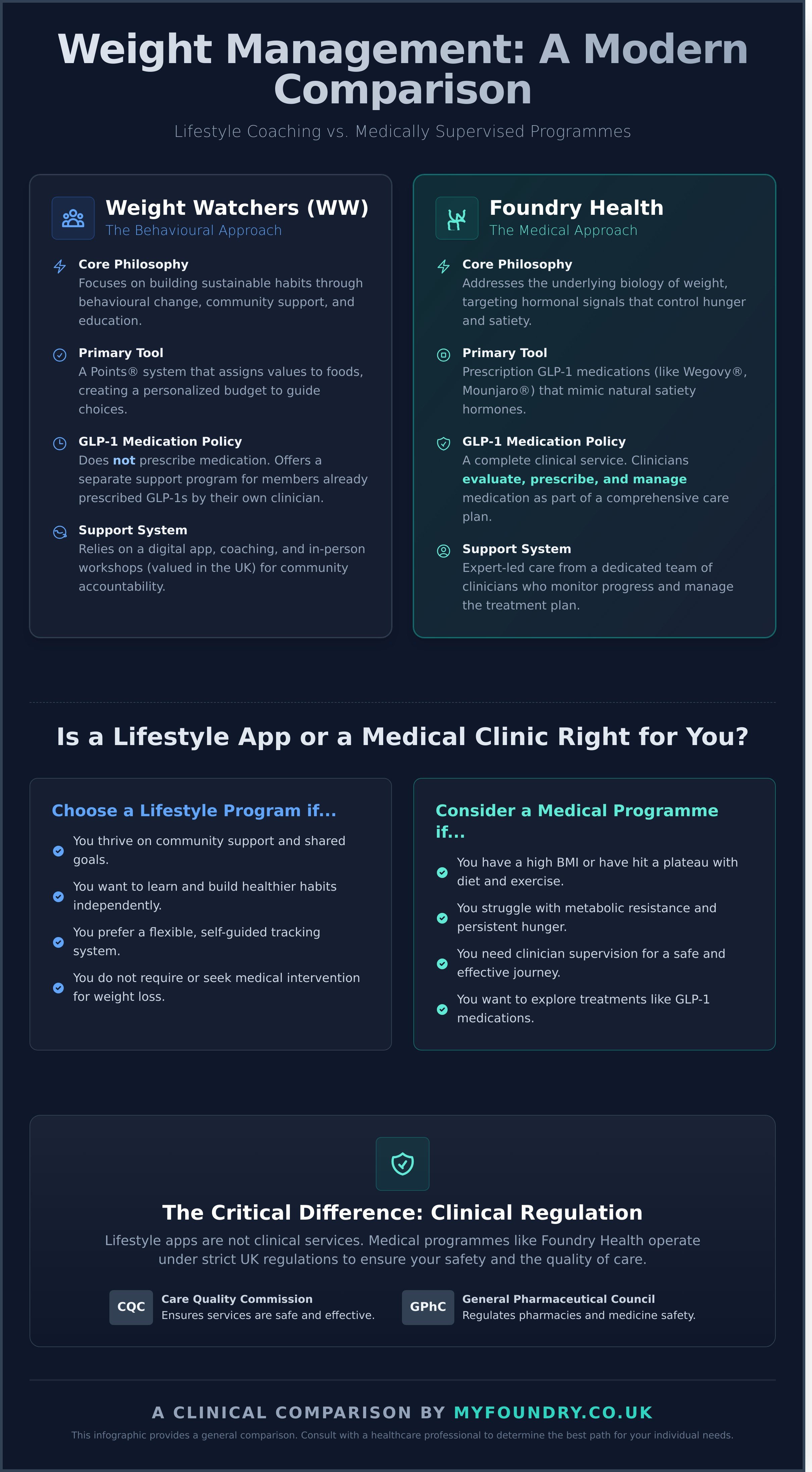
Weight Watchers vs. Foundry Health: A Practical Comparison
Choosing a weight management path involves understanding the core differences in service delivery. While both Foundry Health and Weight Watchers aim to support your health goals, they operate on fundamentally different models: one is a clinician-led medical programme, and the other is a community-driven lifestyle subscription. This distinction impacts everything from patient safety and regulatory oversight to the type of support you receive.
Regulatory Standards and Patient Safety
In the UK, any service providing medical treatments, including prescription medications, must be regulated to ensure patient safety. Foundry Health is regulated by the Care Quality Commission (CQC), which means our services are independently monitored for safety, effectiveness, and quality of care. All medications are dispensed by a GPhC-regulated pharmacy, guaranteeing that your treatment is genuine and handled by qualified professionals. App-based services without this clinical backing operate outside of medical regulation, which is appropriate for a nutritional tool but carries significant risks if they were to offer treatments without proper clinical oversight.
Support Structures: Community vs. Clinical
A significant strength of the Weight Watchers programme is its powerful community. Peer-to-peer support, group meetings, and shared experiences provide invaluable motivation and accountability for many individuals. Foundry Health offers a different, more personalised structure: direct, one-to-one access to a dedicated clinical team. This clinical guidance is tailored to your unique medical history and progress, providing a confidential and expert-led support system.
These two approaches are not mutually exclusive. A medical programme can address the biological factors of weight management, while tools from programmes like Weight Watchers can help with the day-to-day lifestyle changes. For those who meet the clinical criteria, the inclusion of prescribed medical weight loss treatments is a key differentiator. A Foundry Health membership integrates the cost of your medication, clinical consultations, and ongoing care into a single plan, representing an investment in a comprehensive, medically-supervised pathway to sustainable health.
Is a Lifestyle Program or a Medical Clinic Right for Your BMI?
Choosing the right path for weight management is a critical decision that depends on your individual health profile. While lifestyle-focused programs like Weight Watchers provide valuable support for many, a clinical pathway becomes necessary when biology and underlying health conditions present significant barriers. Understanding when to transition from a traditional dieting approach to expert-led medical care is a proactive step towards sustainable health.
Recognising that a lifestyle-only approach is no longer effective is key. This often involves experiencing repeated weight regain despite consistent effort, or receiving a diagnosis for a weight-related condition like high blood pressure or pre-diabetes. Adopting a "Medical First" mindset means prioritising clinical oversight when your Body Mass Index (BMI) indicates a higher health risk, ensuring your weight loss journey is both safe and effective.
When to Consider a Medical Pathway
UK clinical guidelines generally recommend considering medical weight loss treatment if you have:
- A BMI of 30 or over.
- A BMI of 27 or over, accompanied by a weight-related health complication such as high blood pressure, high cholesterol, or type 2 diabetes.
This approach integrates regular monitoring of key health markers, like blood pressure and blood sugar, to track progress beyond the scales. A common concern is whether using medication is "cheating." Medically prescribed treatments are not a shortcut; they are a regulated tool designed to work with your body's biology, helping to manage hunger and support the consistent lifestyle changes necessary for long-term success.
Preparing for a Clinical Consultation
Transitioning to clinical care is a straightforward process. To prepare for your consultation with a UK-registered clinician, you should have your medical history, a list of current medications, and your recent height and weight measurements ready. At Foundry Health, this is handled through a secure digital consultation, where a clinician reviews your information to determine your suitability for treatment.
It's important to set realistic expectations. The first 12 weeks of a medical weight loss program are a foundational period. The focus is on safely introducing the treatment, monitoring your progress, and making gradual, sustainable adjustments to your diet and activity levels. This is the start of a comprehensive health journey, not a quick fix.
If your BMI and health history suggest a medical approach is right for you, taking the next step is simple. Start your consultation today to connect with a regulated clinical team.
Why Foundry Health is the Trusted Medical Alternative to Weight Watchers
For those seeking a more robust and clinically-supported path to weight management, Foundry Health offers a clear and responsible alternative. Our mission is built on providing "A better way to wellness" by moving beyond the limitations of traditional diet plans. While programmes like Weight Watchers offer valuable tools for tracking and community support, they lack the medical oversight and prescription treatments that can be essential for achieving and sustaining significant weight loss.
At Foundry, we integrate expert clinical care directly into your journey. Our service is designed around you, combining the convenience of a secure online platform with the medical authority of UK-registered clinicians and regulated prescription services. We focus on creating personalised care plans that address the biological factors of weight management, aiming for long-term health outcomes, not just short-term fixes.
Expert-Led Care and Regulated Safety
Your health and safety are our highest priorities. We partner exclusively with UK-registered prescribers and GPhC-regulated pharmacies to ensure every stage of your treatment meets the highest clinical standards. This commitment to regulated safety provides peace of mind, knowing your care is in professional hands. Our service is completely confidential, offering discreet medical support from consultation to delivery. A Foundry membership provides more than just a prescription; it includes ongoing clinical guidance to support your long-term wellness.
Your Next Steps to Professional Weight Management
Beginning your journey with Foundry is a straightforward and secure process. It starts with a simple online consultation to understand your health and goals. Here’s what you can expect:
- Secure Online Assessment: Complete a comprehensive and confidential health consultation from home.
- Expert Clinical Review: A UK-registered clinician will review your information to determine your eligibility for treatment.
- Personalised Treatment Plan: If approved, you will receive a personalised plan, including prescribed medication delivered discreetly to your door.
If you are ready to move beyond tracking points and towards a clinical transformation supported by medical experts, it’s time to consider a professional approach. Take control of your health with a plan designed for lasting results.
Start your clinical weight loss consultation today.
Choosing Your Path to Sustainable Weight Management
The landscape of weight management has evolved significantly. While lifestyle programmes like the modern Weight Watchers offer valuable behavioural support, they may not address the complex biological factors that make sustainable weight loss challenging. For many, particularly those with a higher BMI, a purely behavioural approach falls short. The crucial distinction lies in understanding whether your needs are best met by lifestyle coaching or by a comprehensive, medical-led strategy that considers your unique physiology.
If you believe a clinical pathway is the right next step, Foundry Health provides a trusted, medically-supervised alternative. Our programmes are designed and managed by UK-registered clinicians, with medication dispensed from a GPhC-regulated pharmacy and care delivered through CQC regulated healthcare partners. Every patient receives personalised clinical reviews to ensure their treatment is safe and effective.
Take control of your health with a plan designed for you. Start your clinician-led weight loss journey with Foundry Health today. A sustainable, healthier future is within your reach.
Frequently Asked Questions
Can I use Weight Watchers while taking Wegovy or Mounjaro?
Yes, it is possible. Weight Watchers offers a specific programme designed to support individuals using GLP-1 medications. This plan focuses on key nutritional goals like protein intake and hydration to complement the medication's effects. However, it is essential to consult with your prescribing clinician at a provider like Foundry Health before combining any programmes to ensure your overall treatment plan remains safe, cohesive, and medically supervised for the best possible health outcomes.
Is Weight Watchers or medical weight loss more effective for long-term results?
Effectiveness depends on individual needs. Weight Watchers provides a framework for behavioural change through its points system and community support. In contrast, a medical weight loss programme addresses the underlying biological factors of weight with prescribed medication and clinical oversight. For those with a significant amount of weight to lose or with weight-related health conditions, a regulated medical approach often leads to more substantial and sustainable long-term results than lifestyle changes alone.
Does Weight Watchers prescribe weight loss medication in the UK?
No, Weight Watchers does not prescribe medication in the UK. Their service is centred on a behavioural and lifestyle-based points system, coaching, and peer support. Prescription weight loss treatments, such as GLP-1 medications, must be prescribed by a qualified healthcare professional following a thorough medical assessment. This is the service that regulated providers like Foundry Health offer, ensuring patient safety and treatment suitability through our team of UK-registered clinicians.
What is the cost difference between WW and Foundry Health?
The costs reflect the different services. A WW membership typically costs between £10 and £25 per month. Foundry Health's comprehensive medical weight loss programme starts from £199 per month. This all-inclusive fee covers your prescribed medication, regular consultations with our clinical team, and ongoing expert support. The higher cost reflects a complete medical treatment plan, not just a lifestyle app or group meetings.
How do I know if I qualify for medical weight loss at Foundry Health?
To determine your eligibility, you must complete a secure online consultation with Foundry Health. Our UK-registered clinicians will perform a thorough review of your medical history, lifestyle, and Body Mass Index (BMI). Generally, our programmes are suitable for adults with a BMI of 30 or higher, or a BMI of 27 or higher with a co-existing weight-related health condition. This clinical process ensures the treatment is both safe and appropriate for you.
Are weight loss injections safe if I have tried WW before?
Yes. The safety of prescribed weight loss injections is based on your unique health profile and medical history, not on past diet plans. Your previous experience with a programme like WW has no bearing on whether a medical treatment is safe for you. At Foundry Health, every patient undergoes a detailed clinical assessment by a UK-registered prescriber to ensure that any medication is a safe and suitable option for their specific circumstances.
What happens if I stop using Weight Watchers and switch to a clinical programme?
When you switch from a programme like Weight Watchers to a clinical one at Foundry Health, you move from a behavioural approach to a medical treatment. Your journey will begin with an in-depth clinical consultation to create a personalised plan. This includes prescribed medication to help regulate appetite and metabolism, combined with ongoing support from our medical experts. This provides a more robust framework for individuals who need more than lifestyle adjustments to achieve sustainable results.
How long does a medical weight loss programme typically last?
The duration of a medical weight loss programme is tailored to your individual health goals and clinical response. Treatment is not a short-term fix; many patients continue for several months or over a year to achieve and maintain significant weight loss. Our clinicians monitor your progress regularly and adjust your plan as needed. The primary objective is to help you achieve sustainable, long-term health improvements in a medically-supervised and safe manner.