

Tired of Failed Diets? The Biological Reason You Struggle and How to Break the Cycle
Editorial TeamWhat if the reason you struggle to keep weight off has nothing to do with your willpower? If you're tired of failed diets, you've likely experienced the frustrating cycle where 80% of dieters regain their lost weight within the first year. It's common to feel a sense of personal failure when chronic hunger and conflicting nutritional advice make progress feel impossible. You aren't alone in this struggle; your biology is simply doing what it was designed to do by protecting its energy stores.
We believe you deserve a weight management plan that prioritises your health through evidence-based science. In this article, you'll discover why traditional calorie counting often triggers a survival response in your brain and how a clinician-led, medical approach can finally provide the sustainable results you deserve. We'll explore the biological roots of hunger and explain how expert-led care can help you achieve lasting freedom from constant food noise. It's time to move away from quick fixes and towards a regulated, medical pathway designed for your long-term wellness.
Key Takeaways
- Understand why you may be tired of failed diets and how the "willpower myth" overlooks the complex biological factors at play.
- Learn about metabolic adaptation and the hormonal triggers that cause your body to resist traditional weight loss methods.
- Identify the risks associated with non-prescription "miracle" pills compared to regulated, evidence-based medical programmes.
- Discover how GLP-1 medications, prescribed by UK-registered clinicians, can effectively manage biological hunger and satiety.
- Explore the Foundry Health journey, offering a secure and professional digital pathway to sustainable weight management.
Why We Get Tired of Failed Diets: The Cycle of Frustration
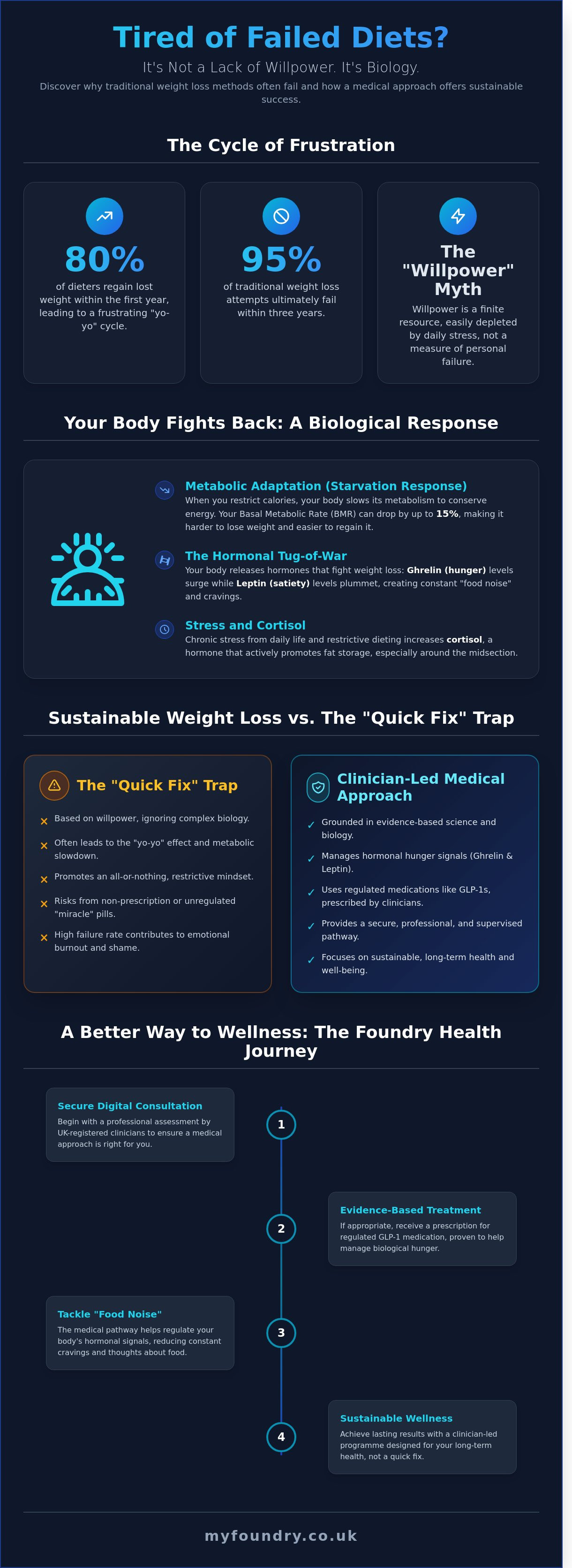
If you're tired of failed diets, you're part of a vast majority. In the United Kingdom, approximately 25% of adults are currently trying to lose weight according to 2023 health surveys. Yet, clinical data suggests that up to 95% of traditional weight loss attempts fail within three years. This isn't a personal failure. It's a systemic one. The constant cycle of losing and regaining weight, often called "yo-yo dieting," creates a heavy emotional burden that impacts your long-term health and mental well-being.
The Emotional Toll of Chronic Dieting
Regaining weight after a period of success often brings a profound sense of shame. This emotional burden is exacerbated by The Cycle of Frustration, a societal pressure in the UK that equates thinness with health and moral discipline. We see unrealistic "transformation" photos that ignore biological reality. The mental exhaustion of constant calorie counting and food restriction can lead to clinical burnout. It turns every meal into a stressful calculation rather than nourishment. This process often disregards the complex hormonal signals that govern appetite, leading to a feeling of defeat when the body naturally fights back against restriction.
Why "Trying Harder" Isn’t the Answer
Most people believe weight loss is simply a matter of willpower. However, clinical evidence shows that willpower is a finite resource. It's easily depleted by daily stress, work commitments, or lack of sleep. Traditional programmes often promote an all-or-nothing mentality. This rigid approach means one minor slip leads to complete abandonment of the goal. Instead of blaming your resolve, it's time to look at the clinical factors. Sustainable weight management requires a medical understanding of how your body regulates hunger. When you're tired of failed diets, moving toward a medical perspective is the first step to lasting change. We must transition from self-blame to seeking a clinical explanation for why your body maintains its set point.
- Willpower is a physiological resource that drains throughout the day.
- Restrictive dieting can lower your basal metabolic rate by up to 15%.
- Chronic stress increases cortisol, which actively promotes fat storage.
True success requires more than just "eating less." It requires a regulated, expert-led approach that addresses the biological hurdles traditional dieting ignores.
The Science of Why Diets Fail: It’s Biology, Not Willpower
If you feel tired of failed diets, you aren't alone. Most weight loss attempts fail because they treat obesity as a lack of discipline rather than a complex medical condition. Metabolic adaptation is the body’s survival mechanism against calorie restriction. This biological process evolved to protect humans during periods of famine, but in the modern world, it often works against those trying to improve their health.
When you reduce your calorie intake, your body doesn't distinguish between a planned diet and a genuine shortage of food. It responds by slowing down essential processes to conserve energy. This makes weight loss a physical battle against your own DNA. Many patients find that even when they strictly follow a calorie-controlled plan, their progress stalls after a few weeks as their biology adapts.
Metabolic Adaptation and the "Set Point" Theory
Your body works to maintain a specific weight range, often called a "set point." During a restrictive diet, your basal metabolic rate can drop by as much as 15 percent. This "Starvation Response" is why your body clings to fat stores even when you're eating very little. Once the restrictive phase ends, your metabolism remains suppressed. This explains why weight often returns faster than it was lost, as your body seeks to restore its previous energy reserves. Research into the biological reasons for weight regain shows that these metabolic shifts can persist for years after the initial weight loss.
The Hormonal Tug-of-War
Weight management is governed by a complex system of chemical signals. Two primary hormones dictate how you feel about food:
- Ghrelin: Known as the hunger hormone, levels rise significantly during weight loss, sending urgent signals to the brain to seek out calorie-dense foods.
- Leptin: The satiety hormone produced by fat cells. As you lose weight, leptin levels plummet, meaning your brain never receives the message that you're full.
This hormonal shift creates "food noise," which refers to constant, intrusive thoughts about eating that can overwhelm conscious choice. For some, insulin resistance makes this process even harder, as the body struggles to process glucose effectively, leading to increased fat storage and persistent fatigue. If you're tired of failed diets that ignore these chemical triggers, exploring clinically supervised weight management may provide the medical support needed to quiet these biological signals. Biology, not willpower, is usually the deciding factor in long-term success.
Sustainable Weight Loss vs. The "Quick Fix" Trap
If you're tired of failed diets, you've likely encountered the aggressive marketing of the "quick fix" industry. These programmes promise rapid results but ignore the complex biological mechanisms that govern your weight. Research into long-term diet failure rates conducted by UCLA researchers indicates that up to two-thirds of people regain more weight than they initially lost within five years. This cycle persists because traditional dieting often triggers a starvation response rather than addressing metabolic health.
A clinician led weight loss program differs fundamentally from a standard gym plan or a commercial slimming club. While a gym instructor focuses on physical exertion, a UK-registered clinician monitors your physiological markers. They use regulated treatments to manage the hormonal signals that cause persistent hunger. This medical approach moves beyond the "eat less, move more" mantra, providing a regulated pathway that prioritises safety and clinical evidence over aesthetic trends.
Identifying a "Quick Fix" in the UK Market
Spotting an unsustainable programme is essential for protecting both your health and your wallet. Be wary of any service promising weight losses exceeding 2kg per week or those selling "miracle" pills without a formal clinical review. Many non-prescription supplements found in UK high street shops cost between £30 and £70 per month. These products often lack rigorous trial data, frequently resulting in "expensive urine" as the body simply excretes the unabsorbed ingredients. In contrast, regulated medical weight management involves GPhC-regulated pharmacies and CQC-registered providers, ensuring every intervention is backed by science.
The Pillars of Sustainable Weight Management
Sustainable progress is measured in months and years, not days. Clinical guidelines suggest that losing 0.5kg to 1kg per week is the gold standard for long-term success. This steady pace allows your metabolism to adapt, reducing the risk of the "yo-yo" effect. True weight management relies on three specific pillars:
- Medical Oversight: Continuous monitoring by experts who understand how your body responds to treatment.
- Nutritional Education: Learning to fuel your body without fear or restriction, moving away from the mindset that makes you feel tired of failed diets.
- Maintenance Planning: Developing a strategy for when you reach your goal weight, which is the most critical phase of any health journey.
By focusing on weight maintenance from day one, you shift the priority from a temporary "drop" to a permanent lifestyle change. It's about building a healthier relationship with food and your body, supported by a professional team that values your long-term wellness over a short-term number on a scale.
Transitioning to a Clinician-Led Medical Approach
If you're tired of failed diets, it's likely because your biology has been working against your willpower. Moving to a clinician-led model shifts the focus from restriction to biological regulation. This isn't about a lack of discipline; it's about addressing the hormonal signals that drive hunger. By partnering with medical professionals, you move away from guesswork and into a structured environment where safety and evidence take priority.
How Medical Intervention "Levels the Playing Field"
GLP-1 receptor agonists, such as Wegovy (semaglutide) and Mounjaro (tirzepatide), mimic natural hormones that signal fullness to the brain. These medications significantly reduce "food noise," which is the constant, intrusive thoughts about eating that often lead to relapse. When this mental chatter is silenced, patients can finally focus on long-term habit change without the exhausting internal battle against constant hunger. A modern medical weight loss UK programme is far more than just "taking a drug." It's a comprehensive clinical strategy where the medication acts as a tool to facilitate sustainable lifestyle shifts. This approach allows your body to find a new equilibrium, making it easier to stick to nutritional goals that previously felt impossible.
The Importance of UK Regulation (CQC and GPhC)
Safety is the cornerstone of any effective weight management journey. You should never purchase weight loss medication from unregulated social media sellers or websites that don't require a clinical consultation. These sources often bypass vital health checks, putting you at risk of counterfeit products or dangerous side effects. Foundry Health operates with strict adherence to UK standards, ensuring every patient is monitored by experts. If you're tired of failed diets that ignore your unique physiology, a regulated medical approach offers the clinical support needed for lasting change.
- Clinical review: UK-registered prescribers assess your medical history and BMI to ensure treatment is safe for your health profile.
- GPhC-regulated pharmacy: All medications are dispensed from pharmacies registered with the General Pharmaceutical Council.
- Professional monitoring: Clinicians track your progress to manage side effects and optimise your results throughout the programme.
This level of oversight ensures your journey is supervised by professionals who prioritise your long-term wellness over quick, unsustainable results. The process is discreet, secure, and designed to provide the medical foundation necessary for success.
A Better Way to Wellness: How Foundry Health Breaks the Cycle
Weight management is often a complex biological struggle rather than a simple lack of willpower. If you're tired of failed diets that ignore the underlying physiological drivers of hunger, Foundry Health offers a clinical alternative. Our mission is to provide medical weight loss designed for your unique profile, moving away from temporary fixes toward sustainable health. We connect you with UK-registered clinicians who understand that obesity is a chronic condition requiring professional care.
Our weight loss prescription online UK service is built on safety and regulation. By working with GPhC-registered pharmacies and CQC-regulated healthcare partners, we ensure every patient receives treatment that meets rigorous British medical standards.
Your Personalised Clinical Journey
The path to better health shouldn't be complicated. We've streamlined the process into three distinct, secure steps to ensure you receive expert care from the comfort of your home.
- Step 1: The secure online medical assessment. You'll complete a comprehensive health questionnaire covering your medical history, BMI, and current medications. This takes approximately 5 to 10 minutes.
- Step 2: Clinician review and bespoke prescription. A UK-registered prescriber reviews your assessment. They determine the most appropriate clinical pathway for you, ensuring the treatment is safe and effective.
- Step 3: Discreet delivery from our UK-regulated pharmacy. Once approved, your medication is dispensed by our partner pharmacy and delivered to your doorstep in plain, temperature-controlled packaging.
Beyond the Prescription: Long-Term Success
Clinical data shows that weight maintenance is the hardest part of the journey. Our repeat prescription service provides the continuous care needed to prevent the "yo-yo" effect often seen in those tired of failed diets. We don't just provide a one-off treatment; we offer a supportive partnership. As you reach your target weight, our clinicians help you transition to a sustainable lifestyle. This ensures your metabolic health remains stable long after the initial weight loss phase.
We focus on your long-term wellness, not just the number on the scale. By stabilising your biology, we give you the space to build habits that last a lifetime. Start your consultation with Foundry Health today and take the first step toward a medically backed transformation.
Step Into a Science-Led Future of Weight Management
It's time to stop blaming your willpower for biological responses you can't control. Clinical research indicates that metabolic adaptation can reduce your resting energy expenditure by up to 15% during calorie restriction; this makes traditional dieting feel like an uphill battle. Lasting change happens when you address these physiological triggers through expert medical support rather than relying on temporary "quick fixes" that ignore your body's chemistry.
Foundry Health provides a regulated, professional pathway to wellness that prioritises your long-term health. Our platform connects you with UK-registered clinicians and a GPhC-regulated pharmacy to deliver expert-led care with proven medical treatments. Because our entire digital process is CQC-regulated, you'll receive a secure and discreet clinical review tailored to your specific needs. If you're tired of failed diets, it's because your biology is simply working as intended; now, you can use medical science to find a sustainable balance.
Start your clinician-led weight loss journey today and experience a clinical approach designed for your success. You don't have to navigate this transition alone.
Frequently Asked Questions
Why do diets fail for most people after a few months?
Most diets fail because your body triggers a survival response that increases ghrelin, the hunger hormone, by up to 20% following initial weight loss. When you're tired of failed diets, it's often because your metabolic rate has dropped to conserve energy, making it difficult to maintain a calorie deficit. Clinical studies show that 80% of people who lose weight through restrictive dieting regain it within 24 months due to these biological shifts.
How is medical weight loss different from a traditional diet?
Medical weight loss addresses the physiological drivers of obesity rather than relying solely on willpower or calorie counting. While traditional diets focus on external restrictions, medical programmes use GLP-1 medications to mimic natural hormones that regulate appetite and slow gastric emptying. A 2021 study in the New England Journal of Medicine found that participants using medical intervention lost an average of 14.9% of their body weight compared to 2.4% in the placebo group.
Is it safe to get a weight loss prescription online in the UK?
It's safe to obtain a prescription online provided the service is registered with the Care Quality Commission (CQC) and uses UK-registered clinicians. You must ensure the pharmacy is regulated by the General Pharmaceutical Council (GPhC). At Foundry Health, every patient undergoes a clinical review by a qualified prescriber to ensure the treatment is appropriate for their health profile. This digital process maintains the same safety standards as a face-to-face GP consultation.
What is "food noise" and how does medication help stop it?
Food noise refers to the persistent, intrusive thoughts about eating that affect approximately 50% of people struggling with weight management. Medical treatments like GLP-1 receptor agonists work by interacting with the hypothalamus in the brain to dampen these signals. This reduces the frequency of cravings and the urge to snack. By silencing this constant mental chatter, patients find it easier to make rational nutritional choices without feeling biologically driven to overeat.
Can I achieve sustainable weight loss if I have failed many times before?
You can achieve lasting results even if you are tired of failed diets from your past. Success requires moving away from the "eat less, move more" mantra toward a medically supervised plan that corrects hormonal imbalances. Data from clinical trials indicates that patients combining medication with lifestyle changes are 3 times more likely to maintain weight loss over a 68-week period. We focus on long-term wellness rather than the short cycles typical of commercial slimming clubs.
Do I still need to eat healthily if I am on a medical weight loss programme?
Healthy eating is essential for preserving lean muscle mass and ensuring your body receives vital micronutrients while on medication. While the treatment reduces your appetite, the quality of the food you consume determines your energy levels and long-term health outcomes. We recommend a protein-rich diet, aiming for 1.2g of protein per kilogram of body weight. This approach ensures that the weight you lose comes from fat stores rather than muscle tissue.
How do I know if a weight loss service is properly regulated in the UK?
You should verify that the provider displays a valid GPhC pharmacy green logo and a CQC registration mark on their website. In the UK, it's a legal requirement for any service prescribing medication to be registered with these bodies. You can search the CQC register using the provider's name to see their latest inspection rating. Legitimate services will always provide the name of the prescribing clinician and the physical address of their UK-registered pharmacy.
What happens if I stop taking weight loss medication?
If you stop the medication abruptly without a maintenance plan, your hunger hormones will likely return to their baseline levels within 14 days. This can lead to weight regain if the new habits formed during treatment aren't sustained. Research shows that a structured tapering-off period, combined with ongoing nutritional support, helps stabilise weight. Our clinicians work with you to create a transition strategy that protects your progress and maintains your new metabolic set point.