

The Best Way to Lose Weight and Keep It Off: A Clinical Perspective
Editorial TeamMost people believe that weight loss is simply a matter of trying harder, but clinical research shows that roughly 95% of traditional diets fail within five years because they ignore the body's complex biological response to calorie restriction. If you've spent years trapped in a cycle of losing and regaining the same few stone, it's easy to feel like you've failed personally. You aren't lacking willpower; you're fighting a metabolic system designed to protect its energy stores at all costs. Finding the best way to lose weight and keep it off requires moving beyond restrictive "quick fixes" and embracing a medically supervised strategy that addresses both your biology and your habits.
In this guide, we'll explain why a clinician-led approach succeeds where fad diets fall short. You'll discover the biological and behavioural strategies essential for sustainable weight loss, helping you reach a stable weight and reduce your risk of type 2 diabetes. We'll outline how expert medical support offers a better way to wellness, helping you build a healthier relationship with food that lasts for years to come.
Key Takeaways
- Understand the biological "set point" and why your body naturally resists weight loss, helping you move beyond the cycle of temporary "quick fixes".
- Learn how to prioritise nutritional quality and satiety over restrictive calorie counting to maintain a healthy metabolic rate and support long-term health.
- Discover why a clinical perspective is the best way to lose weight and keep it off by addressing your unique biology rather than following oversimplified "fad" diets.
- Establish a personalised roadmap for 2026 that focuses on non-scale victories and regular monitoring to track genuine progress in body composition.
- Gain insights into how UK-registered clinicians and regulated medical pathways offer a safer, more effective alternative to unregulated supplements and lifestyle programmes.
Beyond the Quick Fix: Understanding Sustainable Weight Loss Biology
Achieving a healthier body isn't about a temporary sprint. It requires a fundamental shift in your metabolic health and body composition rather than a fleeting change in diet. Many people search for the best way to lose weight and keep it off, yet they often overlook the biological hurdles the body creates to maintain its current state. Sustainable weight loss isn't just about willpower; it's about working with your physiology rather than against it. Understanding weight management involves recognising the "set point" theory. This theory suggests your body has a preferred weight range it actively protects by adjusting energy expenditure and hunger signals.
Quick fixes usually fail because they ignore this biological adaptation. When you drastically cut calories, your body perceives a famine. It responds by protecting fat stores, which are vital for survival. Clinical research, including studies from the University of Cambridge, suggests that genetics can account for 40% to 70% of weight variance. This means your biological blueprint plays a significant role in how you respond to lifestyle changes, making professional, expert-led guidance essential for long-term success.
Why Weight Regain is a Biological Response
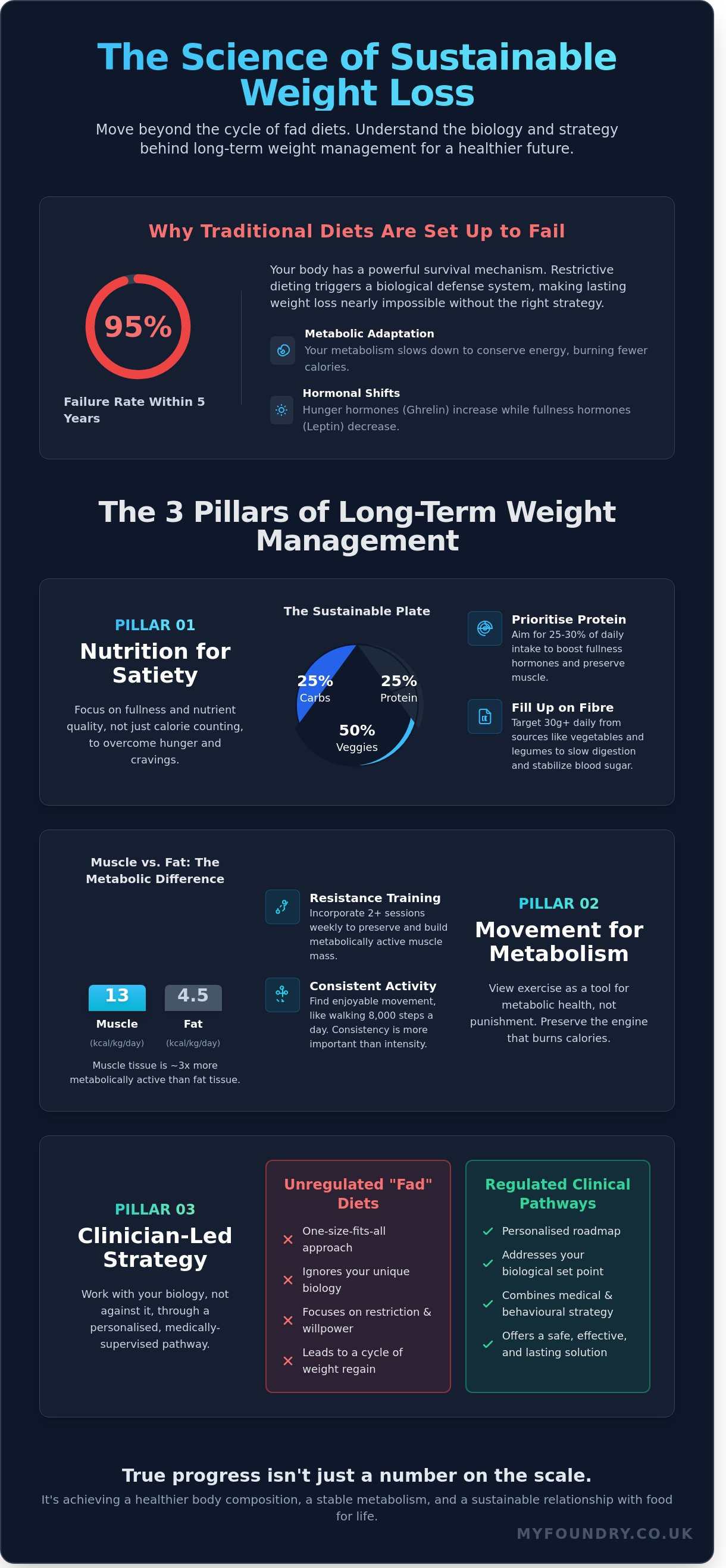
Regaining weight isn't a sign of personal failure. It's often a protective survival mechanism. During a calorie deficit, your body undergoes metabolic adaptation, lowering the number of calories you burn to conserve energy. Hormonal shifts exacerbate this struggle. Levels of ghrelin, the hunger hormone, rise, while leptin, the hormone that signals fullness, drops. A 2016 study published in the journal Obesity followed participants for six years and found their metabolisms remained significantly slower than expected. This biological "pull" makes the best way to lose weight and keep it off a matter of clinical strategy and medical understanding rather than simply "eating less."
The Difference Between Weight Loss and Fat Loss
Focusing solely on the scale can be misleading and counterproductive. Rapid weight loss often results in the loss of muscle mass, which is the engine of your metabolism. Our clinicians emphasise that preserving lean muscle is essential for maintaining a healthy weight long-term. Metabolic rate is the number of calories your body burns at rest. To protect this rate, you must prioritise fat loss while maintaining muscle through adequate protein intake and resistance training. Shifting the focus from "weight" to "metabolic health" ensures your body remains an efficient energy burner, supporting wellness rather than just a lower number on the scale.
The Three Pillars of Long-Term Weight Management
Achieving a healthy weight isn't a sprint; it's a fundamental shift in how you interact with food and activity. Evidence suggests that the best way to lose weight and keep it off involves balancing nutritional quality, physical movement, and psychological shifts. Relying on calorie restriction alone often fails because it ignores the biological signals of hunger and the metabolic adaptations that occur during weight loss.
Nutritional Strategies for Satiety
Hunger is the primary reason most diets fail within 180 days. To combat this, you should focus on satiety rather than just deprivation. High-protein diets, where protein makes up 25% to 30% of daily intake, have been shown to increase fullness hormones like GLP-1. Adding 30 grams of fibre daily from sources like legumes and cruciferous vegetables slows digestion. This prevents the blood sugar spikes that lead to energy crashes and cravings.
Avoid labelling foods as "forbidden." This mindset triggers a psychological "last supper" effect, which often results in bingeing. Instead, aim for a plate composed of:
- 50% non-starchy vegetables for volume and micronutrients
- 25% lean protein to support muscle mass
- 25% complex carbohydrates for sustained energy
Movement That Supports Sustainability
Exercise for weight loss is often viewed as a punishment, but movement for maintenance is a tool for metabolic health. Resistance training is vital here. Muscle tissue is metabolically active, burning roughly 13 calories per kilogram per day compared to just 4.5 calories for fat tissue. Incorporating two sessions of strength work weekly helps preserve this lean mass during a weight loss journey. Finding an activity you enjoy, whether it's walking 8,000 steps a day or swimming, ensures long-term adherence. Consistency beats intensity every time.
Understanding your "why" is the final piece of the puzzle. Habits are rarely about food alone; they're often responses to stress or fatigue. Professional guidance helps bridge the gap between knowing what to do and actually doing it. This clinical perspective on weight management highlights that obesity is a complex, chronic condition that requires long-term medical support rather than a temporary fix. Our UK-registered clinicians provide the oversight needed to ensure these pillars remain balanced. Combining these three pillars is the best way to lose weight and keep it off while protecting your long-term metabolic health.
Why Most Diets Fail and How to Break the Cycle
Restrictive fad diets often ignore the complex reality of human biology. A 2020 study published in The BMJ followed various weight loss programmes and found that while many participants lost weight initially, most regained it within 12 months. This happens because many diets rely on extreme calorie deficits that trigger a "starvation response." When you slash calories too aggressively, your basal metabolic rate can drop by as much as 15% to 20%. Your body isn't failing; it's trying to protect you from what it perceives as a famine. This makes the traditional advice to "eat less and move more" an unhelpful oversimplification for many people.
The psychological toll of this cycle is significant. Constantly starting and failing restrictive regimes can lead to "dieting burnout" and increased cortisol levels. High cortisol is linked to increased abdominal fat storage and higher anxiety. To find the best way to lose weight and keep it off, you must transition from a temporary "dieting" mindset to a permanent, medical weight management lifestyle. This involves clinical oversight and a focus on health outcomes rather than just the number on the scale.
The Myth of Pure Willpower
You can't simply "willpower" your way out of biological hunger. Research from University College London highlights that when you lose weight, your body increases the production of ghrelin, the hunger hormone, and decreases leptin, the fullness hormone. Your brain’s reward centre, the nucleus accumbens, also becomes more sensitive to high-calorie food cues. It's a physiological battle. Clinical interventions, including MHRA-regulated medications, can help level the playing field. These treatments work by mimicking natural hormones to quieten "food noise," allowing you to make rational choices without being overwhelmed by biological cravings.
Identifying Your Personal Triggers
Effective weight management requires a clear distinction between physiological hunger and emotional triggers. In the UK, our environment often makes healthy choices difficult. A 2023 report by the Food Foundation noted that healthy foods are often twice as expensive per calorie as highly processed alternatives. You can reorganise your environment to support your goals through these practical steps:
- Clear your counters: Research shows people who keep fruit on their counters weigh less than those who keep cereal or snacks visible.
- Use 25cm plates: Reducing plate size can naturally decrease calorie intake by 22% without increasing perceived hunger.
- Plan for "High-Risk" times: If 4:00 PM is your typical slump, have a high-protein snack ready to prevent a blood sugar crash.
By addressing these environmental factors and seeking expert-led support, you move away from the "quick fix" trap. Understanding your biology is the best way to lose weight and keep it off sustainably.
Building Your Personal Roadmap for 2026
Success in weight management isn't found in a single month of restriction. It's built through a clinical roadmap that evolves with you. Data from the National Health Service (NHS) suggests that the best way to lose weight and keep it off involves a combination of medical oversight and consistent behavioural changes. You'll need to monitor your progress every 30 days and adjust your plan based on how your body responds to treatment and lifestyle shifts.
Setbacks are a normal part of any medical journey. If you experience a weight plateau or a difficult week, don't abandon your programme. Instead, consult your clinical team to review your dosage or nutritional strategy. Having a support network of UK-registered clinicians ensures you have professional guidance when challenges arise, keeping you focused on health outcomes rather than just the number on the scale.
Setting SMART Goals for Weight Care
A sustainable roadmap relies on SMART goals: Specific, Measurable, Achievable, Relevant, and Time-bound. Clinicians recognise that losing 1 to 2 lbs per week is the clinical gold standard for long-term success. This steady pace allows your metabolism to adapt and helps preserve lean muscle mass. You should also track non-scale victories (NSVs). A non-scale victory is a significant health improvement that isn't reflected by your weight, such as reducing your systolic blood pressure from 145 mmHg to a healthier 125 mmHg.
The Role of Consistency Over Perfection
The "all or nothing" mindset is often the primary reason weight management programmes fail. Sustainable health requires consistency, not perfection. Many patients find success using the 80/20 rule: focusing on nutrient-dense, prescribed dietary choices 80% of the time while allowing for flexibility during the remaining 20%. When planning for holidays or social events in 2026, decide on your boundaries in advance. This proactive approach prevents a single indulgent meal from derailing your entire progress. By viewing your health as a long-term medical commitment, you'll discover the best way to lose weight and keep it off while maintaining your quality of life.
Ready to build a weight management plan that works for your life? Start your clinical consultation with Foundry Health today.
The Role of Clinical Support in Permanent Weight Loss
Medical weight loss isn't a "quick fix" found on a social media advert. It's a regulated healthcare pathway led by UK-registered clinicians. For many people, finding the best way to lose weight and keep it off involves moving beyond willpower and addressing the biological drivers of hunger. Working with a clinical team ensures you're using evidence-based treatments rather than unregulated, often dangerous, supplements found through unverified online sources.
Clinicians look at your health holistically. They identify underlying issues such as hypertension or pre-diabetes that might complicate your journey. This professional oversight provides a safety net that lifestyle-only approaches often lack. By treating weight management as a medical priority, you gain access to tools that are clinically proven to work safely within the context of your unique health profile.
When to Consider a Medical Weight Loss Programme
Clinical support is typically recommended for individuals with a Body Mass Index (BMI) of 30 or above. It's also a vital pathway for those with a BMI of 27 or higher who also manage comorbidities such as hypertension, high cholesterol, or sleep apnoea. Choosing a programme where a GPhC-regulated pharmacy dispenses your treatment is essential for safety. These prescriptions support lasting change by quietening "food noise" and managing physical hunger. This biological assistance makes it significantly easier to implement the best way to lose weight and keep it off by allowing you to focus on long-term habit formation without the constant struggle against cravings.
The foundry Approach to Wellness
foundry provides a better way to wellness by combining medical rigour with modern digital convenience. Every member undergoes a thorough clinical review by UK-registered prescribers before any treatment is issued. This expert-led care continues throughout your membership; it isn't a one-off transaction but an ongoing partnership. We prioritise your safety by adhering to strict CQC and MHRA standards, ensuring every step of your journey is monitored by professionals. Our focus remains on health outcomes and sustainable progress rather than aesthetic trends.
Your Path to Sustainable Health in 2026
Sustainable change isn't found in a 30-day "detox" or a restrictive fad. Clinical data shows that approximately 95% of people who lose weight on traditional diets regain it within five years. Breaking this cycle requires a shift from short-term willpower to long-term biological management. By focusing on the three pillars of metabolic health and seeking expert guidance, you're addressing the root causes of weight gain rather than just the symptoms.
Evidence suggests that medical supervision is the best way to lose weight and keep it off because it aligns your treatment with your unique physiology. At Foundry Health, we prioritise your safety through our network of UK-registered clinicians and GPhC regulated pharmacy partners. Our CQC regulated prescribing partners provide the clinical oversight needed for a secure, effective journey. You don't have to navigate these complex health decisions alone. Begin your journey to sustainable weight loss with a clinical consultation today. It's time to build a healthier future that lasts.
Frequently Asked Questions
Is it possible to lose weight and keep it off without exercise?
You can lose weight through a calorie deficit alone, but physical activity is essential for long-term maintenance. Studies show that 90% of people who successfully maintain weight loss exercise for about 60 minutes a day. While diet is the primary driver for initial loss, movement helps preserve lean muscle mass. This is often the best way to lose weight and keep it off because it prevents your metabolic rate from dropping too low.
How much weight is it safe to lose per week according to the NHS?
The NHS recommends losing between 0.5kg and 1kg per week, which is roughly 1lb to 2lb. Losing weight at this steady pace is safer and more sustainable than rapid crash dieting. It reduces the risk of side effects like gallstones or nutritional deficiencies. Following this clinical guidance ensures you're losing fat rather than just water weight or muscle tissue. It's a responsible approach to long-term health.
What is metabolic adaptation and how does it affect weight regain?
Metabolic adaptation is a biological process where your resting metabolic rate drops more than expected based on your new body size. Research indicates that your body can burn up to 15% fewer calories per day after weight loss as it tries to return to its previous set point. This hormonal shift increases hunger and slows energy expenditure. Understanding this mechanism is vital for preventing weight regain over the long term through clinical support.
Why do I stop losing weight after a few weeks of dieting?
You stop losing weight because your body's energy requirements decrease as you get smaller, often leading to a weight loss plateau. If you've lost 5% of your body weight, your daily calorie needs might drop by 100 to 200 calories. Small, unconscious increases in portion sizes or a slight reduction in daily movement often contribute to this stall. Adjusting your plan with a clinician can help restart your progress and keep you on track.
Can medical weight loss help me keep the weight off permanently?
Medical weight loss provides a regulated clinical pathway to manage appetite and support sustainable habits. Clinical trials for GLP-1 medications show that patients can lose up to 15% of their body weight when combined with diet and exercise. These treatments work by mimicking natural hormones that signal fullness to the brain. This medical support is often the best way to lose weight and keep it off for those with a BMI over 30.
How does perimenopause affect the ability to lose weight and maintain it?
Perimenopause triggers a decline in oestrogen levels, which often leads to increased abdominal fat and a loss of muscle mass. Women in this stage may see their muscle mass decrease by 3% to 8% per decade, which significantly lowers their basal metabolic rate. These hormonal changes make weight management more challenging. A structured, medical approach can help balance these biological shifts through targeted nutrition and strength training to maintain a healthy weight.
What are the best foods to eat to stay full for longer?
You should prioritise lean proteins and high-fibre vegetables to increase satiety and reduce hunger. Foods like chicken breast, lentils, and oats have a high satiety index, helping you feel full for several hours. Aim for 25g to 30g of fibre daily as recommended by UK health guidelines. These nutrient-dense choices prevent the blood sugar spikes that lead to cravings and overeating later in the day, supporting your weight management goals.
How do I know if a weight loss programme is properly regulated in the UK?
You can verify a programme's legitimacy by checking for registration with the Care Quality Commission (CQC) and the General Pharmaceutical Council (GPhC). Legitimate UK providers must display their registration numbers and link to the official registers on their website. Every prescription should undergo a clinical review by a UK-registered prescriber. This ensures the service meets strict safety standards and provides genuine, regulated medications rather than unproven alternatives from unregulated sources.