

Sustainable Weight Management Programme: A Clinical Guide to Lasting Results
Editorial TeamResearch published in the American Journal of Clinical Nutrition indicates that 80% of individuals who lose weight regain it within just 24 months. If you've spent years trapped in this cycle, it isn't because you lack willpower; it's because your biology is actively working against you. Most standard GP services aren't equipped to provide the intensive, long-term support required for success. This is why finding a truly sustainable weight management programme requires moving beyond calorie counting and into the realm of clinical science.
You've likely felt the exhaustion of following conflicting nutritional advice only to see the scales climb back up. We understand that managing your health is a serious commitment, and you deserve a pathway that respects your unique physiology. This guide explains how a clinician-led, medical approach can bypass biological hurdles to deliver a permanent health transformation. We'll explore how a regulated, evidence-based strategy involving UK-registered clinicians provides the stability you need to reduce chronic disease risk and finally achieve a weight that remains steady for life.
Key Takeaways
- Understand why a sustainable weight management programme prioritises long-term clinical strategy over temporary dieting to achieve lasting health transformations.
- Explore how modern GLP-1 medications address biological hurdles like 'food noise' to provide a stable medical foundation for weight maintenance.
- Compare the limitations of traditional commercial plans with hybrid medical approaches to find the most effective solution for metabolic resistance.
- Learn how to identify safe, UK-regulated services by verifying essential CQC and GPhC credentials for your clinical safety and peace of mind.
- Discover how a clinician-led, personalised approach to care tailors medical weight management to your unique health profile and long-term wellness goals.
What Defines a Truly Sustainable Weight Management Programme?
Most traditional weight loss attempts follow a predictable, frustrating pattern. You restrict calories heavily for a few weeks, lose some weight, then find the cravings eventually become unbearable. This isn't a failure of willpower; it's a failure of the method. A sustainable weight management programme is a clinical strategy designed to avoid this cycle. It moves away from the "quick fix" culture and focuses on long-term metabolic health. In the UK, where obesity rates have nearly doubled since the 1990s, the need for evidence-based, clinician-led intervention has never been higher.
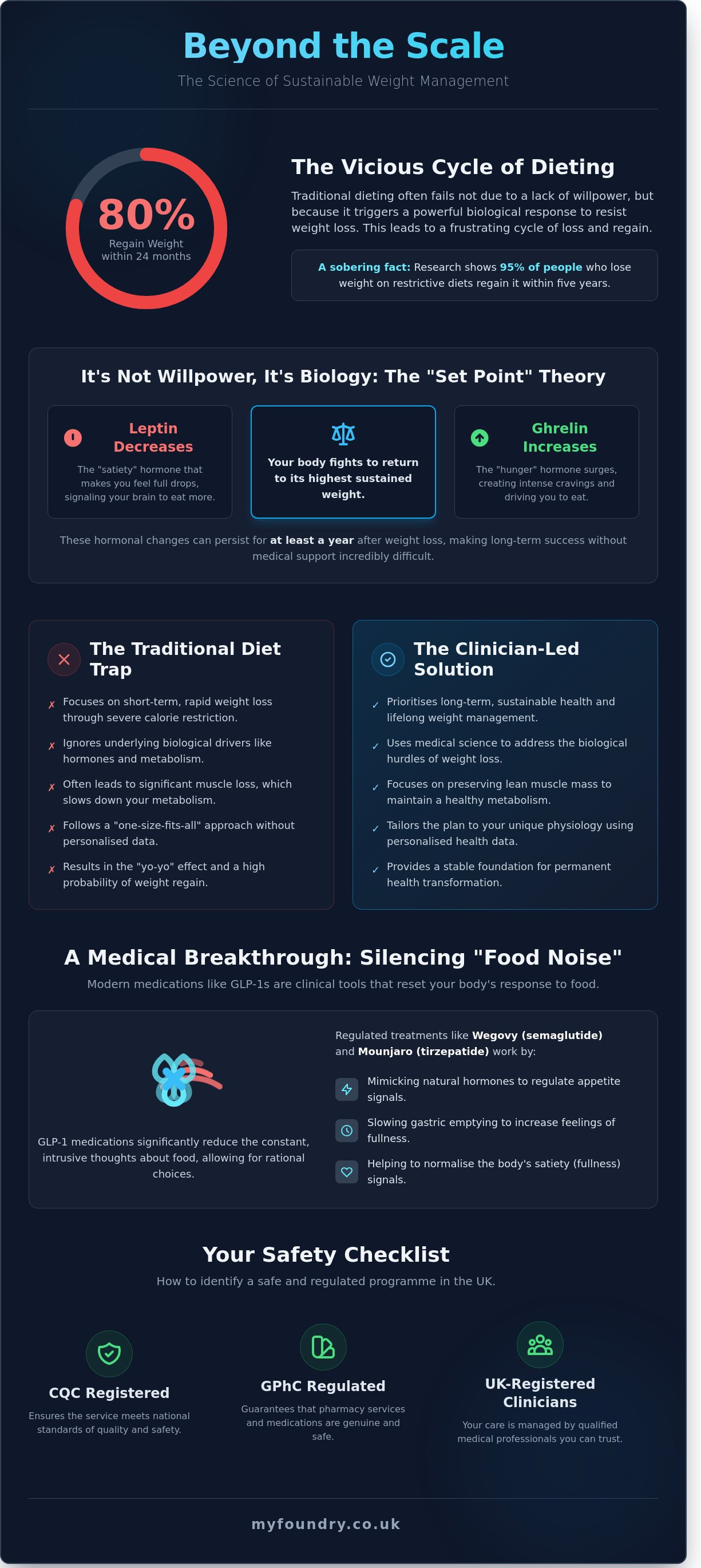
The core difference lies in the shift from short-term weight loss to lifelong weight management. What is weight management? It's a comprehensive approach that balances energy intake with physical activity and metabolic regulation. Unlike generic diets, a medical programme involves oversight from UK-registered clinicians. They monitor markers like HbA1c (blood sugar) and blood pressure rather than just the number on the scale. This ensures that the weight you lose leads to a genuine improvement in your health profile. Research shows that 95% of people who lose weight on restrictive diets regain it within five years. A clinical approach aims to break this statistic by addressing the underlying biology of your body.
The Biology of Weight Regain
Your body is biologically programmed to resist weight loss. This is driven by the "Set Point" theory. Your brain has a preferred weight range it wants to maintain, often influenced by your highest sustained weight. When you lose weight, your body thinks it's starving. It responds by decreasing leptin, the hormone that makes you feel full, and increasing ghrelin, the hormone that triggers hunger. A 2011 study published in the New England Journal of Medicine found that these hormonal changes persist for at least a year after weight loss. This is why "white-knuckling" your way through a diet rarely works. A clinical programme uses regulated, prescribed treatments to help manage these physiological barriers, making it easier to stick to your goals without constant hunger.
Foundations of Long-Term Success
True success requires moving beyond the 12-week mindset. A sustainable weight management programme focuses on a permanent lifestyle shift. One critical factor often ignored by generic plans is the preservation of lean muscle mass. If you lose weight too quickly without clinical guidance, you'll likely lose muscle. Since muscle burns more calories at rest than fat, losing it slows your metabolism. This makes future weight gain almost inevitable. Expert-led programmes use personalised data rather than generic calorie targets. By understanding your specific metabolic rate and body composition, clinicians can tailor a plan that protects your muscle while targeting fat stores. This data-driven approach is far superior to the "one size fits all" methods found in popular apps.
The Role of Medical Intervention in Sustainable Results
For many people, the challenge of weight loss isn't a lack of willpower; it's a complex biological battle. Modern medical interventions have shifted the focus from simple calorie counting to addressing the hormonal signals that govern hunger. Medications such as Wegovy (semaglutide) and Mounjaro (tirzepatide) aren't shortcuts. They're clinical tools designed to reset the body's physiological response to food, making it possible to achieve results that were previously out of reach for those with chronic weight concerns.
These treatments work by mimicking GLP-1, a natural hormone that regulates appetite and slows gastric emptying. Tirzepatide goes a step further by also targeting GIP receptors. Together, these mechanisms significantly reduce "food noise," which is the constant, intrusive preoccupation with eating that many people experience. By silencing this noise, patients find they can make rational food choices rather than emotional or reactive ones. This shift is a cornerstone of any sustainable weight management programme, as it allows for the development of a healthier relationship with food without the constant pressure of intense hunger pangs.
GLP-1 Medications: A Clinical Overview
Semaglutide and tirzepatide don't just suppress appetite; they help normalise the body's satiety signals. In the UK, these treatments are regulated and prescribed based on specific health criteria. Eligibility typically requires a Body Mass Index (BMI) of 30 or above. Alternatively, individuals with a BMI of 27 or above may be eligible if they have weight-related health conditions, such as type 2 diabetes or hypertension. Clinical data from the STEP 1 trial showed that participants using semaglutide lost an average of 14.9% of their body weight over 68 weeks, compared to just 2.4% in the placebo group. This demonstrates the profound impact that medical support can have when combined with professional guidance.
Building Habits While on Treatment
The "quietened mind" provided by medication creates a vital window of opportunity. It's during this time that patients can focus on healthy lifestyle changes without being derailed by cravings. A sustainable weight management programme must include nutritional coaching to ensure that as the quantity of food decreases, the quality remains high. This ensures the body receives essential nutrients while in a calorie deficit. It's also a period for establishing movement patterns that protect muscle mass, which is often lost during rapid weight reduction. Using the medication as a scaffold allows these new behaviours to become second nature, which is essential for the eventual maintenance phase.
Safety and clinical oversight are non-negotiable aspects of medical weight management. While these drugs are highly effective, they can cause side effects such as nausea or indigestion, particularly during the dose-escalation phase. Around 40% of patients report mild gastrointestinal symptoms when starting treatment. Having access to UK-registered clinicians ensures that these side effects are managed safely and that the dosage is adjusted according to individual tolerance. You can view our clinical approach to see how we support patients through every stage of their treatment journey. This professional supervision ensures that the medication remains a supportive tool rather than a standalone fix, prioritising long-term health over rapid, temporary changes.
Lifestyle vs. Medical vs. Hybrid: Comparing Your Options
Deciding on a path for weight loss often feels like a choice between two extremes: joining a local slimming club or seeking a clinical prescription. Traditional commercial programmes focus on calorie counting and group accountability. While these methods provide community, they frequently overlook the physiological barriers that make weight loss difficult for many. Statistics from 2022 suggest that roughly 80% of individuals who lose significant weight through calorie restriction alone regain it within two years. This happens because the body's metabolic rate often slows down to protect itself; a process known as adaptive thermogenesis that makes long-term maintenance nearly impossible through willpower alone.
A truly sustainable weight management programme must address both your habits and your biology. For those with significant metabolic resistance, Lifestyle Modifications such as increased physical activity and dietary shifts are vital foundations, yet they're often insufficient to overcome hormonal signals that trigger intense hunger. This is where medical support becomes a game-changer. However, medication isn't a magic wand. "Pill mills" or basic prescription services that offer injections without clinical guidance often see patients regain weight the moment the treatment stops. They fail to teach the skills needed for long-term health, leaving the user back where they started once the prescription ends.
foundry uses a hybrid model. We combine clinician-led care with evidence-based medical support. This approach ensures you aren't just losing weight, but also resetting your relationship with food under the eye of UK-registered prescribers. Our clinicians monitor your progress; they adjust your plan based on your unique health profile and ensure your safety at every step. It's a partnership that values safety and regulation above quick fixes.
Evaluating Commercial Diet Groups
Commercial groups offer low-cost entry and peer support, which helps with initial motivation. Their point-counting systems simplify nutrition for many. However, these programmes often lack the medical depth required to manage conditions like PCOS or insulin resistance. Without clinical oversight, users often fall into "yo-yo" cycles. These cycles can damage metabolic health over time, making future weight loss attempts even harder for the individual.
The Dangers of Unregulated Online Sellers
The rise in popularity of GLP-1 medications has led to a dangerous "grey market." In 2023, the MHRA seized hundreds of fake weight loss pens in the UK. Using medication from unregulated sources is a severe risk to your health. A UK-registered pharmacy is non-negotiable for patient safety. At foundry, every prescription undergoes a formal clinical review by experts who prioritise your long-term wellness over unsafe results. We ensure every medication is authentic, regulated, and prescribed specifically for your clinical needs.
Identifying a Safe and Regulated Programme in the UK
Choosing a sustainable weight management programme requires more than just comparing prices or reading success stories. It's a medical decision that demands strict adherence to UK safety standards. In the United Kingdom, any clinic providing medical weight loss advice and prescriptions must be registered with the Care Quality Commission (CQC). This independent regulator ensures that healthcare providers meet fundamental standards of quality and safety. If a website doesn't clearly display its CQC provider ID, it's a significant warning sign that the service may be operating without proper oversight.
Your medication should only ever be dispensed by a pharmacy registered with the General Pharmaceutical Council (GPhC). You can verify this by looking for the green GPhC voluntary logo, which links directly to the pharmacy's entry on the official register. Similarly, your prescriber must be a UK-registered clinician. This means they're regulated by the General Medical Council (GMC), the Nursing and Midwifery Council (NMC), or the GPhC. These professionals have a legal duty of care to ensure your treatment is clinically appropriate. They're also accountable to their respective professional bodies, which provides you with an essential layer of protection.
Be wary of red flags that suggest a service is putting profit before patient safety. Avoid any platform that offers prescription-only medication without a thorough clinical review. Legitimate providers won't sell "miracle" results or use high-pressure sales tactics. If a site lacks a physical UK address, doesn't name its clinicians, or offers suspiciously low prices compared to the market average, it's likely bypassing vital safety checks. As of 2024, the MHRA has seen a rise in counterfeit weight loss pens; buying from unregulated sources puts you at risk of injecting unknown, dangerous substances.
The Clinical Review Process
A professional clinical consultation is a detailed assessment of your health. You'll be asked to provide your current weight, height, and a full medical history, including any medications you're taking. Clinicians use this data to calculate your Body Mass Index (BMI). They typically look for a BMI of 30 or above, or 27 with weight-related health issues like hypertension. This process isn't a formality; it's how clinicians ensure the treatment won't interact with existing conditions. Ongoing monitoring is equally vital, as your dose may need adjustment based on your progress and any side effects you experience.
Regulation and Patient Safety
The Medicines and Healthcare products Regulatory Agency (MHRA) plays a critical role in monitoring weight loss treatments through the Yellow Card scheme. A regulated sustainable weight management programme will always require identity verification to prevent prescription fraud. They'll also ask for consent to notify your GP about your treatment. This communication is vital for your long-term health, ensuring your medical records are complete and accurate. Your data must be handled with total discretion, stored on secure, encrypted digital health platforms that comply with UK GDPR requirements to protect your privacy.
Trust in a service that prioritises your safety and long-term wellness over quick fixes. Start your clinical consultation with our team of UK-registered medical professionals today.
The Foundry Health Approach: Personalised Care for Wellness
Foundry Health represents a shift away from the cycle of restrictive dieting and towards a better way to wellness. We believe that effective weight loss isn't a matter of willpower alone; it's a complex physiological process that often requires expert-led, medical intervention. By moving away from "quick fix" culture, we provide a sustainable weight management programme that addresses the biological drivers of hunger and satiety. Our philosophy is rooted in clinical excellence, ensuring every patient receives care that is as safe as it is effective.
We don't believe in one-size-fits-all solutions. Instead, we tailor our approach to your unique health profile, considering your BMI, medical history, and specific wellness goals. This level of personalisation is made possible through our integrated model, which combines a UK-regulated pharmacy with a dedicated clinical team. By keeping every stage of your care under one roof, we ensure a seamless transition from your initial consultation to the delivery of your treatment and beyond. This integrated system allows for tighter safety controls and a more responsive patient experience.
Your Journey with Foundry Health
Your transition to a healthier lifestyle is structured into three clear, manageable stages designed to build confidence and consistency.
- Step 1: The secure digital consultation and clinical review. You'll begin by completing a comprehensive health assessment online. This isn't a simple tick-box exercise. Your data is reviewed by UK-registered clinicians who assess your suitability for medical weight loss. We typically complete these reviews within 24 hours, ensuring you receive a professional decision without unnecessary delays.
- Step 2: Personalised treatment plan and prescription delivery. If approved, our team develops a plan tailored to your needs. Your prescription is then dispensed by our GPhC-regulated pharmacy. We use discreet, temperature-controlled packaging to ensure your treatment arrives in perfect condition, ready for you to start your sustainable weight management programme.
- Step 3: Ongoing support, monitoring, and habit integration. Weight management is a marathon, not a sprint. We provide continuous clinical oversight to monitor your progress and manage any side effects. Our team helps you integrate new habits, such as improved nutritional choices and increased physical activity, which are essential for maintaining results long after the initial treatment phase.
Why Trust Our Clinicians?
Safety is the cornerstone of everything we do. Our team consists of UK-registered professionals, including experienced prescribers and pharmacists who specialise in metabolic health. We operate under the strict standards set by the General Pharmaceutical Council (GPhC) and the Care Quality Commission (CQC). This regulatory oversight means you can trust that your care meets the same rigorous safety benchmarks as any face-to-face NHS or private clinic.
Our commitment to evidence-based medicine ensures that we only recommend treatments backed by robust clinical data. Research shows that combining medical treatment with lifestyle changes can lead to significantly better outcomes than diet and exercise alone. We provide the tools, the expertise, and the regulated framework you need to take control of your health. If you're ready to move away from temporary fixes and towards a permanent solution, we're here to guide you.
Take the first step towards a healthier, more confident version of yourself. Our clinicians are ready to review your profile and help you begin a journey that prioritises your long-term wellness over short-term trends.
Empowering Your Long-Term Health Journey
Achieving lasting health isn't about temporary restrictions; it's about a clinically backed shift in your biology and habits. You've seen that a successful journey requires more than willpower. It demands a sustainable weight management programme that balances medical expertise with personalised care. Safety remains the priority at every stage. Foundry Health operates as a CQC Regulated Service, ensuring every patient receives oversight from UK-Registered Clinicians. Your prescriptions are dispensed by a registered GPhC Pharmacy, meeting the highest British standards for clinical safety and pharmaceutical care.
By choosing a hybrid model, you move away from the cycle of "quick fixes" that fail 95% of dieters according to long-term clinical observations. Instead, you're choosing a path designed for your specific physiology. Our team provides the medical foundation you need to reach your wellness goals securely and effectively. We're ready to partner with you to ensure your results are as permanent as they are life-changing.
Start your clinical consultation for a sustainable weight management programme
We're here to support your transition to a healthier, more confident future.
Frequently Asked Questions
Is a sustainable weight management programme just another name for a diet?
No, a sustainable weight management programme is a clinical intervention rather than a restrictive diet. While traditional diets have a 95% failure rate over five years according to the Council on Size and Weight Discrimination, this medical approach focuses on metabolic health. It combines regulated medication with professional support to address biological drivers of weight gain. You'll work with UK-registered clinicians to build habits that last, ensuring your progress is safe and evidence-based.
How long do I need to stay on a medical weight loss programme?
Your duration on a medical programme depends on your specific health markers and BMI goals. Many patients follow a treatment plan for 12 to 18 months to achieve and stabilise their target weight. Clinical data from the STEP trials indicates that long-term consistency is vital for metabolic adjustment. Our clinicians review your progress regularly to determine when you can safely transition to a maintenance phase once you've reached your targets.
Can I get a weight loss prescription online safely in the UK?
You can safely obtain a weight loss prescription online in the UK through regulated healthcare providers. It's essential to verify that the service is registered with the Care Quality Commission (CQC) and uses GPhC-accredited pharmacies. Every prescription at Foundry Health follows a clinical review by UK-registered prescribers. This ensures your treatment is medically appropriate and complies with all MHRA safety standards for patient care and medication dispensing.
What happens if I stop taking weight loss medication?
Stopping medication without a transition plan often results in your appetite returning to its baseline level. Data from the STEP 4 clinical trial showed that individuals regained approximately two-thirds of their lost weight one year after ceasing treatment. This is why our sustainable weight management programme emphasises lifestyle coaching. We help you implement dietary changes that support your metabolism even after you finish your course of medication to prevent significant weight regain.
Will my GP be informed if I join a private weight management programme?
We'll inform your GP about your treatment to ensure your medical records remain accurate and safe. Under GMC Good Medical Practice guidelines, private clinicians should share relevant pharmacological data with a patient's primary doctor. This coordination prevents drug interactions and allows for holistic care. We handle this process discreetly; ensuring your healthcare team is aligned on your journey toward better wellness while maintaining your privacy and safety throughout the process.
Are there side effects to the medications used in these programmes?
Most patients experience mild side effects, particularly during the first four weeks of treatment. Common issues include nausea or indigestion, which affect roughly 40% of people as their bodies adjust to the medication. These symptoms are usually temporary and manageable with clinician guidance. Because our programmes are expert-led, you'll receive specific advice on dose titration to minimise discomfort while you work towards achieving your long-term health goals safely.
How much does a clinician-led weight management programme cost?
A comprehensive, clinician-led programme typically costs between £150 and £290 per month. This fee covers your clinical consultations, the prescribed medication, and tracked, refrigerated delivery to your UK address. Unlike "quick fix" solutions, this investment provides access to regulated healthcare professionals and genuine MHRA-approved treatments. We believe in transparent pricing with no hidden costs; allowing you to plan your health journey with confidence and financial clarity from the start.
Do I still need to exercise if I am on a medical programme?
Physical activity remains a vital component of any medical weight loss journey. The UK Chief Medical Officers recommend 150 minutes of moderate-intensity activity per week to protect cardiovascular health. Exercise helps preserve lean muscle mass, which can decrease during rapid weight loss. While the medication manages your appetite, movement ensures your body remains strong and your metabolic rate stays high. This combination is essential for maintaining your results over the long term.