

Side Effects of Wegovy Injection: A Clinical Guide to Management and Safety
Editorial TeamClinical Safety Notice
Before choosing a provider for medical weight loss, it is vital to verify their regulatory credentials. Read our 2026 Guide to Safe UK Online Pharmacies to understand GPhC, CQC, and MHRA compliance standards.
Last Tuesday, Sarah found that a persistent wave of nausea was making her morning commute feel like an impossible task. It's common to feel apprehensive when your commitment to better health is met with physical discomfort that disrupts your daily routine. You aren't alone in this experience. Clinical data indicates that approximately 44% of patients report nausea during their initial treatment phase. Understanding the side effects of wegovy injection is a vital part of your journey. It helps you move past the initial adjustment period with confidence and clarity.
We believe that medical weight loss should be a supported partnership, not a solitary challenge. This guide provides a clear breakdown of what to expect, from common digestive changes to rare reactions that require medical attention. You'll learn why these symptoms happen and discover practical, clinician-led tips to manage them effectively. We'll also address specific concerns about muscle preservation and facial volume to ensure your progress is both healthy and sustainable. By the end of this article, you'll have a professional roadmap for navigating your treatment safely under the guidance of our expert clinical team.
Key Takeaways
- Understand how Wegovy mimics natural hormones to regulate appetite and why slowing gastric emptying is the primary cause of initial digestive changes.
- Learn how to identify and manage the most common side effects of wegovy injection, including expert-led tips for handling nausea and bowel adjustments.
- Discover practical at-home strategies and dietary adjustments, such as the ‘small and frequent’ rule, to help your body adapt to the medication comfortably.
- Recognise the specific symptoms that distinguish mild, expected discomfort from rare but serious medical complications that require clinical attention.
- Explore how personalised titration and clinician-led oversight can minimise discomfort and help you stay on track with your long-term weight management goals.
Understanding why side effects of Wegovy injection occur
Wegovy contains the active ingredient semaglutide, a regulated medical treatment that mimics the action of a naturally occurring hormone called Glucagon-like Peptide-1 (GLP-1). This hormone is released by your intestines after you eat, signalling to your brain that you're satisfied. By replicating this process, Wegovy helps you manage your weight through biology rather than willpower alone. However, introducing a synthetic version of this hormone triggers a period of physiological adaptation.
The primary mechanism of Wegovy involves slowing down gastric emptying. This is the clinical term for the speed at which food leaves your stomach and enters the small intestine. While this process is essential for making you feel full for longer periods, it's also the reason most side effects of wegovy injection occur. When your digestive system operates at a slower pace, your body must recalibrate its processing of nutrients and waste. Most patients find that these effects are transient, typically appearing during the initial weeks of treatment or shortly after a dose increase.
The role of the GLP-1 hormone in your body
Semaglutide interacts directly with GLP-1 receptors located in both the gut and the brain, specifically the hypothalamus. This area of the brain regulates appetite and food intake. When these receptors are activated, they send powerful signals of satiety. In some instances, the brain interprets these intense "fullness" signals as nausea, especially if the stomach is still processing a recent meal. This biological response is a common part of the adjustment period as your central nervous system learns to balance these new signals. Clinical observations suggest that as your body becomes accustomed to the medication, these signals stabilise and the feeling of nausea generally subsides.
Why dose titration is essential for safety
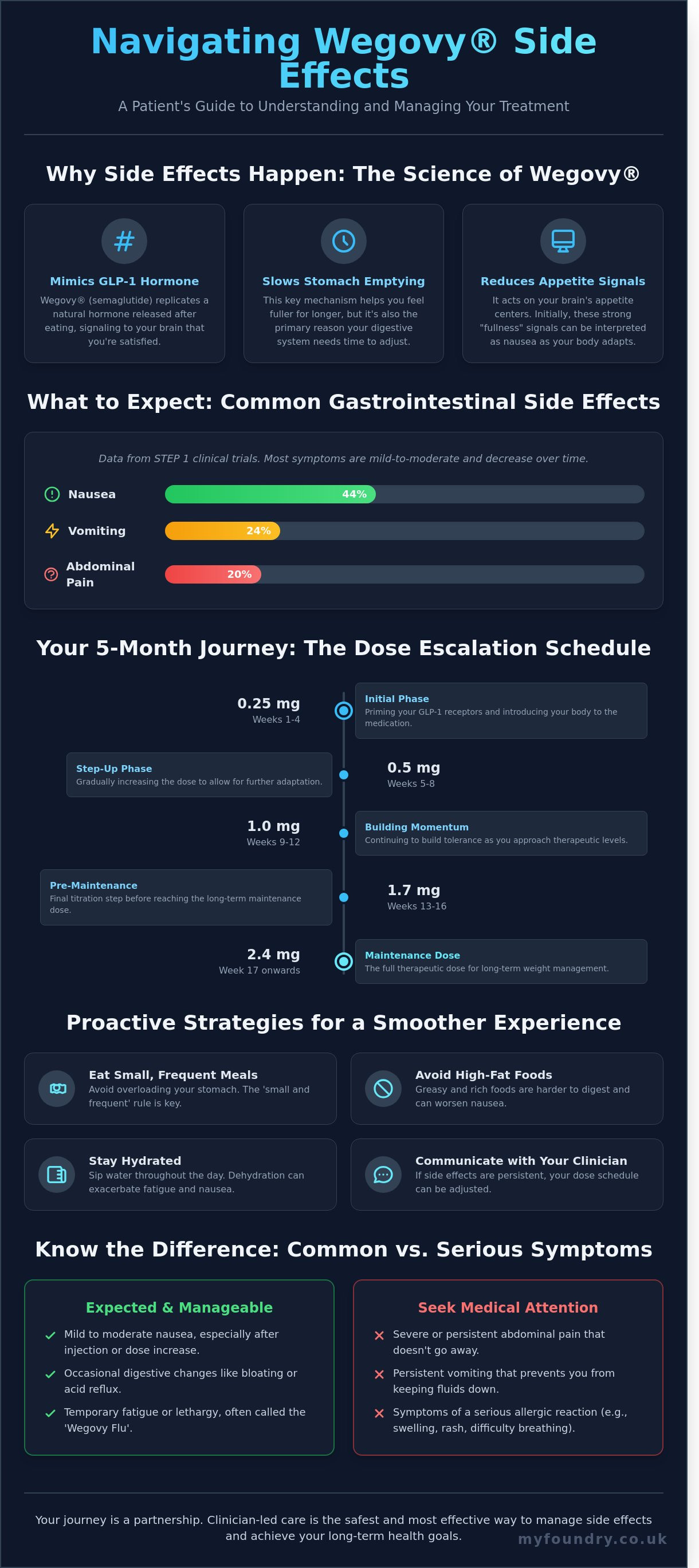
To ensure patient safety and improve comfort, Wegovy is never started at the maximum dose. Instead, UK clinicians use a structured 5-month dose escalation schedule. This process helps your gastrointestinal tract adapt to the medication gradually. The standard schedule begins at a low dose of 0.25mg for the first four weeks, followed by 0.5mg, 1mg, and 1.7mg, eventually reaching the maintenance dose of 2.4mg. Starting with a lower concentration allows your digestive enzymes and gut motility to adjust without being overwhelmed. Titration is the clinical process of gradually increasing medication to find the optimal balance of efficacy and tolerability.
- 0.25mg to 0.5mg: Initial introduction to prime the GLP-1 receptors.
- 1mg to 1.7mg: Intermediate stages to build metabolic momentum.
- 2.4mg: The therapeutic maintenance dose for long-term weight management.
Following this regulated path is the most effective way to minimise side effects of wegovy injection while achieving your health goals. If you experience persistent discomfort, your prescriber may recommend staying on a lower dose for an additional month to allow for further adaptation.
Common gastrointestinal side effects: What most patients experience
Clinical data from the STEP 1 clinical trials indicates that gastrointestinal issues are the most frequent side effects of wegovy injection. Nausea is the primary concern for many, reported by approximately 44% of patients. This sensation is often strongest in the days immediately following an injection or when your clinician increases your dosage. While it can be uncomfortable, it usually indicates that the medication is actively influencing the metabolic signals in your brain and gut.
Vomiting and abdominal pain also occur in about 24% and 20% of cases, respectively. These symptoms typically emerge during the dose-escalation phase as your body adapts to the GLP-1 hormone. Most patients find that these issues subside once they reach a stable maintenance dose. Heartburn and acid reflux, technically known as dyspepsia, are also common. This happens because Wegovy slows gastric emptying, meaning food remains in your stomach for a longer duration. To manage this, many patients find success by reducing portion sizes and avoiding high-fat meals that are harder to digest.
The 'Wegovy Flu': Fatigue and malaise
During the first few weeks of treatment, you might experience a persistent sense of tiredness or lethargy. This isn't a viral infection, but it's often nicknamed the "Wegovy flu" by patient communities. This fatigue is frequently linked to a rapid drop in calorie intake. As your appetite diminishes, your body has less immediate fuel to draw upon, leading to temporary energy dips. It's vital to differentiate between medication-induced fatigue and dehydration. Because GLP-1 receptor agonists can sometimes suppress your thirst drive, you must consciously increase your water intake to maintain energy levels and support your metabolic health.
Managing changes in bowel habits
Shifts in bowel regularity are a standard part of the body's adjustment to new motility patterns. Constipation affects roughly 24% of patients, occurring because the medication slows down the movement of food through the digestive tract. Identifying this early is key to preventing discomfort. You should focus on increasing your daily fibre intake through vegetables and whole grains to keep things moving. If lifestyle adjustments aren't enough, you might consider over-the-counter options like bulk-forming laxatives. For more specific guidance on managing these changes, you can speak with a UK-registered clinician who can help tailor your weight management plan. Diarrhoea can also occur as the bowel adjusts, though this usually resolves without intervention within a few days of a dose change.
Practical strategies for managing Wegovy side effects at home
Managing the side effects of wegovy injection requires a proactive approach to your daily routine, particularly during the first month of treatment. The most effective strategy is adopting a 'small and frequent' eating pattern. Because semaglutide slows the rate at which your stomach empties, traditional large meals can lead to significant bloating and discomfort. Instead, aim for five or six nutrient-dense, palm-sized portions throughout the day. This keeps your blood sugar stable and prevents the stomach from becoming overly distended, which is a common trigger for nausea.
Hydration is your primary defence against the fatigue and headaches that sometimes accompany the start of a weight management programme. Clinical observations indicate that many initial side effects are exacerbated by a drop in fluid intake as appetite diminishes. You should aim for at least 2 to 2.5 litres of water daily. If you're struggling with nausea, sipping on electrolyte-rich drinks can help maintain your mineral balance without the heaviness of a full meal.
Dietary adjustments to reduce nausea
Certain foods act as triggers for gastrointestinal distress. High-fat, fried, or heavily spiced meals sit heavy in the digestive tract, often leading to acid reflux or indigestion. If you're experiencing a flare-up or have just moved to a higher dosage, switching to bland options like the BRAT diet (bananas, rice, applesauce, and toast) for 24 to 48 hours can provide necessary relief. A critical habit to develop is the 'satisfaction check'. You must stop eating the second you feel satisfied, even if food remains on the plate. Reaching the point of feeling 'full' on Wegovy often means you've already overeaten for your reduced gastric capacity.
Injection techniques and timing
The timing of your weekly dose can influence your experience. Many patients find that injecting before bed helps them sleep through the initial wave of nausea that can occur shortly after administration. Conversely, if you find the medication affects your sleep quality, a morning injection might be more suitable. While the day of the week should remain consistent, you have the flexibility to find the hour that best suits your body's rhythm.
Site rotation is another essential safety practice to minimise the side effects of wegovy injection. You should alternate between the abdomen, thigh, and upper arm each week to prevent localised skin reactions or thickening of the fatty tissue. To ensure you're using the correct technique, we recommend reviewing our Wegovy UK patient guide for a step-by-step breakdown of the administration process.
Distinguishing between common discomfort and serious medical risks
Most patients experience mild gastrointestinal issues during the initial stages of treatment. However, it's vital to differentiate these manageable symptoms from rare, significant complications. In clinical trials, acute pancreatitis was reported in 0.2% of patients. This condition presents as severe, persistent abdominal pain that often radiates through to your back. Unlike standard indigestion, this pain doesn't subside and may be accompanied by vomiting. If you experience these specific symptoms, stop the medication and contact a medical professional immediately.
Gallbladder problems represent another clinical consideration for those on this medication. Data from the STEP clinical trial programme showed that 2.6% of individuals taking Wegovy developed gallbladder-related issues, such as gallstones, compared to 1.2% in the placebo group. You should look for pain in the upper right abdomen, fever, or yellowing of the skin and eyes. Additionally, severe vomiting can lead to acute kidney injury through rapid dehydration. Maintaining a steady intake of fluids is essential if you experience gastrointestinal side effects of wegovy injection to protect your renal health.
When to seek immediate medical attention
Anaphylaxis is extremely rare but requires emergency care. Watch for signs of a severe allergic reaction, including swelling of the face, lips, or tongue, alongside difficulty breathing or a rapid heartbeat. You should also seek help if you experience persistent vomiting that prevents you from keeping fluids down for more than 12 hours. Finally, pay attention to any new lumps or swelling in the neck area. While thyroid C-cell tumours were primarily observed in rodent studies, UK regulators require all patients to report these symptoms for safety monitoring.
Mental health and mood changes
Clinical supervision is a cornerstone of safe weight management. Monitoring your mental wellbeing is just as important as tracking physical progress. Patients with a history of depression or mood disorders require closer observation from their clinical team throughout their journey. While mood changes are rare, any significant shift in mental wellbeing should be discussed with your Foundry Health clinician immediately. Our medical team ensures your journey is supported by evidence-based care and regular clinical reviews to keep you safe.
If you're concerned about managing potential risks or want to learn more about safe administration, consult with our UK-registered clinicians to ensure your treatment plan is regulated and secure.
The role of clinician-led care in minimising side effects
Clinical data from the STEP trials indicates that approximately 7% of participants discontinued treatment due to adverse events. A rigid, one size fits all approach to medication often drives these dropout rates because it fails to account for individual biological sensitivity. At Foundry Health, we recognise that your metabolic response is unique. Pushing through severe discomfort is rarely the path to success; instead, we focus on a clinical partnership that prioritises your comfort and safety.
Our clinicians utilise bespoke titration schedules. If the side effects of wegovy injection become intrusive at a specific dose, we don't automatically escalate your treatment the following month. We may recommend staying at a lower dose for an additional four-week cycle or adjusting the timing of your injection to better suit your lifestyle. This flexibility ensures your body has the time it needs to adapt to the GLP-1 hormone changes.
Access to a UK-registered clinician provides a safety net that automated platforms cannot replicate. You can receive professional medical advice in real-time to manage symptoms like nausea or acid reflux. This immediate support prevents minor manageable issues from escalating into reasons to stop your treatment prematurely.
Personalised support vs. 'Pharmacy-only' models
Many retail pharmacy models provide the medication with little to no follow-up care. This leaves patients to navigate complex symptoms alone. Our clinicians conduct regular clinical reviews to monitor your progress and document your specific side effect profile. We use this data to refine your treatment plan, ensuring you achieve maximum efficacy with minimum discomfort. Explore our medical weight loss UK programme for a detailed breakdown of how our clinical support structure protects your health throughout the journey.
Transitioning to a better way to wellness
Effective weight management extends beyond the needle. Without proper clinical oversight, rapid weight loss can lead to a 25% to 40% reduction in lean muscle mass. We integrate Wegovy treatment with evidence-based nutritional guidance to protect your metabolic health. This holistic approach prepares you for the maintenance phase, teaching you how to sustain your results without long-term reliance on medication. We focus on building a foundation for permanent health, not just a temporary fix. Start your clinical consultation with Foundry Health today to begin a regulated, expert-led journey toward sustainable wellness.
Establishing Your Safe Medical Weight Loss Journey
Managing the side effects of wegovy injection doesn't have to be a solo effort. Clinical data from the STEP 1 trial indicates that while 44% of patients may experience nausea, these symptoms are typically transient and manageable with the right medical guidance. By focusing on gradual dose escalation and proactive hydration, you can navigate your journey toward a healthier weight with confidence. Expert-led care ensures that common gastrointestinal discomfort is distinguished from rare, serious risks, keeping your safety at the forefront of every clinical decision.
Foundry Health provides a secure pathway to weight management through UK-registered clinicians and our GPhC regulated pharmacy. Our partnership with CQC regulated healthcare partners ensures your treatment meets the highest safety standards in the United Kingdom. If you're ready to move beyond the struggle of weight management, we're here to help you find a better way to wellness. It's time to prioritise your health with a clinical team that values your safety as much as your long-term results.
Start your clinical consultation for Wegovy
Frequently Asked Questions
How long do side effects of Wegovy injection usually last?
Most side effects of Wegovy injection are temporary and typically resolve within a few days or weeks as your body adjusts to the medication. Clinical data indicates that gastrointestinal symptoms often peak during the first 4 weeks of dose titration. If you experience persistent nausea or vomiting beyond this initial period, you should consult your UK-registered clinician for a review of your treatment plan.
Can I drink alcohol while taking Wegovy?
You can drink alcohol in moderation while taking Wegovy, but it's often advisable to limit your intake to avoid complicating your treatment. Alcohol can aggravate common side effects of Wegovy injection like nausea and vomiting, which were reported by 44% of patients in clinical trials. Since both alcohol and weight loss medication affect blood sugar and hydration, drinking may lead to increased dizziness or gastric discomfort.
What should I do if I miss a dose due to side effects?
If you miss a dose because you're feeling unwell, you should take it as soon as you feel better, provided it's within 5 days of the scheduled date. If more than 5 days have passed, skip that dose and wait for your next scheduled injection. You must never take a double dose to make up for a missed one. Our medical team recommends contacting your prescriber if side effects are so severe that you're unable to continue your weekly routine.
Is 'Ozempic face' a side effect of Wegovy?
'Ozempic face' isn't a direct medical side effect of the medication, but rather a result of rapid weight loss. When you lose a significant amount of subcutaneous fat quickly, it can lead to a more hollowed or aged appearance in the facial features. Clinical trials show Wegovy patients lose an average of 15% of their body weight over 68 weeks. This change in facial volume is a common outcome of any effective weight management journey.
How can I prevent hair loss while on Wegovy?
You can help prevent hair thinning by ensuring you consume adequate protein and essential vitamins during your treatment. Hair loss, or telogen effluvium, was reported by 3% of participants in STEP clinical trials and is usually triggered by the stress of rapid weight loss rather than the drug itself. We suggest aiming for at least 60g of protein daily and discussing a high-quality multivitamin with your clinician to support your body's nutritional needs.
Are the side effects of Wegovy worse than Mounjaro?
Side effect profiles for Wegovy and Mounjaro are broadly similar, though their frequency can vary slightly between individual patients. Clinical data from the STEP and SURMOUNT trials shows that both medications primarily cause gastrointestinal issues like nausea and constipation. While some studies suggest Mounjaro might lead to slightly higher rates of mild nausea, individual reactions differ. Your clinician will help you determine which regulated treatment is most suitable for your specific health profile.
Can Wegovy cause low blood sugar (hypoglycaemia)?
Wegovy rarely causes low blood sugar in patients who don't have type 2 diabetes. However, if you're taking other medications like insulin or sulfonylureas, the risk of hypoglycaemia increases. Symptoms to watch for include dizziness, sweating, and confusion. During your clinical review, it's vital to disclose all current medications so our UK-registered prescribers can safely manage your treatment and adjust dosages if necessary to prevent blood sugar drops.
Does the injection site affect the severity of side effects?
The injection site doesn't typically change the severity of systemic side effects like nausea, but rotating sites can prevent local skin irritation. You should alternate between your abdomen, thigh, and upper arm each week as recommended in the 2021 clinical guidelines for GLP-1 medications. Some patients find that injecting in the thigh reduces the intensity of nausea compared to the stomach, although this is largely based on individual patient reports rather than large-scale clinical data.