

Perimenopause Weight Loss Support UK: A Clinical Guide to Managing Hormonal Weight Gain
Editorial TeamWhy does your body suddenly feel like it's working against you? Research published in the journal Climacteric indicates that women can experience a 20% increase in fat mass during the menopausal transition, with much of it settling around the abdomen as the "menopause middle." If you're struggling with these changes despite your best efforts, seeking professional perimenopause weight loss support UK is a vital step toward reclaiming your health and confidence.
It's incredibly frustrating when established habits no longer work and persistent fatigue leaves you with little energy for the gym. You've likely felt the confusion of balancing HRT benefits with the need for targeted weight management. This clinical guide explains the biological mechanisms behind hormonal weight gain and demonstrates how regulated medical interventions provide a secure, expert-led pathway to success. We'll break down the specific role of oestrogen in fat distribution and outline how our UK-registered clinicians help you move beyond temporary fixes toward sustainable, long-term wellness that works in harmony with your hormones.
Key Takeaways
- Understand the biological mechanisms, such as declining oestrogen and insulin resistance, that drive hormonal fat redistribution during the perimenopausal transition.
- Evaluate why traditional lifestyle interventions often fall short and how medical weight loss can address the physiological hunger caused by hormonal shifts.
- Learn how to navigate the clinical pathway to access regulated perimenopause weight loss support UK through safe, expert-led healthcare services.
- Discover how a personalised, subscription-based medical model provides the consistent clinical review and prescriptions necessary for long-term health.
Understanding the Biological Shift: Why Perimenopause Affects Weight
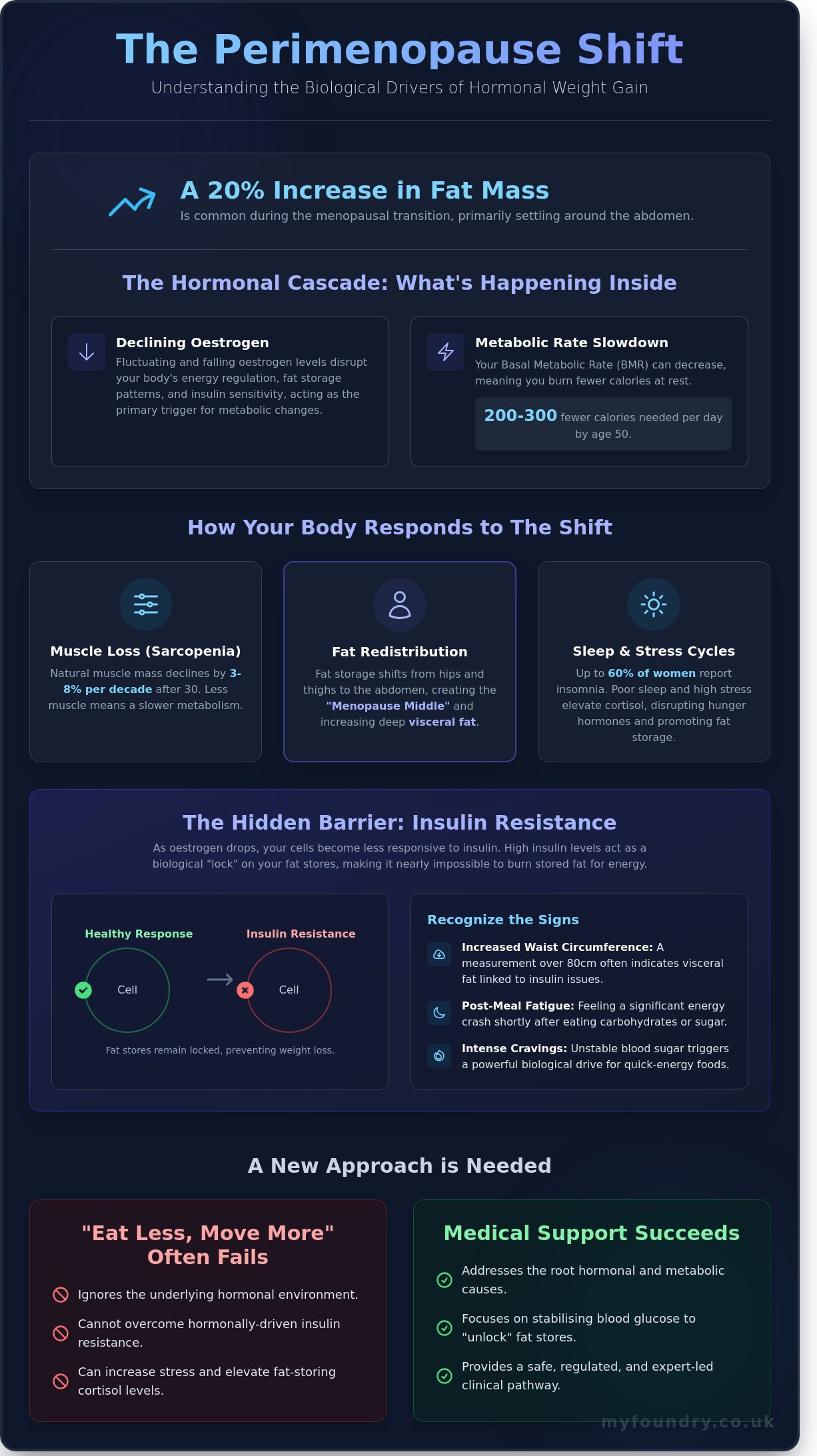
Perimenopause is the clinical transition period leading to menopause, typically beginning between the ages of 45 and 55. During this phase, oestrogen and progesterone levels fluctuate significantly before eventually declining. These hormonal shifts change how your body processes energy and stores fat. If you've found that your usual exercise routine no longer works, you aren't alone. Traditional "eat less, move more" advice often fails because it ignores the underlying hormonal environment. Accessing professional perimenopause weight loss support UK services helps address these specific biological hurdles with medical precision.
A primary driver of weight gain during this transition is sarcopenia. This is the natural loss of muscle mass, which declines by 3% to 8% per decade after the age of 30. Because muscle tissue is more metabolically active than fat, this loss lowers your basal metabolic rate. You burn fewer calories at rest, making weight retention more likely even if your diet remains unchanged. Without targeted intervention, the body's ability to maintain a healthy weight diminishes as the hormonal landscape shifts.
The "Menopause Middle" and Visceral Fat
As oestrogen levels drop, the body changes where it stores fat. Instead of storing energy in the hips and thighs, the body begins to deposit it in the abdominal area. This shift creates what's often called the "menopause middle." This isn't just an aesthetic concern; it represents a shift toward visceral fat. Visceral fat is the deep abdominal fat that surrounds internal organs and increases metabolic risk. Data from the British Menopause Society suggests that this increase in abdominal fat significantly raises the risk of type 2 diabetes and cardiovascular disease in your 40s and 50s.
Sleep, Stress, and Cortisol Cycles
Sleep quality frequently plummets during perimenopause, with up to 60% of women reporting regular insomnia or night sweats. This disruption directly impacts hunger hormones. When you're sleep-deprived, levels of ghrelin rise, which increases appetite, while levels of leptin fall, which reduces feelings of fullness. Chronic stress also plays a role by elevating cortisol levels. High cortisol signals the body to protect its energy stores, leading to stubborn fat retention around the midsection. Clinical perimenopause weight loss support UK must prioritize sleep hygiene and stress management to successfully regulate these metabolic cycles.
The Science of Hormonal Weight Gain: Insulin and Metabolism
During perimenopause, your body undergoes a profound chemical shift. Oestrogen levels fluctuate and eventually decline, which directly impacts your metabolic health. Oestrogen acts as a key regulator of insulin sensitivity. When these levels drop, your cells become less responsive to insulin's signals. This shift often results in the body storing energy as fat, particularly around the abdomen, rather than burning it for fuel. It's a physiological change that makes processing carbohydrates significantly less efficient than in your 30s.
UK clinical data indicates that women in midlife experience a noticeable dip in their basal metabolic rate. Research from the British Menopause Society suggests that by age 50, a woman's daily caloric requirement may decrease by 200 to 300 calories. This isn't a failure of willpower; it's a metabolic reality. If you're seeking perimenopause weight loss support UK, understanding these hormonal drivers is the first step toward a clinical solution that works with your biology rather than against it.
Insulin Resistance: The Hidden Barrier
Insulin resistance occurs when your cells stop responding effectively to the hormone responsible for clearing sugar from your blood. High insulin levels act as a biological lock on your fat stores. When insulin is high, your body cannot access stored fat for energy. You might notice specific signs that your insulin sensitivity is struggling:
- Increased waist circumference: A measurement over 80cm often indicates visceral fat accumulation linked to insulin issues.
- Post-meal fatigue: Feeling an energy crash shortly after eating carbohydrates or sugar.
- Intense cravings: Blood sugar fluctuations lead to a cycle of "highs and lows" that trigger a biological drive for quick energy.
Stabilising blood glucose is essential to lower systemic insulin levels. This process "unlocks" the fat cells, allowing the body to return to a state where weight management is possible through regulated medical pathways.
Metabolic Flexibility in Your 40s
Metabolic flexibility is your body's ability to switch between burning carbohydrates and burning fat. During the perimenopausal transition, this flexibility often declines, leaving the body "stuck" in a sugar-burning mode. This makes it difficult to lose weight even when you reduce your food intake. A clinician-led programme can help reset these metabolic responses by using evidence-based strategies tailored to your hormonal profile.
To support a healthy metabolism during this phase, two factors are non-negotiable. First, increasing protein intake to roughly 1.2g to 1.5g per kilogram of body weight helps preserve lean muscle. Second, resistance training is vital. Muscle is a metabolically active tissue that improves insulin sensitivity. By focusing on these clinical pillars, you can restore metabolic flexibility and manage weight gain effectively through your 40s and beyond.
Comparing Weight Loss Support: Lifestyle vs. Medical Interventions
Traditional UK slimming clubs often focus on group accountability and calorie counting. While these methods provide community, they frequently fail to address the physiological shifts of the perimenopausal transition. Research indicates that women gain an average of 0.5kg to 1kg per year during this phase, regardless of their activity levels. This gain is often driven by a 20% drop in oestrogen, which alters how the body stores fat and responds to insulin. Relying on willpower alone becomes exhausting when your hormones are actively working against your efforts.
When Lifestyle Changes Aren’t Enough
There is a specific point where "eating less and moving more" stops working. If you've maintained a consistent calorie deficit for 12 weeks without seeing a change in body composition, medical intervention may be the next logical step. The psychological toll of "failing" at traditional diets is significant; it often leads to a cycle of restriction and frustration. Medical support offers a biochemical leg-up. It bypasses hormonal resistance to restart the metabolic process. Seeking professional perimenopause weight loss support UK ensures that your weight management strategy is based on clinical data rather than generic diet plans.
The Role of GLP-1 Medications
Medical weight loss treatments like Wegovy (semaglutide) and Mounjaro (tirzepatide) have transformed how we manage hormonal weight gain. These medications interact with the brain's appetite regulators to reduce physiological hunger and "food noise." In perimenopausal women, these treatments help stabilise the blood sugar spikes that often lead to mid-afternoon cravings.
Safety and regulation are paramount. These medications are not "quick fixes" found in unregulated online shops; they are powerful clinical tools that require oversight. At Foundry Health, every prescription undergoes a rigorous clinical review. We ensure that treatments are dispensed only through GPhC-regulated pharmacies. This clinician-led approach is superior to over-the-counter supplements because it provides:
- Verified Safety: Direct supervision by UK-registered clinicians to monitor side effects.
- Evidence-Based Results: Clinical trials for Wegovy showed an average weight loss of 15% over 68 weeks.
- Regulated Sourcing: Genuine medications sourced through MHRA-approved supply chains.
- Personalised Dosing: Adjustments made based on your specific hormonal profile and health history.
Choosing a regulated medical pathway provides the structure needed to manage weight effectively. It moves the focus from "dieting" to clinical weight management, providing a sustainable solution for the perimenopause weight loss support UK women need to reclaim their health.
The UK Clinical Pathway: Accessing Regulated Support
Accessing perimenopause weight loss support UK requires understanding the two primary routes: the NHS and private clinical care. The NHS typically reserves medical weight management for patients with a BMI over 35 and specific co-morbidities like Type 2 diabetes. For many women in perimenopause, this threshold is too high; it leaves them without support during a critical health transition. Private medical pathways bridge this gap by offering expert-led care to those who require clinical intervention to manage hormonal weight gain safely and effectively.
A professional consultation differs significantly from a standard GP visit. It focuses specifically on the intersection of your hormonal health and metabolic rate. Clinicians look for more than just a number on the scale; they assess how perimenopausal shifts impact your ability to maintain a healthy weight. This specialized approach ensures that any prescribed treatment aligns with your broader health goals.
The Online Consultation Process
The digital clinical review at Foundry Health is a structured medical assessment designed for your safety. You'll complete a comprehensive health questionnaire covering your medical history, current prescriptions, and specific perimenopausal symptoms. UK-registered clinicians review every response to ensure suitability. This process isn't a formality. It's how we determine the correct clinical pathway. For example, clinicians often start patients on a low introductory dose for the first 28 days to monitor tolerance before adjusting the protocol based on your body's response.
Ensuring Safety and Regulation
Patient safety depends on choosing regulated providers. Every legitimate UK online pharmacy must display the GPhC green logo, which links to their entry on the official register. You should also confirm the service is CQC regulated to ensure high standards of clinical governance. Buying "weight loss pens" from social media sellers is dangerous. In 2023, the MHRA reported a rise in counterfeit GLP-1 medications that lacked active ingredients or contained harmful substances. Regulated care provides continuous monitoring, which is essential for managing your perimenopause weight loss support UK journey effectively.
Take the first step toward a regulated, expert-led weight management plan. Start your consultation with Foundry Health today.
Personalised Perimenopause Support with Foundry Health
Hormonal shifts during the perimenopausal transition often make traditional weight loss methods feel ineffective. When oestrogen levels fluctuate and eventually decline, the body’s insulin sensitivity changes, often leading to increased abdominal fat storage. Foundry Health provides the perimenopause weight loss support UK women need to address these biological realities through a regulated, medical framework. Our programme isn't built on restrictive fads. We focus on clinical interventions that work with your body's changing chemistry.
Our subscription-based model ensures you receive consistent care throughout your journey. Because perimenopause can last between 4 and 10 years, a "one-off" solution rarely provides lasting results. We provide ongoing access to UK-registered clinicians and regular clinical reviews to monitor your progress and adjust your treatment plan as your symptoms evolve. This continuity of care is vital for maintaining metabolic health and achieving long-term wellness rather than chasing temporary aesthetic changes.
- Clinician-led oversight from UK-registered professionals.
- Prescriptions dispensed by GPhC-regulated pharmacy partners.
- Evidence-based treatments tailored to hormonal weight gain.
- Transparent, subscription-based pricing for uninterrupted support.
A Better Way to Wellness
Foundry Health operates on a philosophy of empathetic, professional weight management. We understand that managing weight during your 40s and 50s isn't just about willpower; it's about biology. Our service removes the stress of traditional pharmacy visits by providing secure home delivery from our regulated UK pharmacy partner. All medications arrive in discreet packaging, ensuring your privacy is maintained at every stage. If you're ready to explore your options, you can read our guide on how to get a weight loss prescription online in the UK to understand our secure medical process.
Your Next Steps to Regaining Control
It is time to move from frustration to clinical action. If you've found that diet and exercise alone aren't yielding the results they once did, expert guidance can help bridge the gap. We prioritise clinical excellence and patient safety, ensuring every treatment plan is reviewed by a qualified prescriber. Our process is entirely digital and secure, providing the perimenopause weight loss support UK residents trust for its discretion and medical rigour. You don't have to manage these complex hormonal shifts in isolation. Start your clinical consultation with Foundry Health today and take a definitive step toward reclaiming your health and confidence.
Take Control of Your Hormonal Health Today
Managing weight during the perimenopausal transition isn't just a matter of willpower; it's about addressing fundamental biological shifts. When estrogen levels fluctuate, your body’s insulin response and metabolic rate often change, making traditional diet and exercise feel less effective than they once were. Accessing professional perimenopause weight loss support UK services provides the clinical foundation needed to navigate these hormonal challenges with confidence and medical oversight.
Foundry Health prioritizes your safety through a rigorous medical framework. Every patient receives a clinician-led review to ensure their treatment plan is tailored to their specific medical profile. All prescriptions are dispensed by a regulated GPhC pharmacy, and we work alongside CQC regulated healthcare partners to maintain the highest standards of care. These layers of regulation ensure you receive medical-grade care rather than a temporary fix. You don't have to face these physiological changes without expert guidance.
Start your clinical weight loss consultation today and take a proactive step toward long-term metabolic wellness. You're capable of reclaiming your health and feeling like yourself again.
Frequently Asked Questions
Can I use medical weight loss treatments while on HRT?
Yes, you can safely use medical weight loss treatments like Wegovy or Mounjaro while on Hormone Replacement Therapy (HRT). HRT addresses estrogen deficiency and vasomotor symptoms, while GLP-1 medications target the metabolic pathways responsible for weight gain. Clinical data from the STEP 1 trials demonstrated that participants achieved an average weight loss of 14.9% over 68 weeks. Our UK-registered clinicians perform a full review of your medical history to ensure both treatments work in harmony for your specific health needs.
Is perimenopause weight gain permanent or can it be reversed?
Perimenopause weight gain isn't permanent and can be reversed with the right clinical intervention. Research indicates that women typically gain between 0.5kg and 1kg per year during the menopausal transition due to fluctuating hormone levels. By accessing professional perimenopause weight loss support UK services, you can address the metabolic shifts that cause this accumulation. A 2021 study published in the Journal of Women’s Health found that structured medical programmes successfully reduced visceral fat by 10% in midlife women.
How much weight can I expect to lose on a clinician-led programme?
Most patients on a clinician-led programme lose between 10% and 15% of their total body weight within the first 6 to 12 months. Clinical trials for Tirzepatide showed that 91% of participants achieved at least a 5% weight reduction by week 72 of treatment. Your individual results depend on your starting BMI and how well you follow the prescribed plan. Our regulated healthcare partners monitor your progress monthly to ensure your weight management journey is both safe and effective.
Will Wegovy or Mounjaro affect my menopause symptoms?
Wegovy and Mounjaro don't directly change your hormone levels, but the resulting weight loss often significantly improves menopause symptoms. A study in the journal Menopause found that losing 10% of body weight led to a 20% reduction in the frequency of hot flashes. Reducing adipose tissue also lowers systemic inflammation, which helps manage joint pain and fatigue. Our expert-led guidance ensures that your treatment supports your overall wellness during this transitional period.
Why is my "menopause belly" so hard to lose compared to other fat?
Menopause belly is difficult to lose because falling oestrogen levels cause fat to redistribute from the hips to the abdominal cavity. This visceral fat can increase by as much as 300% during perimenopause, and it's more resistant to traditional dieting than subcutaneous fat. Our perimenopause weight loss support UK programme uses regulated medications to improve insulin sensitivity and target this specific hormonal fat storage. These treatments help bypass the metabolic resistance that often makes diet and exercise alone feel ineffective.
Do I need a referral from my GP to join Foundry Health?
You don't need a referral from your GP to start your journey with Foundry Health. Our UK-registered prescribers conduct an independent clinical review through our secure digital process to confirm your eligibility. This assessment checks your BMI, current medications, and health history against strict safety protocols. We're a CQC regulated service, meaning we provide a legitimate medical pathway while maintaining the option to share your progress with your GP if you wish.
How long does the perimenopause weight loss programme last?
A typical medical weight loss programme lasts between 6 and 12 months to achieve sustainable results. Clinical data suggests that maintaining treatment for at least 48 weeks helps your body reset its metabolic set point, which reduces the risk of weight regain. Once you reach your target weight, our clinicians help you transition into a maintenance phase designed for your long-term health. This structured approach moves away from quick fixes and focuses on lasting wellness outcomes.
Are there specific side effects for women in perimenopause using GLP-1s?
Women in perimenopause generally experience the same gastrointestinal side effects as other users, such as mild nausea or indigestion. Clinical trials show that approximately 15% of patients report these symptoms during the first 4 weeks as the dosage gradually increases. These effects are usually temporary and subside as your body adjusts to the medication. Our clinical team provides specific advice on nutrition and hydration to manage these minor side effects, ensuring your treatment remains comfortable.