

Mounjaro Common Side Effects UK: A Clinician-Led Management Guide
Editorial TeamWhat if the nausea you're feeling isn't a sign to stop, but a signal your body is adapting to a new metabolic baseline? It's understandable to worry about work-life disruption or feel anxious when your digestive system reacts to a new treatment. You're not alone in this; clinical data from the SURMOUNT-1 trials shows that while symptoms like nausea are frequent, they're often temporary and manageable with professional guidance. This clinician-led guide explores mounjaro common side effects uk to give you the clinical clarity you need.
We'll explain the biological reasons behind these reactions and provide a structured plan to manage them under the supervision of UK-registered prescribers. We'll also help you distinguish between normal adjustments and symptoms that require a clinical review. By the end, you'll have the confidence to continue your weight loss journey with a clear plan for your health and wellness. Our goal is to ensure you feel supported by experts every step of the way.
Key Takeaways
- Learn how to identify and effectively manage the most frequent mounjaro common side effects uk patients experience to ensure your treatment remains comfortable.
- Understand the biological mechanism of tirzepatide and why a structured titration schedule is essential for minimising gastrointestinal disruption.
- Discover proactive lifestyle adjustments and hydration strategies tailored to the UK climate that help reduce the load on your digestive system.
- Gain clinical insights into distinguishing between manageable, expected symptoms and rare medical risks that require immediate professional attention.
- Explore why a regulated, clinician-led weight loss programme offers a safer and more supportive environment than self-managed "DIY" injection routes.
Common Mounjaro Side Effects: A UK Patient Overview
Understanding how your body responds to a new medication is a vital part of your weight management journey. Tirzepatide (Mounjaro) works as a dual GIP (glucose-dependent insulinotropic polypeptide) and GLP-1 (glucagon-like peptide-1) receptor agonist. It mimics two hormones naturally produced in the gut to regulate appetite and blood sugar levels. While this dual-action approach makes it highly effective for weight loss, it also accounts for the mounjaro common side effects uk patients typically experience during their first few months of treatment.
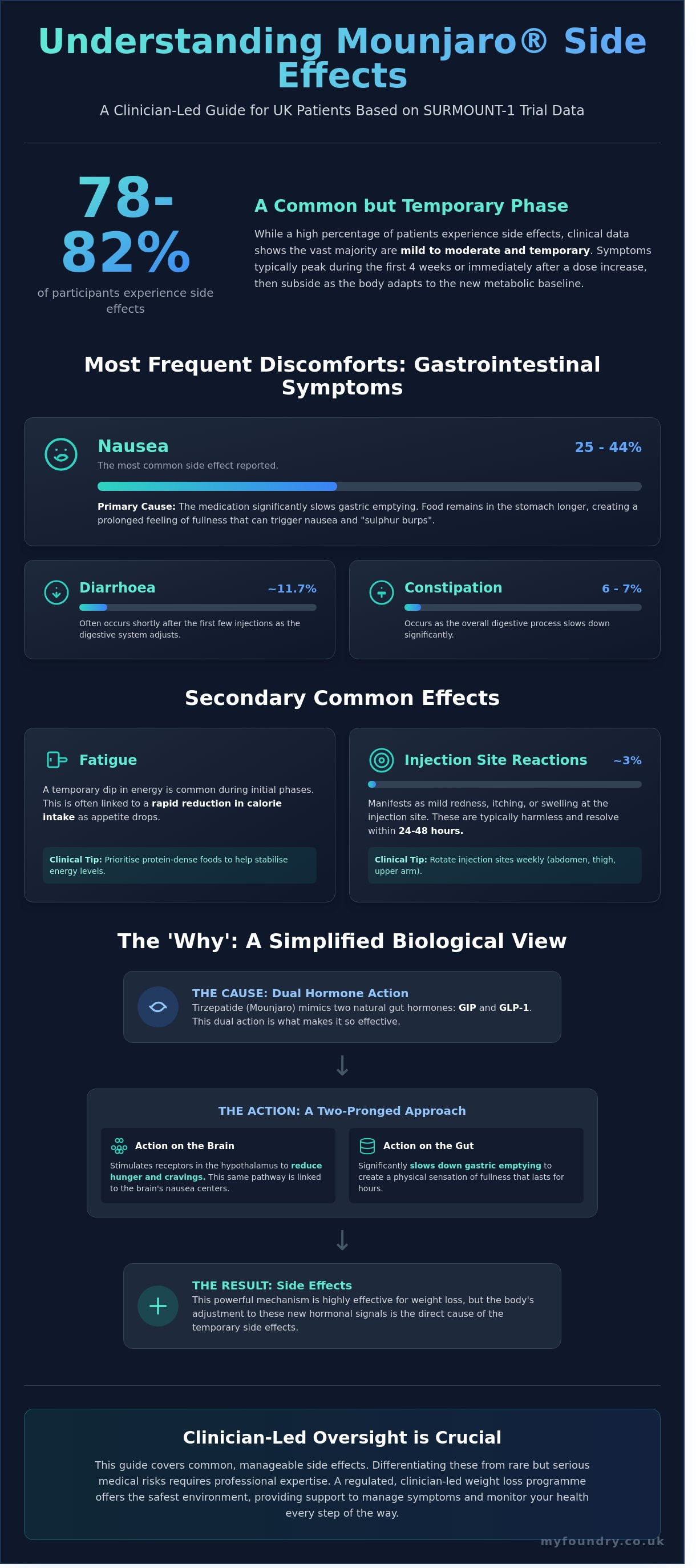
Data from the SURMOUNT clinical trials indicates that side effects are frequent, affecting approximately 78% to 82% of participants at various dosage levels. However, our UK-registered clinicians find that the vast majority of these issues are mild to moderate and temporary. At Foundry Health, we've observed that symptoms typically peak during the first 4 weeks of the programme or immediately following a dose titration. As your body adapts to the hormonal changes, these discomforts usually subside without the need to stop treatment.
Gastrointestinal Symptoms: The Most Frequent Discomforts
The most common issues reported by our patients involve the digestive system. Nausea is the primary complaint, affecting between 25% and 44% of patients in clinical settings. This occurs because the medication significantly slows down gastric emptying. When food remains in the stomach for longer periods, it can lead to feelings of sickness, indigestion, and "sulphur burps," which are caused by the breakdown of food over an extended time.
Bowel habit changes are also a frequent part of the mounjaro common side effects uk profile. Clinical data shows that:
- Diarrhoea: Reported by roughly 11.7% of patients, often occurring shortly after the first few injections.
- Constipation: Affecting about 6% to 7% of users as the digestive process slows down.
- Heartburn: Frequent in patients who consume high-fat meals while on the medication.
Secondary Common Effects: Fatigue and Injection Site Reactions
Beyond the gut, many patients experience a temporary dip in energy levels. You might feel unusually tired during the initial titration phases. This fatigue is often linked to a rapid reduction in calorific intake; as your appetite drops, your body has less immediate fuel to burn. Our clinical team recommends prioritising protein-dense foods to help stabilise your energy throughout the day.
Localised skin reactions are another common occurrence, reported by approximately 3% of patients. These manifest as mild redness, itching, or slight swelling at the injection site. These reactions are typically harmless and resolve within 24 to 48 hours. We advise rotating your injection site between the abdomen, thigh, or upper arm each week to minimise skin sensitivity and ensure consistent absorption of the medication.
The Biological Mechanism: Why Does Tirzepatide Cause Side Effects?
Tirzepatide operates as a dual agonist, meaning it mimics two distinct hormones in the body: glucagon-like peptide-1 (GLP-1) and glucose-dependent insulinotropic polypeptide (GIP). These hormones target receptors in the gut and the brain to regulate blood sugar and appetite. Because these receptors are so widespread, the medication affects multiple systems simultaneously. This broad biological impact is the primary driver behind the mounjaro common side effects uk patients report during their initial treatment phases.
The central nervous system is a key player in this process. By stimulating receptors in the hypothalamus, Mounjaro effectively reduces hunger and suppresses cravings. However, these same pathways are linked to the brain's nausea centres. When the medication first introduces these signals, the brain can overreact, leading to the feelings of queasiness often felt after the first few injections. Individual biology dictates how intense this response is; some patients have more sensitive receptors, while others possess a higher natural tolerance to hormonal shifts.
Delayed Gastric Emptying: The Root of Most Digestive Issues
In the context of Tirzepatide, gastric emptying is the physiological process of food moving from the stomach into the small intestine at a significantly reduced pace. This mechanism is vital for weight loss because it creates a physical sensation of fullness that lasts for hours after a meal. It's the "fuller for longer" effect that makes calorie deficits easier to maintain.
There are physical trade-offs to this slower process. When food sits in the stomach for longer than usual, it can lead to the production of excess gas or cause stomach acid to back up into the oesophagus. This often manifests as bloating or indigestion. According to MedlinePlus on Tirzepatide, these gastrointestinal responses are the most frequent reasons for patient discomfort. If you're finding these symptoms difficult to manage, our expert-led clinical team can help you adjust your diet to ease the transition.
The Titration Timeline: When to Expect Improvements
The UK follows a standardised 4-week dose escalation schedule to help the body adapt safely. Starting at a low 2.5mg dose allows your system to recognise the new hormonal signals without becoming overwhelmed. Clinical data indicates that symptoms are most likely to reappear briefly each time you increase your dose, such as moving from 2.5mg to 5mg.
- The 72-Hour Peak: Side effects often peak within the first three days of a new dose as plasma levels reach their highest point.
- The 8-Week Milestone: Many patients find that their digestive system begins to settle significantly after the second dose increase.
- The 12-Week Adaptation: By the third month, the body typically reaches a state of "metabolic habituation" where the most intrusive symptoms subside.
Most clinical trials show that while 30% to 40% of patients experience some nausea initially, these numbers drop sharply after the first 12 weeks. This adaptation period is a normal part of the journey as your central nervous system and gut biome recalibrate to the medication's presence.
How to Organise Your Lifestyle to Minimise Discomfort
Managing mounjaro common side effects uk patients experience requires a proactive approach to daily routines. While your body adjusts to the medication, small shifts in how you eat, drink, and rest can significantly reduce gastrointestinal distress. Our clinicians recommend viewing these adjustments as a supportive framework for your weight management journey rather than a set of restrictions.
Dietary Strategies for Symptom Relief
The first 48 hours after your weekly injection are often when the medication's impact on your digestive system is most pronounced. During this window, prioritising bland, low-fat foods can prevent the gallbladder and pancreas from being overworked. Opt for simple carbohydrates like dry toast, crackers, or steamed white fish. You should avoid high-sugar treats, fried takeaways, and heavily processed meals, as these are primary triggers for nausea and diarrhoea.
The traditional "three square meals" structure rarely suits those on this treatment. Because Mounjaro slows gastric emptying, large volumes of food sit in the stomach longer, leading to bloating. Adopting a "little and often" approach helps. Aim for five or six small, nutrient-dense snacks throughout the day. Stop eating the moment you feel a sense of "fullness" to prevent the late-onset nausea that often follows overconsumption.
Hydration and Practical Daily Habits
Hydration is a cornerstone of clinical safety. In the UK, we often overlook fluid intake during cooler months, yet central heating and caffeine can lead to mild dehydration. Symptoms like headaches and fatigue are frequently mistaken for mounjaro common side effects uk when they are actually signs of low fluid levels. You should aim for 2 litres of water daily. If you struggle with plain water, peppermint tea or fresh ginger steeped in hot water can soothe the digestive tract and reduce feelings of queasiness.
Your evening routine plays a vital role in preventing acid reflux. We advise finishing your last meal at least 3 hours before you intend to sleep. Lying flat too soon after eating allows stomach acid to rise more easily due to the slowed digestion process. Using an extra pillow to slightly elevate your head can also provide relief. For more detailed clinical guidance on managing specific reactions, you can refer to the official Patient Information Leaflet.
If lifestyle changes aren't enough, UK pharmacies offer various over-the-counter (OTC) options. You can safely use rehydration salts to maintain electrolyte balance if you experience diarrhoea. Antacids containing calcium carbonate or magnesium can help with indigestion. Always speak with your pharmacist or our clinical team before starting new OTC medications to ensure they don't interfere with your prescribed programme.
Differentiating Common Side Effects from Serious Medical Risks
While managing the mounjaro common side effects uk patients often encounter, it's essential to identify when a symptom requires urgent clinical intervention. Most gastrointestinal issues are transient and subside as your body adjusts to the medication. However; rare complications like acute pancreatitis or gallbladder disease require immediate medical attention. Our clinical team monitors these risks through the MHRA Yellow Card scheme, a UK regulatory system that tracked over 20,800 safety reports for GLP-1 and GIP medications by early 2024 to ensure ongoing patient safety.
Pancreatitis and Severe Abdominal Pain
Acute pancreatitis involves severe inflammation of the pancreas that requires hospital treatment. You should distinguish standard indigestion from the specific "wrap-around" pain signature; this is a constant, severe pain starting in the upper abdomen that radiates through to your back. Clinical signs of pancreatitis include persistent, debilitating upper abdominal pain, often accompanied by repeated vomiting, that does not subside with over-the-counter antacids or position changes. If nausea transforms into incapacitating pain, you must visit your local A&E department immediately. Always report any new or worsening abdominal discomfort to your Foundry Health clinician during your scheduled clinical reviews.
Gallstones and Allergic Reactions
Rapid weight loss can change the chemical balance within the gallbladder. When patients lose weight quickly, typically exceeding 1.5kg per week, the risk of developing gallstones increases due to higher cholesterol concentrations in the bile. Symptoms often include sudden, sharpening pain in the upper right abdomen or between the shoulder blades. Our clinicians recommend steady, controlled weight loss to mitigate this risk.
You must also remain vigilant for signs of anaphylaxis, although severe allergic reactions are very rare. Seek emergency care if you experience any of the following:
- Swelling of the lips, tongue, or throat.
- Significant difficulty breathing or swallowing.
- A rapid heartbeat accompanied by severe dizziness or fainting.
For patients with Type 2 diabetes, hypoglycaemia is a specific risk factor to monitor. Watch for blood glucose levels dropping below 3.9 mmol/L, which may manifest as sudden sweating, tremors, or confusion. If you're unsure whether your symptoms fall under mounjaro common side effects uk guidelines or represent something more serious, our expert-led team provides the professional oversight needed to keep your journey safe.
The Importance of Clinician-Led Oversight for Safe Weight Loss
Managing weight shouldn't be a solo effort. While Mounjaro is a highly effective treatment, using it without professional guidance carries significant risks. A medical weight loss UK programme ensures you have a clinical safety net. Our clinicians monitor your biological response to the medication to prevent complications. Choosing "DIY" injections from unregulated sources can lead to incorrect dosing or exposure to counterfeit substances. At Foundry Health, every prescription is dispensed by a GPhC-registered pharmacy, ensuring your medication is genuine and safe.
Personalised Dose Adjustments
We don't believe in a "one size fits all" approach to titration. The standard schedule involves increasing your dose every 4 weeks, but this isn't always the best path for every individual. If you're experiencing mounjaro common side effects uk such as persistent nausea or indigestion, our clinicians may recommend staying on a lower dose, like 2.5mg or 5mg, for an extended period. This clinical flexibility allows your body to acclimatise while you still achieve consistent results.
Regular clinical reviews help manage the anxiety that often comes with starting a new medical treatment. We monitor your progress through a holistic lens. This includes tracking your energy levels, hydration, and nutritional intake, rather than focusing solely on the number on the scales. Data from clinical settings suggests that patients who receive regular support are more likely to sustain their weight loss over the long term. Most patients find that mounjaro common side effects uk are manageable when the dosage is tailored to their specific tolerance levels.
Your Next Steps with Foundry Health
Taking the first step toward better health is a significant decision. Our process is designed to be secure, discreet, and medically robust. You'll start by completing a comprehensive digital consultation that covers your medical history and wellness goals. A UK-registered clinician reviews every application to ensure Mounjaro is the right clinical choice for your body and lifestyle.
Once approved, you'll gain access to our digital platform for ongoing support and easy prescription management. This ensures you're never left to manage symptoms alone. Most patients successfully navigate initial symptoms and go on to reach their target weight safely through our regulated framework. Don't leave your health to chance with unregulated providers. Start your Mounjaro UK journey today and partner with a team committed to your long-term wellness.
Prioritising Your Health During Weight Loss Treatment
Navigating the transition to tirzepatide requires a balance of biological understanding and proactive management. While managing mounjaro common side effects uk is a standard part of the process, these symptoms are often manageable through specific dietary adjustments and consistent hydration. Most patients find that discomfort subsides as the body adapts, provided they have access to professional medical advice.
Safety shouldn't be a secondary concern when embarking on a medical weight loss journey. Foundry Health operates as a CQC Regulated and GPhC Registered Pharmacy, ensuring your care remains in the hands of UK-registered clinicians. We don't believe in "quick fixes." Instead, we offer personalised medical weight loss plans that focus on long-term wellness and expert-led oversight. You'll receive the clinical support needed to differentiate between common symptoms and serious risks, keeping your health at the forefront of every decision.
Start your clinician-led Mounjaro journey with Foundry Health
Taking control of your weight is a significant milestone, and we're here to ensure you feel supported every step of the way.
Frequently Asked Questions
How long do Mounjaro side effects typically last for UK patients?
Mounjaro side effects usually subside within a few days or weeks as your body adjusts to the medication. Clinical data indicates that gastrointestinal symptoms are most prevalent during the first four weeks of starting treatment or increasing a dose. Most UK patients find that nausea or indigestion reduces significantly after the second or third dose of a specific strength. If symptoms persist beyond 28 days, you should consult your clinical team for a review.
Can I drink alcohol while taking Mounjaro if I have side effects?
You should limit or avoid alcohol while experiencing Mounjaro side effects, as it can exacerbate nausea and dehydration. Alcohol also influences blood glucose levels, which may complicate your weight management journey. UK clinical guidelines suggest that even small amounts of alcohol can increase the risk of gastric irritation. If you choose to drink, stick to one small glass of water between drinks to maintain hydration and monitor how your body responds.
Is it normal to feel very tired after my first Mounjaro injection?
It's quite common to feel fatigued after your first Mounjaro injection. Clinical studies for tirzepatide showed that approximately 9% of participants reported tiredness as a side effect. This usually happens because your body is adapting to changes in metabolic processing and a lower caloric intake. Ensure you're consuming enough protein and staying hydrated with at least two litres of water daily to help manage these energy dips during the initial phase.
What should I do if I experience severe vomiting on Mounjaro?
If you experience severe or persistent vomiting, you must stop eating solid foods and focus on sipping clear fluids to prevent dehydration. Contact your UK-registered prescriber or a healthcare professional immediately if you cannot keep liquids down for more than 12 hours. Severe vomiting can lead to complications like acute kidney injury. Our clinicians recommend monitoring your urine output; if it becomes dark or infrequent, seek medical advice through 111 or your GP.
Can Mounjaro side effects cause hair loss?
Mounjaro itself doesn't cause hair loss, but rapid weight loss can trigger a temporary condition called telogen effluvium. This occurs when the body's hair follicles enter a resting phase due to the physiological stress of losing weight quickly. Research suggests this affects roughly 5% to 10% of individuals undergoing significant weight reduction. To support hair health, ensure your diet includes adequate zinc, iron, and at least 60g of protein daily during your treatment.
Will my side effects get worse every time I increase my dose?
Side effects don't always worsen with every dose increase, though many patients notice a temporary return of symptoms during the transition from 2.5mg to 5mg. This is because the concentration of tirzepatide in your system is doubling. Following a clinician-led management plan helps mitigate these issues. Most UK patients find that by the time they reach higher maintenance doses, their body has developed a tolerance, making the mounjaro common side effects uk patients experience much more manageable.
What is the best time of day to take Mounjaro to avoid nausea?
Many patients find that taking their Mounjaro injection in the evening, roughly two to three hours before bed, helps them sleep through the initial peak of nausea. This timing allows the medication to begin its metabolic work while you're resting. If you find your symptoms are worse in the morning, try taking your dose after a small, protein-rich meal. Consistency is key, so choose a time that fits your weekly schedule and stick to it.
Can I take indigestion tablets like Gaviscon with Mounjaro?
You can safely take indigestion remedies like Gaviscon or Rennie to manage heartburn or acid reflux while on Mounjaro. These over-the-counter treatments provide a physical barrier or neutralise stomach acid, which is helpful as Mounjaro slows gastric emptying. However, because Mounjaro affects how quickly your stomach clears, don't take these tablets at the same time as other oral medications. Always inform your clinician about any supplements or antacids you're using to ensure your treatment remains effective.