

Medical Weight Loss vs Supplements: A 2026 UK Clinician's Guide
Editorial TeamNavigating the world of weight management can feel overwhelming. With an endless stream of online advertisements for 'miracle' pills and quick-fix shakes, it's easy to feel concerned about safety, effectiveness, and the risk of wasting money on unregulated products. If you've found yourself questioning where to turn for a solution that is both safe and genuinely effective, you are not alone. This uncertainty often centres on one crucial comparison: the path of medical weight loss vs supplements.
The distinction between a clinically supervised programme and an over-the-counter product is fundamental to your health. This 2026 UK clinician's guide is designed to provide clarity. We will examine the critical differences in safety, efficacy, and regulation, offering an evidence-based perspective to help you make a fully informed choice. Our goal is to empower you with the confidence to move beyond marketing claims and identify a medically sound, regulated pathway to achieving your long-term wellness goals.
Key Takeaways
- Learn to distinguish between clinically supervised programmes and the unregulated UK market of over-the-counter weight loss products.
- Understand the risks associated with supplements, which often lack the rigorous clinical testing required for prescribed medical treatments.
- Compare the key differences in the medical weight loss vs supplements debate, from clinical oversight and safety to long-term efficacy.
- Identify the criteria, such as BMI thresholds, that determine if you are a suitable candidate for a medical weight loss programme in the UK.
Defining the Two Paths: Clinical Programmes vs. Over-the-Counter Products
If you have found managing your weight a challenge, you are not alone. Navigating the world of weight management can be overwhelming, with a vast array of options available. Broadly, these choices fall into two distinct categories: structured medical programmes and widely available over-the-counter supplements. Understanding the fundamental differences between them is the first step towards making a safe and informed decision for your health.
The core distinction in the conversation around medical weight loss vs supplements is not simply about a pill versus an injection; it is about medical governance. One path is overseen by registered clinicians within a regulated healthcare framework, while the other operates outside of it. This difference has profound implications for safety, efficacy, and the level of personalised care you receive.
What Qualifies as a Medical Weight Loss Programme?
A true medical weight loss programme is a comprehensive, expert-led service defined by its clinical rigour. It is not something you can simply buy off a shelf. Key components always include:
- Consultation with a UK-registered clinician: Your journey begins with an assessment by a qualified professional, such as a doctor or prescribing pharmacist, who is registered to practise in the UK.
- A thorough health assessment: The clinician evaluates your medical history and current health status to ensure the treatment is both suitable and safe for you.
- Prescription-only medicines (POMs): If appropriate, treatment involves the use of licensed and clinically-trialled anti-obesity medications, which are dispensed by a GPhC-regulated pharmacy.
- Ongoing clinical support: You receive continuous monitoring and guidance from a dedicated clinical team to manage your progress, adjust treatment, and support your long-term wellness goals.
What Are Weight Loss Supplements?
In contrast, weight loss supplements are products sold directly to consumers without the need for a prescription or a clinical consultation. They are defined by several key characteristics:
- Unregulated ingredients: They typically contain a mix of vitamins, minerals, herbs, or other botanical ingredients in varying concentrations and combinations.
- Direct-to-consumer sales: You can find them in health food stores, supermarkets, and online, available for anyone to purchase.
- Marketing-led claims: They are often promoted with claims of boosting metabolism, burning fat, or suppressing appetite, which may not be supported by robust clinical evidence.
- Not licensed as medicines: Crucially, in the UK, these products are classified as food supplements, not medicines. They do not undergo the rigorous testing for safety and effectiveness that prescribed medications do.
The Unregulated World of Supplements: A Look at the Risks in the UK
For those seeking support with weight management, the supplement market can seem like an accessible and promising first step. Products often use compelling marketing, promising fast results with 'natural' ingredients. However, this appeal masks a significant lack of oversight and potential for harm. Unlike prescribed medical treatments, the UK supplement industry operates under a different set of rules, where proof of effectiveness is not a prerequisite for sale. This fundamental difference is central to the debate of medical weight loss vs supplements.
Regulation: The MHRA vs. Food Standards Agency
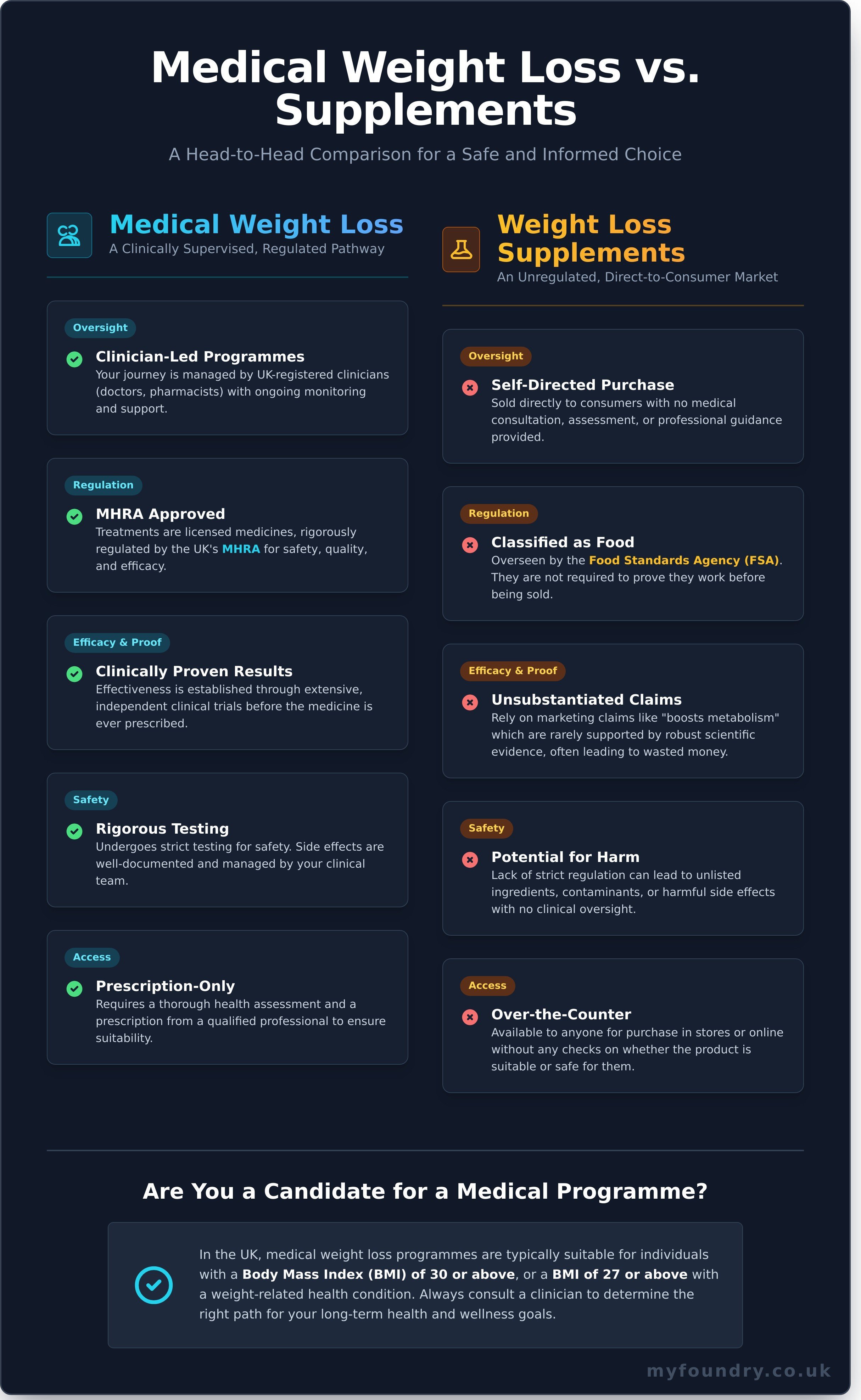
In the UK, medicines are rigorously regulated by the Medicines and Healthcare products Regulatory Agency (MHRA). The MHRA's role is to ensure that any licensed medicine has met stringent standards for safety, quality, and, crucially, efficacy before it can be prescribed to a patient. In stark contrast, weight loss supplements are classified as food products and are overseen by the Food Standards Agency (FSA). This means they do not have to undergo clinical trials to prove they actually work before being sold to the public.
Unproven Claims and Wasted Money
Because supplements do not require clinical proof of efficacy, manufacturers can rely on vague and often unsubstantiated claims. Phrases like "supports metabolism" or "aids fat burning" are common, but they are rarely backed by robust, independent clinical trials. For many individuals, this leads to a frustrating and expensive cycle of trying different products with little to no meaningful results, leading to disappointment and a sense of failure that is misplaced.
Potential for Harmful Side Effects
Beyond the lack of efficacy, there are significant safety concerns. The absence of strict regulation means some supplements may contain unlisted ingredients, contaminants, or substances in unsafe dosages. The risks are so significant that there is a standing UK medicines regulator warning against purchasing weight loss products online without a valid prescription from a clinician. Furthermore, without medical oversight, there is a real danger of negative interactions with other prescribed medications and no professional support to manage potential side effects.
The Medical Programme Pathway: Safety, Efficacy, and Oversight
In the debate of medical weight loss vs supplements, the fundamental difference lies in a structured, evidence-based pathway designed for your individual health. Unlike the unpredictable world of non-prescription products, a medical programme provides a framework of safety, clinical oversight, and proven efficacy. This approach isn't about quick fixes; it's about providing sustainable, medically-supervised care that puts your long-term wellness first. The journey is a partnership between you and a clinical team, ensuring every step is appropriate, monitored, and safe.
The Role of the UK-Registered Clinician
Your journey begins with a comprehensive and confidential consultation with a UK-registered clinician. This initial assessment goes far beyond a simple questionnaire. Your prescriber will evaluate your complete medical history, current health status, BMI, and personal wellness goals to determine if a prescription treatment is a safe and suitable option for you. Following strict NICE guidelines, they ensure that any medication prescribed is clinically appropriate, while also providing ongoing support to monitor your progress and manage any potential side effects. This continuous clinical relationship is the cornerstone of a safe treatment plan. Meet our expert clinical team to learn more about their qualifications.
Clinically-Proven Prescription Treatments
Our programmes utilise licensed, clinically-proven medications, such as GLP-1 receptor agonists. These treatments have undergone years of rigorous clinical trials and are approved by the Medicines and Healthcare products Regulatory Agency (MHRA) for weight management. Their mechanisms are well-understood and their effectiveness is supported by extensive scientific data. This stands in stark contrast to the vast majority of over-the-counter dietary supplements for weight loss, which often lack robust evidence to support their claims. By choosing a medical pathway, you are choosing a treatment validated by science. Explore our guides to understand more about treatments like Wegovy and Mounjaro.
Dispensing Through a Regulated UK Pharmacy
Every prescription is fulfilled by a GPhC (General Pharmaceutical Council) regulated UK pharmacy. This final step in the safety chain is crucial. The GPhC enforces strict standards for dispensing practices, medication storage, and pharmacist training, guaranteeing that the treatment you receive is genuine, correctly dispensed, and safe for use. This regulated supply chain eliminates the risks associated with ordering supplements online, where the source, ingredients, and quality are often unknown and unverified. Learn more about why choosing a regulated UK pharmacy is essential for your safety.
Head-to-Head Comparison: Medical Programmes vs. Supplements
When considering your options for weight management, the distinction between a structured medical programme and over-the-counter supplements is critical. While both promise results, their approach, safety, and effectiveness are fundamentally different. Understanding this direct medical weight loss vs supplements comparison is the first step toward making an informed, health-focused decision.
Comparison Table: Which Path is Right for You?
| Criterion | Medical Weight Loss Programme | Over-the-Counter Supplements |
|---|---|---|
| Safety & Regulation | Overseen by UK-registered clinicians. Uses prescribed, regulated medications from GPhC-registered pharmacies. | Self-managed with no clinical oversight. The supplement industry has limited regulation, leading to inconsistent quality and safety. |
| Efficacy & Evidence | Built on medications and methods proven effective in extensive clinical trials for sustainable weight loss. | Claims are often based on anecdotal evidence or small-scale studies. Efficacy for long-term weight loss is largely unproven. |
| Personalisation | Tailored to your specific health profile and needs following a comprehensive medical consultation. | A one-size-fits-all approach. Dosages and ingredients are not adjusted for your individual medical history. |
| Process & Access | Requires a consultation with a clinician to assess suitability and receive a prescription. | Available for direct purchase online or in-store without any medical assessment. |
| Ongoing Support | Includes continuous support and regular check-ins with a clinical team to monitor progress and safety. | No professional medical support is provided. Users are left to manage their journey alone. |
The table highlights a clear divide: medical weight loss is a comprehensive, clinician-guided health intervention, whereas supplements are a self-directed, unregulated consumer product. For those seeking a safe and effective path, the structure and oversight of a medical programme offer significant advantages.
Analysing the True Cost of Weight Loss
At first glance, the low per-bottle price of supplements can seem appealing compared to the investment in a full medical programme. However, this initial saving is often misleading. The true cost of ineffective supplements accumulates over time-bottle after bottle purchased with minimal or no results, leading to wasted money and profound frustration.
A medical weight loss programme should be viewed as an investment in your long-term health and wellness. The cost is transparent and covers not just the prescribed medication but also the expert clinical consultations, ongoing monitoring, and dedicated support that are essential for achieving sustainable results safely. By choosing a clinically-validated path, you are investing in a process designed for success, not just another short-term fix. See if you're eligible for a clinically-proven weight loss programme.
Making a Safe Choice: Is a Medical Programme Right for You?
Throughout this article, we have explored the significant differences between unregulated, over-the-counter products and clinically-approved treatments. The core argument is clear: genuine safety and efficacy in weight management come from medical oversight. The debate of medical weight loss vs supplements is ultimately a choice between unproven claims and evidence-based care. A structured medical programme puts your health first, ensuring any treatment is prescribed and monitored by a qualified clinician who understands your unique health profile.
Who Should Consider a Medical Programme?
If you have found managing your weight to be a difficult and frustrating journey, you are not alone. A medical weight loss programme is designed for individuals who need a higher level of support. In the UK, you may be eligible if you are:
- An individual with a Body Mass Index (BMI) of 30 or over. This is the clinical threshold for obesity, where medical intervention is often recommended.
- An individual with a BMI of 27 or over who also has a weight-related health condition, such as type 2 diabetes, high blood pressure, or high cholesterol.
- Someone who has tried changing their diet and exercise habits without achieving sustained success. Medical programmes offer an additional, powerful tool to work alongside lifestyle adjustments.
- A person seeking a long-term, sustainable solution. This is not a quick fix but a comprehensive approach to improving your health under the guidance of medical professionals.
It's also worth noting that challenges with weight management can be linked to other underlying conditions. For example, difficulties with impulse control and executive function associated with ADHD can impact eating habits and the ability to consistently follow a health plan. For those who suspect this might be a factor, seeking a comprehensive assessment from a specialist service such as the ADHD Clinic can be a crucial part of a holistic approach to overall wellness.
How to Start Your Journey with foundry
At foundry, we embody a safe, regulated, and supportive approach to weight management. We have streamlined the process to be as simple and discreet as possible. Your journey begins with a confidential online consultation. This is a thorough medical assessment completed by a UK-registered clinician to determine if a prescription treatment is a safe and appropriate option for you. It is a professional review of your health, not a sales pitch.
Our expert-led service is designed to provide you with the clinical guidance and support necessary for lasting success. If you are ready to move beyond the uncertainty of supplements and explore a medically-supported path, we are here to help. Start your confidential consultation today to discover if our programme is the right choice for you.
The Clear Choice: Prioritising Safety and Efficacy in Your Weight Management Journey
As we've explored, the decision between medical weight loss vs supplements is a critical one for your long-term health and safety. The key takeaway is clear: while supplements operate in a largely unregulated UK market with significant risks and unproven claims, medical programmes provide a pathway defined by clinical oversight, proven efficacy, and patient safety. Choosing a medical route is not about a quick fix; it is a commitment to a structured, evidence-based approach to sustainable health management.
If you are ready to move beyond the uncertainty of over-the-counter products, a clinically-led programme is the responsible choice. At Foundry, our programmes are supervised by UK-registered clinicians who prescribe licensed, evidence-based treatments. We are partnered with a GPhC-regulated pharmacy, ensuring every step of your journey meets the highest standards of medical care in the United Kingdom.
Your path to lasting wellness deserves expert guidance and genuine support. Start your confidential consultation today to learn if a medical weight loss programme is the right and safe choice for you.
Frequently Asked Questions
Are weight loss supplements safe to take in the UK?
The safety of non-prescription weight loss supplements can be highly variable. Unlike prescribed medications, which undergo rigorous testing and are regulated by the MHRA, supplements are not held to the same clinical standards. They may contain undisclosed ingredients or lack evidence to support their claims. For a regulated and clinically-supervised approach, prescribed medical treatments are the recommended path, ensuring both safety and efficacy under the guidance of a qualified clinician.
Can you buy medical weight loss injections like Wegovy over the counter?
No, you cannot buy medical weight loss injections like Wegovy (semaglutide) over the counter in the UK. These are Prescription-Only Medicines (POM). They require a thorough clinical consultation with a UK-registered prescriber to assess your medical history and determine if the treatment is safe and appropriate for you. This process ensures patient safety and adherence to strict medical guidelines, which is a key differentiator between regulated medical treatments and supplements.
What is the most effective medical weight loss treatment available?
The most effective treatment is one that is tailored to your individual health profile and needs. Clinically-proven medications such as GLP-1 receptor agonists, which include semaglutide (Wegovy) and liraglutide (Saxenda), are considered highly effective for many people. The best option for you will be determined by a clinician after a comprehensive medical assessment, ensuring the chosen treatment aligns with your health goals and is prescribed safely as part of a structured weight management programme.
How do I know if a weight loss service is legitimate and regulated in the UK?
A legitimate medical weight loss service in the UK must be regulated by the Care Quality Commission (CQC). You should be able to find their registration details on the CQC website. Furthermore, any partner pharmacy dispensing medication must be registered with the General Pharmaceutical Council (GPhC). Always verify these credentials to ensure you are receiving care from a provider that meets the highest standards of safety and clinical governance required by UK law.
Do I have to take weight loss medication forever?
Not necessarily. Prescription weight loss medication is designed to be used as part of a comprehensive, long-term weight management plan that includes lifestyle adjustments. The duration of your treatment will be decided in consultation with your clinician, based on your progress and health objectives. The goal is to help you achieve sustainable results, and your clinical team will provide guidance on when it is appropriate to taper off or stop the medication.
What are the side effects of prescription weight loss medications compared to supplements?
When considering medical weight loss vs supplements, a key difference is how side effects are managed. Prescription medications have well-documented potential side effects, and your clinical team will monitor you and provide support to manage them. In contrast, the side effects of supplements can be unpredictable due to a lack of regulation and testing. With a medical programme, you have professional oversight to ensure your health and safety are always the priority.
Is medical weight loss covered by the NHS?
The NHS does offer specialist weight management services, including access to medications like Wegovy, but eligibility is typically restricted by very strict criteria and can involve long waiting lists. These services are generally reserved for individuals with a very high BMI and related health conditions. For this reason, many people who are eligible for treatment but face access barriers may choose a regulated private medical provider for more timely and accessible care.
How much does a private medical weight loss programme typically cost?
The cost of a private medical weight loss programme in the UK can vary depending on the provider and the specific medication prescribed. A comprehensive monthly plan, which typically includes the medication, ongoing clinical consultations, and support, can range from approximately £150 to £300. It is important to choose a provider that is transparent about all costs involved, ensuring there are no hidden fees for consultations or prescribing services.