

Managing PCOS Weight Gain: A Clinician-Led Guide to Sustainable Loss
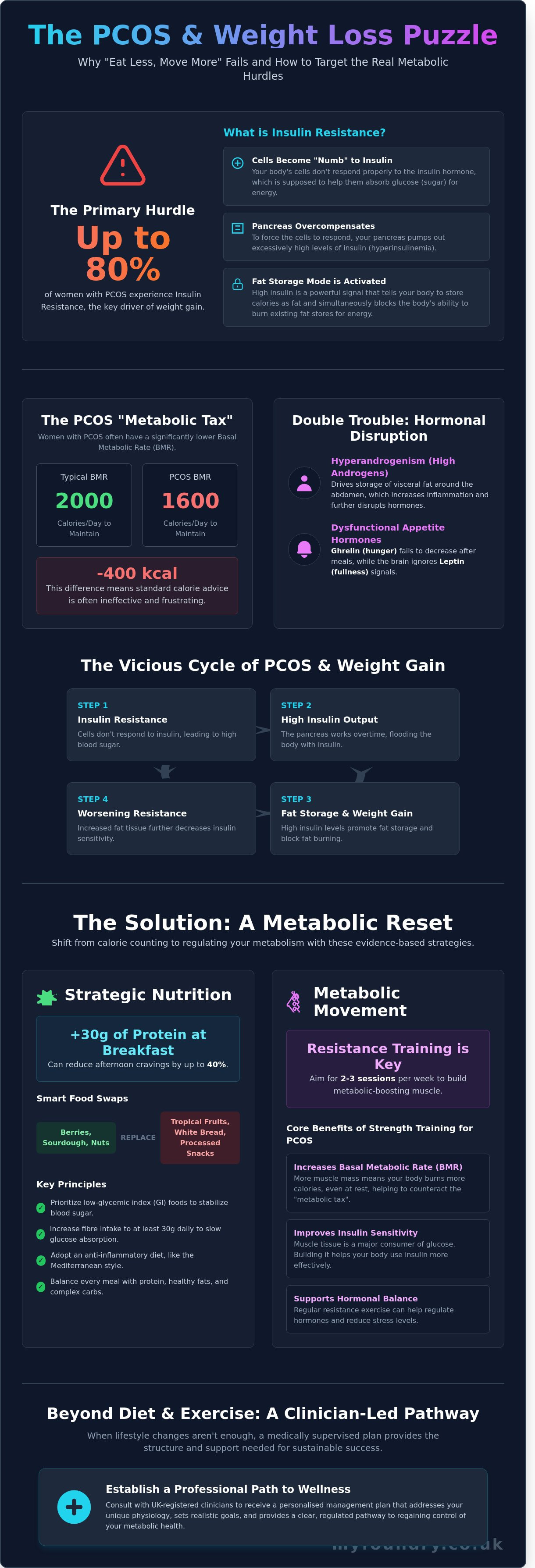
Editorial TeamWhy is it that standard weight loss advice often fails when you're managing PCOS weight gain? If you've ever been told by a GP to simply "eat less and move more" while your scales refuse to budge, you know that the reality of Polycystic Ovary Syndrome is far more complex. Research from the Journal of Clinical Endocrinology and Metabolism indicates that up to 80% of women with this condition experience insulin resistance. This is a biological hurdle that makes fat storage easier and fat loss significantly harder, regardless of your willpower.
We understand how exhausting it feels to battle intense sugar cravings and a metabolic rate that feels permanently stalled. It's frustrating to feel dismissed by practitioners who don't account for your specific hormonal profile. This guide moves beyond generic lifestyle tips to explore the clinical reasons why your body holds onto weight. You'll learn how to address these imbalances through evidence-based strategies and expert-led, medically supervised weight loss plans. We'll outline the exact steps needed to regain control of your metabolic health; providing a clear, regulated pathway to sustainable results designed for your unique physiology.
Key Takeaways
- Understand why PCOS is a biological metabolic condition driven by insulin resistance, making weight management more complex than standard calorie counting.
- Learn how to prioritise low-glycaemic index foods and resistance training to effectively improve insulin sensitivity and stabilise blood sugar levels.
- Discover the clinical evidence for medical interventions when lifestyle changes alone are insufficient for managing PCOS weight gain and metabolic health.
- Establish a professional pathway to wellness by setting realistic health goals and consulting with UK-registered clinicians for a personalised management plan.
Why is Managing PCOS Weight Gain More Challenging than Standard Weight Loss?
For many women, the struggle with weight isn't a matter of willpower or lifestyle choices. It's a biological hurdle. Managing PCOS weight gain is uniquely difficult because it's rooted in a complex metabolic environment rather than simple caloric imbalance. Polycystic ovary syndrome acts as a metabolic disruptor that fundamentally changes how your body processes energy and stores fat.
Clinicians often identify a "metabolic tax" associated with the condition. Research suggests that women with PCOS can have a basal metabolic rate that is significantly lower than those without the syndrome. In some clinical observations, this difference means a woman with PCOS might require 400 fewer calories per day just to maintain her weight compared to a peer of the same height and age. This makes traditional weight loss advice frustratingly ineffective.
Hyperandrogenism, or elevated levels of male hormones, further complicates the picture. These hormones drive the body to store fat viscerally, specifically around the abdomen. This "apple" shape isn't just an aesthetic concern; visceral fat is metabolically active and produces inflammatory markers that can further disrupt hormonal health. The psychological weight of these symptoms is heavy. When the scales don't move despite rigorous effort, it often leads to a cycle of stress and cortisol spikes, which ironically triggers more fat storage.
The Insulin Resistance Connection
Insulin resistance is the primary driver for 70% of PCOS weight issues. When your cells become "numb" to insulin, your pancreas overcompensates by pumping out even more of the hormone. High insulin levels act as a powerful chemical signal that tells your body to store every spare calorie as fat while simultaneously blocking your ability to burn existing fat stores. This creates a relentless cycle where high insulin causes weight gain, and the extra weight makes insulin resistance even worse.
Hormonal Imbalance and Appetite
The "hunger hormones," ghrelin and leptin, are frequently dysfunctional in PCOS patients. Ghrelin, which tells you when to eat, often fails to decrease after a meal; leptin, which should signal fullness, is often ignored by the brain. This means your body is sending urgent biological signals to eat, even when you've had enough calories. We address these physiological barriers in our A Clinician-Led Medical Weight Loss Programme Explained, moving away from "dieting" towards regulated medical weight management that targets these specific hormonal pathways.
How to Lose Weight with PCOS: Evidence-Based Lifestyle Strategies
Successful weight management with PCOS requires a shift from traditional calorie restriction to metabolic regulation. Clinical research indicates that insulin resistance affects up to 70% of women with the condition, which complicates the process of managing PCOS weight gain. According to the U.S. Office on Women's Health, these hormonal imbalances can also impact fertility and long-term cardiovascular health. Addressing the underlying biology is the most effective way to see results.
Stabilising blood sugar is the first priority. When insulin levels remain high, the body stays in a fat-storage mode. You can counter this by prioritising low-glycaemic index (GI) foods and ensuring every meal contains a balance of protein, healthy fats, and complex carbohydrates. Evidence shows that starting the day with a breakfast containing at least 30g of protein can reduce subsequent cravings by up to 40% throughout the afternoon.
PCOS Weight Loss Tips for Nutrition
Focus on increasing daily fibre intake to at least 30g. Fibre slows the absorption of glucose into the bloodstream, preventing the sharp insulin spikes that drive weight gain. Adopting anti-inflammatory eating patterns, such as the Mediterranean diet, helps lower systemic inflammation often found in PCOS patients. Small adjustments make a significant difference. Try these specific swaps:
- Berries over tropical fruits: Replace mango or pineapple with raspberries or strawberries to lower the glycaemic load.
- Sourdough or rye over white bread: These options have a lower GI and provide better satiety.
- Nuts and seeds over processed snacks: These provide essential fatty acids that support hormone production.
Movement and Metabolic Health
Resistance training is a cornerstone of PCOS management. By building lean muscle mass, you increase your basal metabolic rate and improve insulin sensitivity in the muscle tissue itself. Aim for two to three sessions per week. While high-intensity interval training (HIIT) is popular, it can sometimes be counterproductive if your cortisol levels are already elevated. Excessive cortisol triggers the body to hold onto abdominal fat.
Incorporate Non-Exercise Activity Thermogenesis (NEAT) into your daily routine. Simple habits like walking for 15 minutes after meals can lower post-prandial glucose levels by 22%. Managing stress and prioritising seven to nine hours of quality sleep are equally vital. Sleep deprivation can increase insulin resistance by 33% the following day, making it harder to maintain your progress. If you need a structured approach, you might consider a clinical weight management plan tailored to your specific hormonal profile.
Beyond Diet and Exercise: When Lifestyle Changes Aren’t Enough
Traditional weight loss advice often centres on a simple "calories in versus calories out" equation. For women with Polycystic Ovary Syndrome, this approach frequently fails because it ignores the profound impact of hormonal dysregulation. When insulin resistance is severe, your body is biologically primed to store fat rather than burn it. If you've found managing PCOS weight gain an exhausting struggle despite following evidence-based lifestyle strategies, it isn't a lack of willpower; it's a physiological barrier.
Clinical intervention moves the focus from restriction to metabolic repair. For years, Metformin has been prescribed off-label in the UK to help sensitise cells to insulin, though its weight loss effects are often modest, typically resulting in a BMI reduction of only 1.1 units over six months. Modern medicine now offers more potent options that target the specific pathways involved in appetite regulation and glucose metabolism.
The Role of GLP-1 Medications (Wegovy and Mounjaro)
GLP-1 receptor agonists represent a significant shift in how we approach metabolic health. These medications mimic natural incretin hormones to slow gastric emptying and signal fullness to the brain. In clinical trials, such as the SURMOUNT-1 study, participants using tirzepatide (Mounjaro) achieved an average weight reduction of up to 20.9% over 72 weeks. These treatments help level the playing field for those managing PCOS weight gain by correcting the hormonal signals that lead to constant hunger. You can learn more about how this works in our Mounjaro UK: Your Complete Patient Guide.
Medical Supervision vs. DIY Solutions
Your health is too important for "quick fix" tea detoxes or unregulated supplements bought online. These products lack clinical evidence and can interfere with PCOS symptoms. A clinician-led approach is vital because it involves regular monitoring of your metabolic markers and cardiovascular health. Foundry Health relies on UK-registered prescribers to ensure every treatment plan is safe and tailored to your history. We provide a regulated, secure digital process that prioritises your long-term wellness over temporary aesthetic changes. This professional oversight ensures that your journey remains safe and effective at every stage.
Building Your Personalised PCOS Weight Management Plan
Effective strategies for managing PCOS weight gain require a move away from generic calorie counting toward a clinical, evidence-based framework. Your plan should follow four distinct stages to ensure safety and long-term efficacy. This structured approach helps you understand your body's specific requirements rather than following a one-size-fits-all diet.
- Step 1: Consult a clinician. Establish your baseline metabolic health through blood tests. A UK-registered clinician will assess markers such as HbA1c, fasting insulin, and testosterone levels to identify the specific drivers of your weight gain.
- Step 2: Set non-scale victories (NSVs). Focus on measurable health markers. This might include a 20% increase in daily energy levels or the return of a regular 28 to 35-day menstrual cycle.
- Step 3: Implement a sustainable nutritional framework. Focus on low-glycaemic index (GI) foods that stabilise blood sugar. This isn't about restriction; it's about choosing complex carbohydrates and lean proteins that prevent insulin spikes.
- Step 4: Monitor and adjust. Regularly review your progress with a medical professional. Clinical data should guide your adjustments, ensuring that lifestyle or medicinal interventions remain effective as your body chemistry changes.
Tracking More Than Just the Scales
While BMI is a standard metric, it's often an incomplete tool for those with PCOS. Research indicates that the waist-to-hip ratio is a far more accurate predictor of cardiovascular and metabolic risk. Aim for a ratio below 0.85 to indicate improved internal health. You should also track improvements in skin clarity, hair thickness, and sleep quality. Using a secure digital health platform to log this clinical data provides a clearer picture of your progress than a traditional scale ever could.
Overcoming the PCOS Weight Loss Plateau
Weight loss stalls are common and usually stem from biological factors rather than a lack of willpower. Chronic inflammation or undiagnosed obstructive sleep apnoea, which affects up to 50% of women with PCOS and obesity, can significantly hinder your metabolic rate. Plateaus are a biological signal, not a failure. If your progress remains static for more than four weeks, it's time for a clinical review. A prescriber can then determine if your current treatment dosages or types require adjustment to better support your unique physiology.
If you're ready to move beyond "quick fixes" and start a regulated medical programme, you can start your clinical consultation with our UK-registered team today.
A Clinician-Led Pathway to Managing PCOS Weight Gain
Foundry Health provides a structured medical framework for managing PCOS weight gain. It isn't about generic lifestyle advice or restrictive dieting. Our service connects patients with UK-registered clinicians who understand the metabolic complexities of Polycystic Ovary Syndrome. Every step is handled through a discreet, digital-first platform. This ensures you receive expert care without the need for face-to-face appointments that can often feel stressful or time-consuming. By moving the consultation process online, we remove the barriers that frequently prevent women from seeking the medical support they need.
Safety is the foundation of our approach. Every prescription is dispensed by a GPhC-regulated pharmacy, ensuring that the medications you receive meet the highest UK standards. We work closely with regulated healthcare partners like ABSM Healthcare Ltd to maintain a secure chain of care. This clinical rigour ensures your journey is safe, effective, and fully supervised by medical professionals.
How Foundry Health Supports PCOS Patients
Our clinicians conduct a thorough clinical review of every consultation, usually within 24 hours, to confirm that any prescribed treatment is safe for your specific health profile. Managing PCOS weight gain requires an understanding of insulin resistance and hormonal health, which is why our team focuses on metabolic outcomes rather than just the number on the scale. You can Meet Our UK-Registered Clinicians to learn more about the experts who oversee our weight management programmes.
- Expert clinical oversight from UK-registered prescribers.
- Secure, encrypted data handling for total patient privacy.
- Prescriptions delivered discreetly to your home or office.
Starting Your Journey to Better Wellness
Sustainable change requires a shift away from the "quick fix" mentality that dominates the weight loss industry. We focus on long-term health outcomes. By starting a secure online consultation today, you're choosing a path backed by medical science and regulatory standards from the CQC and MHRA. It is a better way to wellness that prioritises your biological needs.
The first step is a comprehensive assessment. This allows our clinical team to understand your medical history and current symptoms. If you're ready to move beyond standard dieting and address the biological drivers of your weight, our team is here to help. Start your online consultation to begin your clinical weight management programme.
PCOS is a complex endocrine disorder, not a lack of willpower. It's a medical condition that deserves a medical solution.
Take Control of Your Health Journey
Managing PCOS weight gain isn't a matter of willpower; it's a complex metabolic challenge. Clinical data indicates that up to 70% of women with PCOS experience insulin resistance, which directly impacts how the body stores and processes energy. While evidence-based lifestyle adjustments are vital, research confirms that losing just 5% of your total body weight can significantly improve hormonal balance and insulin sensitivity. When traditional methods alone don't provide the results you need, a clinician-led approach offers a safe, regulated alternative to standard weight loss programmes.
Foundry Health provides a structured pathway designed specifically for your unique hormonal profile. Our CQC Regulated Service ensures you receive care from UK-Registered Clinicians, supported by our GPhC Regulated Pharmacy. You don't have to navigate these metabolic hurdles alone. Our team is here to provide the medical expertise and professional support required for sustainable, long-term progress.
Start your clinical consultation for medical weight loss and take the first step toward a healthier, more balanced future. You've got the strength to manage your health, and we've got the expertise to help you succeed.
Frequently Asked Questions
Can PCOS weight gain be reversed?
Yes, PCOS weight gain is reversible through a structured clinical approach that addresses the underlying hormonal imbalances. Clinical studies show that losing 5% of your total body weight can restore regular ovulation and improve insulin sensitivity. Our UK-registered clinicians focus on sustainable strategies rather than quick fixes to ensure long-term weight management and metabolic health.
Why is it so hard to lose belly fat with PCOS?
High levels of insulin and androgens cause the body to store fat preferentially in the abdominal area. Approximately 70% of women with PCOS experience insulin resistance, which signals the body to store energy as fat rather than burning it. This hormonal environment makes managing PCOS weight gain more challenging than standard weight loss, requiring targeted medical intervention.
Is Wegovy or Mounjaro better for PCOS weight loss?
Both Wegovy and Mounjaro are effective medical options, but clinical trials like SURMOUNT-1 show Mounjaro may lead to higher weight loss percentages. Wegovy is a GLP-1 receptor agonist, while Mounjaro targets two different hormones. Your clinician will review your medical history to determine which regulated treatment suits your specific metabolic profile and health goals.
Does losing weight help with other PCOS symptoms like acne or hair growth?
Reducing body weight lowers the level of circulating androgens, which directly improves skin clarity and reduces hirsutism. A 10% weight loss can lead to a 40% reduction in free testosterone levels according to endocrine research. This clinical improvement helps manage symptoms like cystic acne and excess hair growth naturally by restoring your body's hormonal balance.
How many calories should a woman with PCOS eat to lose weight?
Most women with PCOS find success consuming between 1,200 and 1,500 calories daily, though individual needs vary based on activity levels. Studies suggest the basal metabolic rate in women with PCOS can be 400 calories lower per day than those without the condition. We recommend a protein-rich diet to maintain muscle mass while managing PCOS weight gain effectively.
Can I get a weight loss prescription on the NHS for PCOS?
You can access weight loss prescriptions through the NHS if you meet specific NICE criteria, such as a BMI over 35 or over 30 with a related condition. However, wait times for specialist weight management services often exceed 18 months in many UK trusts. Our private, CQC-regulated service offers a faster clinical review with UK-registered prescribers for those who qualify.
What is the best exercise for PCOS weight loss?
Resistance training and high-intensity interval training are the most effective for improving insulin sensitivity in PCOS patients. Research suggests that three sessions of strength training per week can reduce insulin resistance by 15% within 12 weeks. Building lean muscle mass helps your body burn more energy at rest, making long-term weight management more achievable and sustainable.
How long does it take to see results when managing PCOS weight gain?
Most women see measurable changes in their weight and energy levels within 4 to 12 weeks of starting a clinical plan. A healthy rate of loss is generally 0.5kg to 1kg per week. Consistent progress over six months is more important than rapid drops, as it allows your hormones to stabilise and prevents the weight from returning.