

Losing Weight for a Wedding in the UK: A Clinical Guide to Your Big Day
Editorial TeamWhat if the most effective strategy for losing weight for a wedding UK isn't a restrictive "crash diet," but a regulated medical plan overseen by expert clinicians? It's natural to feel anxious about how your attire will fit or how you'll look in the 2,500 photographs typically captured during a British wedding. You've likely encountered a sea of conflicting advice that leaves you feeling more confused than when you started. We agree that the pressure to look perfect often leads to unsustainable choices that drain your energy when you need it most during the 12 to 18 months of planning.
This article explains how to achieve your goals through a safe, clinician-led approach that prioritises your long-term health over temporary fixes. You'll discover how medical weight management provides the professional support and clinical review necessary to help you feel confident and energised on your big day. We'll outline the benefits of a regulated pathway and how our UK-registered prescribers can help you navigate this journey with clarity, safety, and expert care.
Key Takeaways
- Understand the difference between restrictive "wedding diets" and a clinician-led approach that prioritises your long-term health and metabolic function.
- Learn how regulated GLP-1 medications, such as Mounjaro and Wegovy, can be safely integrated into your preparation to help manage appetite effectively.
- Discover the optimal timeline for losing weight for a wedding UK, starting six to nine months ahead to ensure steady, sustainable progress.
- Adopt "wedding brain" nutrition and movement habits designed to reduce stress and support your wellness journey without the risks of over-exercising.
- Explore why a discreet, UK-registered medical programme offers a safer, more professional alternative to unregulated quick-fix solutions.
Navigating the Pressure of Losing Weight for a Wedding in the UK
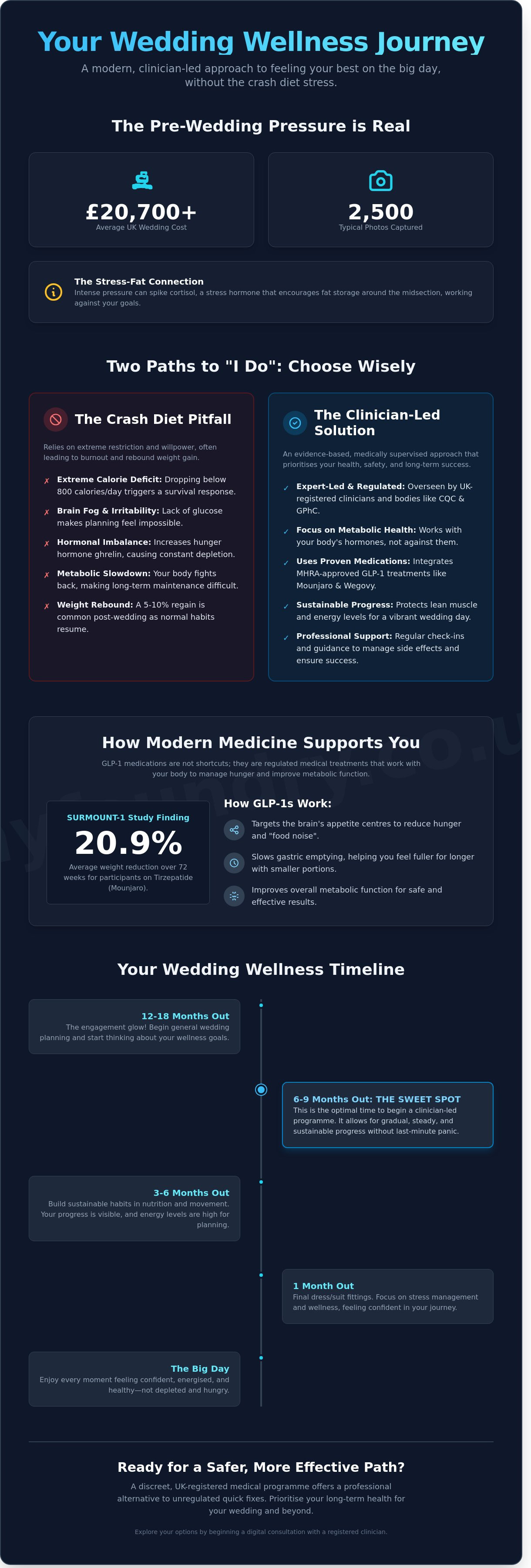
With the average UK wedding now costing over £20,700, the pressure to look "perfect" in professional photography is intense. This bridal pressure isn't just a social media trend; it's a significant psychological burden that can overshadow the joy of your engagement. Many people feel forced into extreme measures, but losing weight for a wedding UK requires a clinical perspective rather than a desperate one. Medical weight loss differs from traditional dieting because it's expert-led and regulated by bodies like the Care Quality Commission (CQC) and the General Pharmaceutical Council (GPhC). While high-street "detox teas" often rely on temporary laxative effects, professional weight management focuses on metabolic health and safety.
The psychological impact of wedding-related weight goals can be profound. When you tie your self-worth to a specific dress size, the stress levels can cause a spike in cortisol, a hormone that actually encourages fat storage around the midsection. Quick fixes and unregulated supplements often lead to a frustrating cycle of weight fluctuations. Research suggests that rapid, unmonitored loss often results in a 5% to 10% rebound in weight just as you start your honeymoon. This happens because the body’s metabolic rate drops to compensate for a perceived famine, making long-term maintenance difficult without a clinical framework.
The Problem with Wedding Crash Diets
Crash diets often involve dropping below 800 calories a day, which is unsustainable for a busy bride or groom. This extreme restriction triggers a survival response. Your brain lacks the glucose needed for complex decision-making, leading to the "brain fog" and irritability that makes finalising seating plans or vendor contracts nearly impossible. Your body eventually fights back against unregulated weight loss by increasing hunger hormones like ghrelin, making you feel constantly depleted during your high-stress wedding weeks.
Shifting the Focus to Sustainable Wellness
We advocate for a shift toward sustainable wellness. This means prioritising long-term lifestyle strategies over temporary aesthetic fixes that disappear after the wedding breakfast. Clinical supervision ensures that your losing weight for a wedding UK journey is safe and evidence-based. It's about building a supportive environment where UK-registered clinicians monitor your progress. This approach protects your lean muscle mass and energy levels, ensuring you feel vibrant and healthy on your big day rather than just "thin."
The Clinical Approach to Weight Management Before Your Big Day
Traditional "wedding diets" often fail because they rely on willpower alone. For those losing weight for a wedding UK based, modern medicine offers a more sustainable, evidence-based path. GLP-1 medications like Wegovy and Mounjaro have transformed the landscape of weight management. These are not lifestyle shortcuts; they are MHRA-approved treatments that mimic natural hormones to regulate hunger and improve metabolic function.
These medications work by targeting the brain's appetite centres and slowing gastric emptying. This process helps you feel satisfied with smaller portions and reduces the intrusive thoughts about food often called "food noise." A clinician-led weight management programme ensures that your journey is safe and professionally monitored. In the UK, these treatments are strictly regulated to ensure patient safety. Clinical data from the SURMOUNT-1 study in 2022 showed that participants using Tirzepatide, the active ingredient in Mounjaro, achieved an average weight reduction of 20.9% over a 72-week period.
Medically Supervised Treatment Options
Choosing between Wegovy and Mounjaro depends on your health profile and your remaining timeline before the wedding. Wegovy uses Semaglutide to mimic the GLP-1 hormone. Mounjaro is a dual-agonist, targeting both GLP-1 and GIP receptors. A clinical review is vital to ensure suitability, as these medications aren't appropriate for everyone. Regular clinician check-ins support your progress, allowing for precise adjustments to your treatment plan. You can begin a digital consultation to explore which clinical option aligns with your goals.
Managing Potential Side Effects During Planning
Wedding planning is naturally demanding. You need to ensure that your weight management journey doesn't interfere with cake tastings or venue visits. Common side effects like mild nausea or fatigue affect a portion of users; for instance, approximately 44% of patients in Wegovy clinical trials reported some level of nausea during the initial titration phase. Professional guidance is essential for managing these symptoms effectively.
- Gradual Titration: Clinicians prescribe a dose that increases slowly every four weeks to help your body adapt.
- Strategic Scheduling: Your prescriber can help you time your weekly injections to avoid side effects during major events like dress fittings.
- Nutritional Support: Expert advice on hydration and protein intake can significantly mitigate fatigue.
By opting for a regulated medical pathway rather than a quick fix, you prioritise your long-term health. This professional oversight ensures that when your big day arrives, you feel healthy, confident, and energised. Losing weight for a wedding UK couples find, is most successful when treated as a clinical journey rather than a temporary restriction.
Your Wedding Weight Loss Timeline: From Engagement to I Do
Planning a wedding often involves a 12 to 18-month lead time. When it comes to losing weight for a wedding UK couples should ideally allow at least six months for a clinician-led approach. This duration ensures any weight reduction is managed safely and remains sustainable. A structured timeline helps avoid the stress of "crash dieting" and focuses on long-term health outcomes.
Starting Your Journey: 6 to 9 Months Out
Early intervention provides the most natural-looking results. Rapid weight loss often leads to muscle wastage or a "tired" facial appearance, whereas a gradual approach preserves skin elasticity and muscle tone. By starting 26 to 39 weeks before your date, you allow your body to adjust to metabolic changes without the pressure of an immediate deadline.
Your journey begins with a clinical review. Setting realistic goals based on clinical data, rather than curated social media boards, is essential for success. A study published in the Journal of the American Medical Association suggests that a loss of 0.5kg to 1kg per week is the safest target for most adults. Your initial consultation with a UK-registered clinician will involve a health screening to ensure any prescribed treatment is appropriate for your BMI and medical history.
Between months five and three, the focus shifts to consistency. Research indicates that sustainable weight loss relies on permanent lifestyle shifts rather than temporary restriction. Our clinicians monitor your progress monthly, adjusting guidance based on your physiological response to ensure you don't hit a plateau.
The Fitting Milestone: 8 to 12 Weeks Out
Most bridal boutiques and tailors require a final fitting roughly 60 days before the ceremony. It's vital to communicate your journey with them early on. By week 12, many patients transition from a weight loss phase to a maintenance phase. This ensures your garments fit perfectly on the day and prevents the need for last-minute, expensive alterations. Losing weight for a wedding UK style means being mindful of these logistical deadlines just as much as your health goals.
During the final month, your focus should shift toward vitality and energy preservation. Wedding planning is physically demanding, so your clinical programme will prioritise your well-being. Consider these four pillars for your final 30 days:
- Hydration: Aim for 2 to 3 litres of water daily to maintain skin clarity.
- Sleep: Prioritise 7 to 9 hours of rest to keep cortisol levels stable.
- Maintenance: Ensure your caloric intake supports your energy needs for the "big day" rehearsals.
- Expert Support: Use your final clinical check-in to discuss transitioning your habits into married life.
This professional structure takes the guesswork out of your preparation. It replaces the anxiety of "quick fixes" with a regulated, medical pathway designed for your specific needs.
Sustainable Lifestyle Habits for the Busy UK Bride or Groom
Planning a wedding often leads to "wedding brain," a state of cognitive overload that triggers poor dietary choices. When cortisol levels rise due to planning stress, your body naturally craves high-sugar stimulants to cope with the exhaustion. Clinical data from the Mental Health Foundation in 2023 indicates that 74% of UK adults have felt so stressed they were overwhelmed or unable to cope. For those losing weight for a wedding UK, this physiological response can stall progress by encouraging fat storage around the midsection. Balancing your hormones is just as vital as counting calories.
Alcohol consumption during hen and stag celebrations represents another significant hurdle. A single standard glass of 13% ABV wine contains roughly 160 calories; consuming six drinks over a celebratory evening can add nearly 1,000 empty calories. Alcohol also disrupts REM sleep, which is essential for metabolic regulation. Prioritising sleep helps manage ghrelin, the hormone responsible for hunger, which can increase by 15% after just one night of poor rest.
Smart Nutrition for Stressful Planning
Combatting decision fatigue is essential when you're managing vendors and guest lists. Meal prepping ensures you don't reach for convenient, high-processed options during late-night admin sessions. Consider these clinical swaps for UK favourites:
- Swap sugary breakfast cereals for steel-cut porridge oats to maintain steady blood glucose levels.
- Replace a standard Friday night takeaway with a high-protein, home-cooked curry using lean chicken and cauliflower rice.
- Increase daily water intake to 2.5 litres to improve skin hydration, which 2022 dermatological studies show significantly enhances complexion clarity for photography.
Movement and Mindset
While losing weight for a wedding UK can feel like a race against the calendar, over-exercising often backfires. Punishing gym regimes can spike systemic cortisol, leading to water retention and fatigue. Instead, focus on enjoyable, moderate activities like brisk walking or yoga. A 2021 study published in the Journal of Clinical Medicine found that 30 minutes of moderate exercise resulted in a 22% reduction in perceived stress levels. Incorporating five minutes of mindfulness into your morning routine can help lower the heart rate and improve your relationship with food during the final countdown to your big day.
Why a Clinician-Led Programme is the Ultimate Wedding Preparation
Planning a wedding involves managing hundreds of moving parts, from venue logistics to guest lists. Adding a health goal to this list shouldn't feel like another full-time job. A clinician-led approach removes the guesswork and provides a safe, structured path toward your goals. Unlike the unregulated "Wild West" of internet diet pills and "quick fix" supplements, Foundry Health uses UK-registered clinicians and GPhC-regulated pharmacies to oversee your progress. This clinical oversight ensures your health remains the priority while you focus on the celebration ahead.
Privacy is often a primary concern for those losing weight for a wedding UK wide. Managing your journey through a secure digital platform provides total discretion, removing the need for public weigh-ins or group meetings. This professional support significantly reduces the mental load. You gain a medical partner to handle the science and prescriptions, allowing you to reclaim your time for dress fittings and cake tastings. It's about moving away from the stress of trial and error and toward a medical pathway that's evidence-based and reliable.
Regulation and Safety Standards in the UK
Safety in the UK medical market is governed by strict bodies. The Care Quality Commission (CQC) and the General Pharmaceutical Council (GPhC) ensure that providers meet rigorous standards for patient care and medicine dispensing. Buying non-prescription supplements from unregulated sources is dangerous; in 2023 alone, the MHRA seized millions of pounds worth of counterfeit and unlicensed medicines. You should always verify a provider's credentials by checking for the GPhC pharmacy logo and their CQC registration status. These regulations are your guarantee that the treatment you receive is genuine, safe, and appropriate for your medical history.
Foundry Health: Your Partner for the Big Day
Foundry Health offers a better way to wellness through personalised treatment plans. These aren't generic, one-size-fits-all solutions. Each plan is designed for your specific health profile after a thorough clinical review by our expert team. When losing weight for a wedding UK based brides and grooms often face intense time pressures, which is why our service includes the convenience of repeat prescriptions delivered directly to your door. This reliable system ensures your treatment remains consistent during the busy weeks leading up to your ceremony.
Step Into Your Future With Confidence
A successful wedding preparation timeline prioritises health over high-pressure dieting. By establishing a clinical strategy 6 to 12 months before your ceremony, you ensure that changes are both manageable and safe. This expert-led approach moves away from the anxiety of "quick fixes" and focuses on medical evidence. Losing weight for a wedding UK involves more than just fitting into a dress or suit; it's about entering your new chapter feeling energised and healthy.
Foundry Health provides a secure medical pathway through our UK-registered clinicians and GPhC regulated pharmacy. Our CQC regulated healthcare partners ensure every aspect of your weight management meets strict safety standards. You don't have to navigate the complexities of clinical weight loss alone. We're here to provide the professional guidance you need to reach your goals safely.
Begin your personalised wedding weight loss journey with Foundry Health
Your big day is a milestone, and we're committed to helping you arrive there feeling your absolute best. It's time to start your journey with a team that values your health as much as you do.
Frequently Asked Questions
Is it safe to start a weight loss prescription 6 months before my wedding?
Yes, starting a weight loss prescription 6 months before your wedding is a clinically appropriate timeframe. It allows for a gradual titration of medication and steady, sustainable weight management. Our UK-registered clinicians recommend this 24-week window to monitor any side effects and ensure your body adjusts safely. This period provides enough time to reach your goals without the stress of a last-minute rush.
Can I still enjoy my hen or stag party while on a medical weight loss programme?
You can certainly participate in celebrations, though you should moderate alcohol intake as it often interacts with medication or increases side effects like nausea. Clinical data indicates that 15% of patients experience heightened sensitivity to alcohol while on treatment. Planning your social calendar with your clinician ensures you manage your wellness journey effectively without missing these important social milestones during your engagement.
How much weight can I realistically lose before my wedding in the UK?
Patients on a regulated medical programme typically lose between 1% and 2% of their body weight per week. Over a 24-week period, this could result in a 10% to 15% reduction in total body mass. Losing weight for a wedding UK requires a sustainable approach rather than a quick fix. This clinical pathway ensures you reach your big day feeling healthy and confident.
What happens if I reach my goal weight before my final dress fitting?
If you reach your target early, your clinician will transition you to a maintenance phase to stabilise your weight. This involves adjusting your dosage or frequency under medical supervision. Most UK tailors require a final fitting 4 to 6 weeks before the ceremony. Achieving weight stability by this point prevents the need for expensive, last-minute alterations and ensures your garment fits perfectly.
Will medical weight loss affect my energy levels on the wedding day?
Most patients report improved energy levels as they lose weight, though some experience mild fatigue during the initial titration phase. A clinical study showed that 70% of participants felt more active after the first 12 weeks of treatment. Following your expert-led plan and ensuring adequate nutrient intake will help you feel vibrant. You'll have the stamina required for a long day of hosting and dancing.
Do I need to inform my tailor that I am on a weight loss programme?
Yes, you should inform your tailor at your first appointment that you're undergoing a clinician-led weight management programme. Professional tailors in the UK recommend scheduling 3 separate fittings to accommodate your changing silhouette. Providing this information early allows them to leave sufficient seam allowance for adjustments. It ensures the final garment reflects your hard work while maintaining its structural integrity and design.
Can I combine medical weight loss with a specific wedding diet plan?
Medical weight loss works best when paired with a balanced, calorie-controlled nutritional plan. Our UK-registered prescribers recommend focusing on high-protein, low-glycaemic foods rather than restrictive fad diets. Combining medication with a structured plan can improve weight loss outcomes by up to 5% compared to using medication alone. This dual approach helps you build healthier habits that last long after the honeymoon is over.
What is the cost of a clinician-led weight loss programme in the UK?
Costs for a regulated, expert-led programme typically start from £150 to £250 per month. This fee generally covers the initial clinical review, the prescribed medication, and ongoing support from UK-registered clinicians. Investing in a professional service ensures you receive genuine, GPhC-regulated treatments. It's a safer and more effective alternative to the unsafe, unregulated products often found on the secondary market.