

How to Read a Blood Pressure Chart: A UK Guide to Your Numbers
Editorial TeamSeeing two numbers on a blood pressure monitor can be confusing, and it’s natural to feel concerned about what they mean for your health. Whether you are monitoring your readings at home or have recently received a result from a clinician, understanding where your numbers fall on a blood pressure chart is a critical first step in managing your cardiovascular wellness. Without clear guidance, it’s easy to feel unsure about the accuracy of your reading or what you should do next with this important information.
This UK guide is designed to provide clarity and confidence. We will provide a simple, clinician-reviewed chart to help you identify which category your blood pressure falls into and explain exactly what your systolic and diastolic numbers signify for your long-term health. You will learn how to measure your blood pressure correctly and gain the knowledge to understand when it is necessary to consult with a healthcare professional about your results.
Key Takeaways
- Your blood pressure reading consists of two numbers that provide a critical snapshot of your cardiovascular health.
- Use the official UK blood pressure chart to understand which category your reading falls into and what it means for your health.
- Accurate home monitoring gives a fuller picture of your blood pressure, but correct technique is vital for reliable results.
- A single high reading is not a diagnosis, but it is a prompt to monitor your numbers and know when to consult a clinician.
Understanding Your Blood Pressure Reading: What the Numbers Mean
Monitoring your health often begins with understanding key medical indicators. One of the most important is your blood pressure, a critical measure of your cardiovascular wellness. When you receive a reading, either from a clinician or a home device, it is presented as two numbers, one over the other, and measured in millimetres of mercury (mmHg). For instance, you might see a reading like 120/80 mmHg. While these figures might seem abstract, they provide a detailed snapshot of the force of blood pushing against the walls of your arteries. Understanding what each number represents is the first step toward correctly interpreting a blood pressure chart and taking control of your health.
Systolic Pressure: The Top Number
The first, or top, number in your reading is the systolic pressure. This figure represents the maximum pressure exerted on your artery walls each time your heart beats, or contracts, to pump blood out to the rest of your body. It is the highest level your blood pressure reaches during this cycle and provides a direct measure of the force your heart is using to circulate blood. A higher systolic number can indicate that your heart is working harder than it should be to push blood through your arteries.
Diastolic Pressure: The Bottom Number
The second, or bottom, number is the diastolic pressure. This measures the pressure in your arteries when your heart is at rest, in the phase between beats. As the lowest point your blood pressure reaches, it reflects the amount of resistance your blood encounters as it flows through your vessels. Elevated diastolic pressure can suggest that your blood vessels have lost some of their elasticity or have narrowed, making it more difficult for blood to flow freely through the body even when the heart is relaxed.
Both systolic and diastolic pressures are crucial for a complete assessment of your health. Neither number is more important than the other; they work together to provide a comprehensive picture of your circulatory system's function. A clinician uses both values to determine your overall blood pressure category and assess your risk for conditions like hypertension. By understanding these two components, you can more effectively track your measurements on a blood pressure chart and engage in meaningful discussions with your healthcare provider about your long-term wellness.
The Official UK Blood pressure Chart: Finding Your Category
Once you have your systolic and diastolic readings, the next step is to understand what they mean for your health. A blood pressure chart is a crucial medical tool that classifies your reading into a specific category, helping you and your clinician assess your cardiovascular risk. The categories are based on established guidelines followed by medical professionals across the UK.
Using this blood pressure chart allows you to quickly determine if your blood pressure is within a healthy range or if it indicates a need for lifestyle changes or a medical review. Below, we break down each category to help you interpret your results accurately.
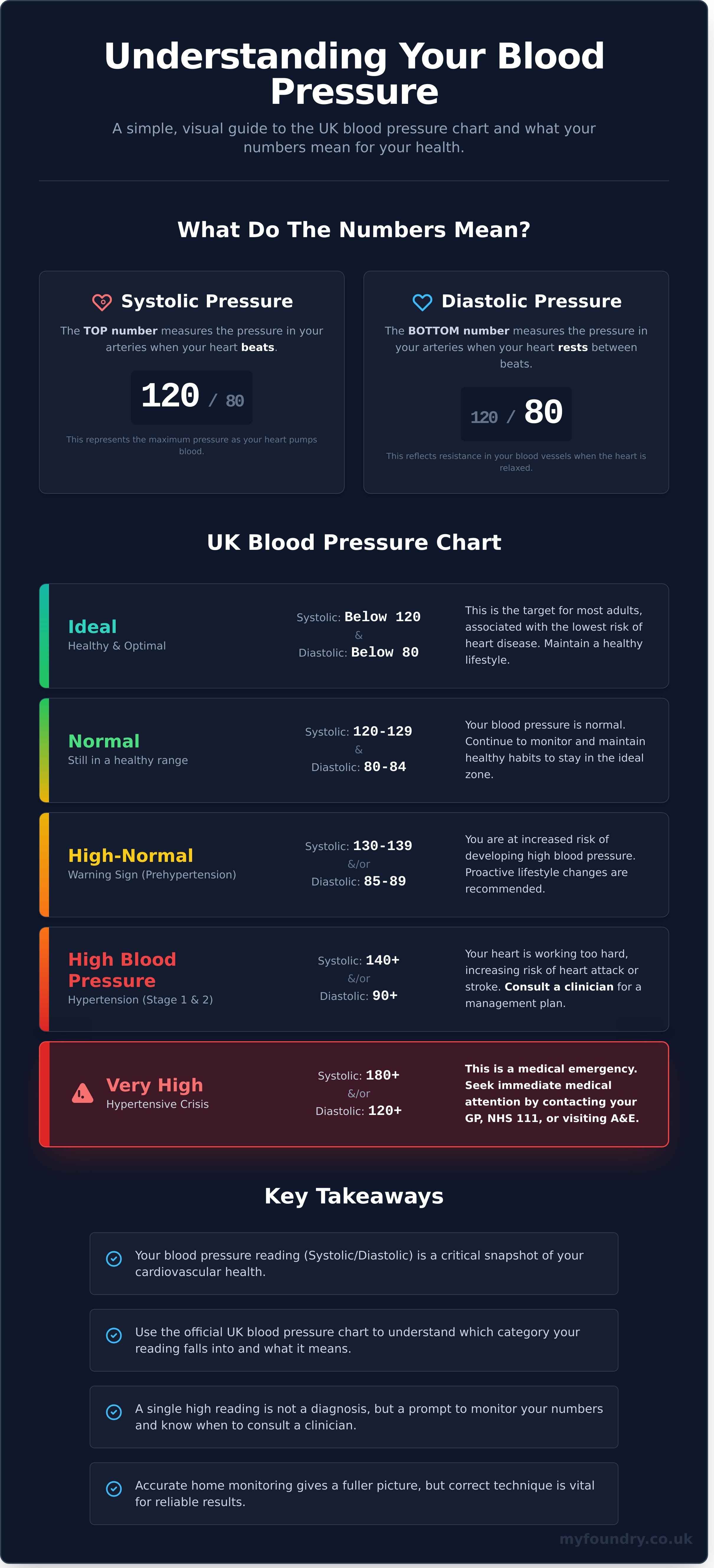
[A clear, easy-to-read blood pressure chart graphic will be placed here, showing the different categories and their corresponding mmHg ranges.]
Ideal to Normal Blood Pressure (Below 120/80 mmHg to 129/84 mmHg)
A reading within this range is considered optimal and indicates a healthy cardiovascular system. This is the target for most adults, as it is associated with the lowest risk of heart disease and stroke. If your readings consistently fall here, it’s a positive sign that your current lifestyle habits are supporting your long-term wellness. The key is to maintain this level through a balanced diet, regular physical activity, and stress management.
High-Normal Blood Pressure (130/85 mmHg to 139/89 mmHg)
This category, sometimes referred to as prehypertension, serves as an important warning sign. While not classified as high blood pressure, it indicates you are at an increased risk of developing it in the future. At this stage, a clinician will likely recommend proactive lifestyle modifications, such as reducing salt intake and increasing exercise. Regular monitoring becomes essential to track any changes and prevent progression to hypertension.
High Blood Pressure (Hypertension): Stage 1 & 2 (140/90 mmHg and above)
A consistent reading of 140/90 mmHg or higher signifies high blood pressure (hypertension). These thresholds, as detailed in the official Blood Pressure UK chart, indicate that your heart is consistently working too hard to pump blood. This places significant strain on your arteries and dramatically increases your risk of serious medical events like a heart attack or stroke. Consulting a clinician is essential to develop a comprehensive management plan, which may include medication and structured lifestyle changes.
Very High Blood Pressure or Hypertensive Crisis (180/120 mmHg or higher)
A reading of 180/120 mmHg or higher is considered a hypertensive crisis and is a medical emergency. This level of blood pressure can cause damage to your organs and requires immediate medical attention. If you record a reading this high, especially if accompanied by symptoms like chest pain, shortness of breath, or visual changes, you must seek urgent care. Do not wait to see if your pressure comes down on its own.
The Link Between Weight, Health, and Blood Pressure
Understanding the numbers on your blood pressure chart is crucial, but it's equally important to recognise the lifestyle factors that influence them. One of the most significant and clinically established factors is body weight. Excess weight is a primary contributor to hypertension (high blood pressure), but the positive news is that this link is modifiable. Acknowledging this connection is the first step toward taking meaningful control of your cardiovascular health.
If you have found managing your weight to be a challenge, you are not alone. However, even modest, sustainable changes can lead to significant and measurable improvements in your blood pressure readings.
How Does Excess Weight Increase Blood Pressure?
The relationship between body weight and blood pressure is a direct, physiological one. When the body carries excess weight, it requires a greater volume of blood to supply oxygen and nutrients to all of its tissues. This increased blood flow exerts more force against the walls of your arteries. Over time, this sustained force, which is what is measured during an NHS blood pressure test, can lead to hypertension. Furthermore, excess body fat can trigger complex hormonal changes and increase inflammation, both of which can contribute to higher blood pressure.
The Benefits of Weight Management for Your Heart
The impact of weight management on blood pressure is profound. Clinical evidence shows that losing as little as 5-10% of your body weight can significantly lower your blood pressure and reduce your risk of related health complications. This reduction in weight alleviates the workload on your heart, allowing it to pump blood more efficiently and with less force. The positive effects often become visible on your blood pressure chart over time.
Beyond blood pressure, the benefits of achieving a healthier weight include:
- Reduced Strain: Lessens the overall strain on your heart, arteries, and other vital organs.
- Improved Cholesterol: Helps lower levels of LDL ('bad') cholesterol and triglycerides.
- Better Blood Sugar Control: Lowers the risk of developing type 2 diabetes, another major risk factor for heart disease.
For those seeking a safe and effective path forward, a structured, clinician-led programme can provide the necessary support and medical oversight for sustainable results. Learn about our expert-led medical weight loss programme.
How to Measure Your Blood Pressure Accurately at Home
A single blood pressure reading taken in a clinical setting offers only a snapshot of your cardiovascular health. Factors like stress or recent activity can temporarily elevate your numbers, a phenomenon often called "white coat hypertension." Monitoring at home provides a more comprehensive and realistic view of your blood pressure patterns over days and weeks.
However, the value of home monitoring is entirely dependent on using the correct technique. Inaccurate measurements can be misleading, so following a precise, repeatable process is essential for gathering reliable data to share with your clinician.
Choosing the Right Home Blood Pressure Monitor
To ensure your readings are trustworthy, select a device that has been clinically validated for accuracy. In the UK, look for monitors approved by the British and Irish Hypertension Society (BIHS). These machines have undergone rigorous independent testing. Upper-arm cuff monitors are recommended by medical experts as they are generally more accurate than wrist-based models. It is also vital to use the correct cuff size for your arm; a cuff that is too tight or too loose will produce an incorrect reading. Most cuffs will have a range marked on them to help you check the fit.
Checklist for an Accurate Reading
For results that are as reliable as those taken in a clinic, follow this simple preparation checklist every time you measure your blood pressure. Consistency is key to building an accurate blood pressure chart over time.
- Prepare for 30 minutes: Avoid caffeine, smoking, alcohol, and strenuous exercise for at least 30 minutes before taking a reading. Ensure your bladder is empty.
- Rest and relax: Sit in a comfortable chair with your back supported for at least five minutes before you begin. Do not talk or use your phone.
- Position yourself correctly: Your feet should be flat on the floor, with your legs uncrossed. Rest your arm on a table or flat surface, with the cuff positioned at the same level as your heart. The cuff should be placed on a bare arm.
- Take multiple readings: Take two or three readings, each one minute apart. Record the average of these readings in your log. This provides a more stable and representative measurement.
By keeping a consistent log of these averaged readings, you create an invaluable record of your health. This detailed blood pressure chart allows your clinician to see trends, assess the effectiveness of any treatment, and make fully informed decisions about your care. Sharing this information with a medical professional, such as the expert clinicians at foundry health, supports a proactive approach to managing your long-term wellness.
When to See a Clinician About Your Blood Pressure
Understanding your blood pressure readings is the first step towards managing your cardiovascular health. However, a single high reading is not a diagnosis of hypertension; factors like stress or recent physical activity can temporarily raise it. The key is to monitor your readings over time. If you notice a consistent pattern of elevated numbers, it is a clear signal to seek a professional medical assessment.
A clinician can provide a formal diagnosis, help you understand the potential underlying causes of high blood pressure, and work with you to create a personalised treatment plan. This expert-led plan is designed for your specific health needs and may include a combination of sustainable lifestyle adjustments and, where clinically appropriate, prescribed medication.
Booking a Routine Appointment
Proactive management is crucial for long-term health. You should schedule a consultation with a clinician if you find that your home readings consistently fall into the 'High-Normal' (prehypertension) or 'High' (Stage 1 or 2 hypertension) categories on a blood pressure chart. A routine appointment is the right setting to:
- Review your readings and confirm a diagnosis.
- Discuss a holistic and preventative plan for your cardiovascular wellness.
- Explore how a structured, medical weight management programme can significantly improve your blood pressure and overall health.
Seeking Urgent Medical Advice
Certain readings and symptoms require immediate medical attention and should not be ignored. These can be signs of a hypertensive crisis, a severe and sudden increase in blood pressure that can lead to a stroke or other life-threatening complications. You must seek emergency medical care by calling 999 or going to A&E if:
- Your blood pressure reading is 180/120 mmHg or higher.
- You have a high reading accompanied by symptoms such as chest pain, shortness of breath, sudden and severe headache, numbness or weakness, or changes in your vision.
For non-emergency concerns about consistently high readings, taking the next step towards a structured management plan is essential. A regulated clinical service can provide the guidance and support you need to take control of your health with confidence. Start your confidential consultation with a UK clinician today.
Your Next Steps to a Healthier Blood Pressure
Understanding your systolic and diastolic numbers is the first powerful step towards managing your cardiovascular health. By learning how to measure your blood pressure accurately at home and interpret the official UK blood pressure chart, you are equipped with the knowledge to make meaningful, positive changes.
If your readings suggest that weight management could be beneficial, it's important to know that expert medical support is available. At Foundry, our UK-registered clinicians provide regulated and safe care, creating personalised, long-term weight management plans which can include prescription treatments to help you achieve your wellness goals.
Ready to take proactive control of your health? Start your confidential consultation to discuss your health goals. Your journey to better health is a significant decision, and a healthier future is within your reach.
Frequently Asked Questions About Blood Pressure Charts
What is considered a dangerously high blood pressure in the UK?
In the UK, a blood pressure reading of 180/120mmHg or higher is considered a hypertensive crisis, which requires immediate medical attention. This level indicates a dangerously high pressure that could lead to severe health complications. If you get a reading this high, especially if accompanied by symptoms like chest pain, shortness of breath, or vision changes, you should seek urgent medical advice by either visiting A&E or calling 999. It is critical to act promptly in this situation.
Can stress or anxiety cause a temporary high blood pressure reading?
Yes, feelings of stress or anxiety can cause a temporary, or acute, increase in your blood pressure. This happens because your body releases stress hormones that cause your heart to beat faster and your blood vessels to narrow. This is a normal physiological response. To ensure an accurate reading for your long-term health assessment, it is best to rest for at least five minutes in a quiet environment before measuring your blood pressure, and to take several readings over time.
Is the top (systolic) or bottom (diastolic) number more important?
Both the systolic (top) and diastolic (bottom) numbers are clinically significant for assessing your cardiovascular health. However, for individuals over 50, elevated systolic pressure is often considered a more significant risk factor for cardiovascular disease. A clinician will always evaluate both numbers together, as an elevation in either can indicate a health concern. It is the combination of both readings on your blood pressure chart that provides a complete picture of your heart health and informs any necessary medical advice.
How do blood pressure ranges change with age?
While it is common for blood pressure to increase with age due to arteries becoming less flexible, the ideal target for a healthy reading does not change. A reading below 120/80mmHg is still considered optimal for adults of all ages. The UK guidelines for diagnosing and managing high blood pressure are consistent for most adults. Therefore, an elevated reading should always be discussed with a medical professional, regardless of your age, to assess your cardiovascular risk and determine appropriate management.
How quickly can lifestyle changes lower my blood pressure?
The timeframe for seeing a reduction in blood pressure from lifestyle changes varies between individuals. Some people may notice a modest improvement within a few weeks of adopting a lower-salt diet and increasing physical activity. For more significant and sustained results, it typically takes one to three months of consistent effort. These changes, including maintaining a healthy weight and moderating alcohol intake, are a long-term strategy for wellness, not a quick fix, and work best when integrated into your daily routine.
What is low blood pressure and should I be concerned about it?
Low blood pressure, or hypotension, is clinically defined as a reading below 90/60mmHg. For many people, this is not a cause for concern and can even be a sign of good health. However, you should consult a clinician if your low blood pressure causes symptoms such as dizziness, light-headedness, fainting, or blurred vision. A medical professional can help determine the underlying cause and ensure your readings do not indicate a more serious health issue requiring treatment.