

Feeling Hopeless About Losing Weight? Why Biology, Not Willpower, Is the Key
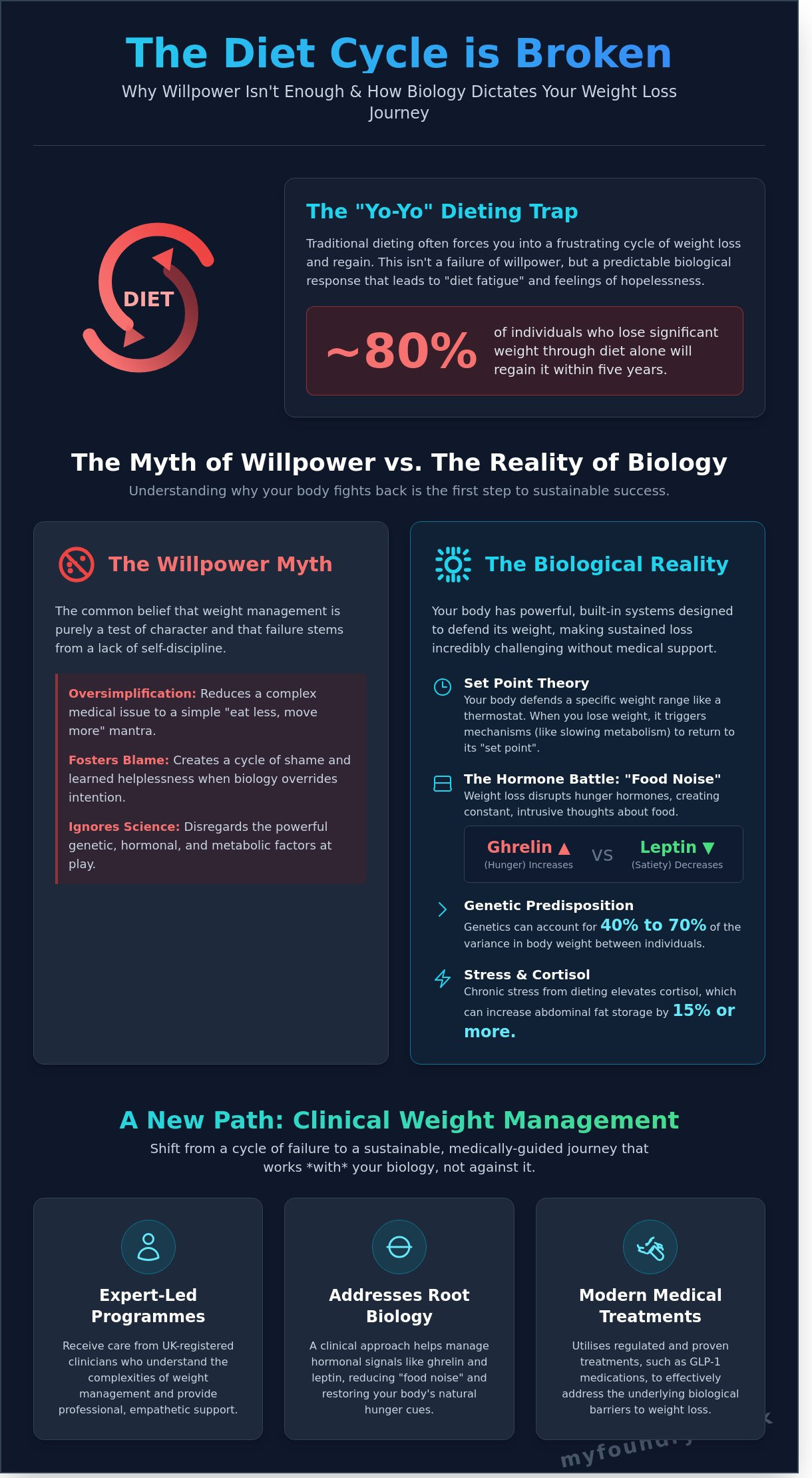
Editorial TeamWhat if the reason you can't keep the weight off has nothing to do with your self-discipline? If you're currently feeling hopeless about losing weight after another cycle of "yo-yo" dieting, you've likely been told that your struggle is a simple lack of willpower. It's an exhausting narrative that ignores the complex reality of human biology. Clinical data shows that nearly 80% of individuals who lose a significant amount of weight regain it within five years, proving that traditional "eat less, move more" advice often fails to account for how our bodies actually function.
We believe that weight management should be treated as a medical journey, not a test of character. This article will explain the biological mechanisms, such as metabolic adaptation and hormonal shifts, that often make sustainable weight loss feel impossible. You'll discover how a clinical approach, guided by UK-registered clinicians and regulated healthcare standards, can provide a more effective pathway. We'll look at the science of why your body resists change and how a medically-backed strategy can help you achieve long-term wellness.
Key Takeaways
- Understand why you might be feeling hopeless about losing weight and how to recognise "diet fatigue" as a natural biological response rather than a personal failure.
- Discover the physiological mechanisms, such as Set Point Theory and hormone signals, that cause your body to resist traditional dieting efforts.
- Learn how shifting from a willpower-focused mindset to a clinical medical model can help manage hunger and restore your long-term motivation.
- Explore how modern, clinician-led treatments like GLP-1 medications address the underlying biological barriers to sustainable weight management.
- Find out how a secure, expert-led digital programme provides the professional support and discreet care needed to break the cycle of weight regain.
Understanding Why You Are Feeling Hopeless About Losing Weight
If you have spent years cycling through various diets without lasting success, the emotional toll is significant. Many people find themselves feeling hopeless about losing weight after their best efforts fail to produce permanent results. This sense of defeat isn't a personal failing. It is a natural psychological response to a physiological battle. Clinical research now confirms that obesity is a chronic, relapsing condition rather than a simple lack of discipline. The "eat less, move more" mantra is a vast oversimplification that ignores the complex interplay of genetic, hormonal, neural, and environmental factors that regulate your body's set point.
Statistics show that roughly 80% of individuals who lose a significant amount of weight through calorie restriction alone will regain it within two years. When your body senses a deficit, it triggers powerful survival mechanisms. These include increased hunger hormones and a slowed metabolism, making sustained progress nearly impossible without medical intervention. Recognising that your biology is working against you is the first step toward finding a more effective, regulated pathway to wellness.
The Psychology of the Diet-Fail Cycle
Repeated attempts to manage weight through "fad" programmes often lead to learned helplessness. This is a psychological state where you stop trying because you believe failure is inevitable. Social stigma compounds this, as 65% of people living with obesity report feeling judged by healthcare providers or peers. This shame creates a barrier to seeking legitimate help. It is also vital to understand that advice from social media influencers is usually biologically irrelevant to your needs. Their "secrets" don't account for your unique metabolic profile or the 40 to 70% of weight variance attributed to genetics.
Recognising the Signs of Burnout
It's important to distinguish between a temporary plateau and total emotional exhaustion. If you are feeling hopeless about losing weight, you may be experiencing "diet burnout." This occurs when the mental energy required to maintain a restrictive lifestyle exceeds your capacity. Pushing harder during these periods often backfires. Elevated cortisol levels from chronic stress can actually increase abdominal fat storage by 15% or more. Instead of generic tips, you need clinical empathy from UK-registered clinicians who treat weight management as a medical necessity. Transitioning from a willpower-based approach to an expert-led, regulated medical plan can alleviate this burden and provide a sustainable way forward.
The Biological Barriers: Why Your Body Fights Weight Loss
Many people view weight management as a simple test of willpower. It isn't. Your body uses a complex biological system called the Set Point Theory to defend a specific weight range. When you try to drop below this range, your system triggers compensatory physiological adaptations to prevent further loss. This biological resistance often leads to people feeling hopeless about losing weight when the scale stops moving despite their best efforts.
Biology is often the silent driver of weight regain. Genetics can account for 40% to 70% of the variance in body weight, meaning some individuals have a much higher baseline resistance to fat loss than others. For women, perimenopause adds another layer of complexity. During this transition, falling oestrogen levels often lead to increased abdominal fat and a decrease in muscle mass, shifting the biological goalposts regardless of diet or exercise consistency.
Hormones: The Invisible Hand in Your Hunger
"Food noise," or the constant intrusive thoughts about eating, is a physiological symptom rather than a lack of discipline. Your brain prioritises survival over aesthetic weight goals; it treats a calorie deficit as a direct threat to your existence. Two primary hormones regulate this process. Ghrelin, produced in the stomach, rises to signal hunger. Leptin, produced by fat cells, signals satiety to the brain.
As you lose weight, your leptin levels drop significantly. This tells your brain that energy stores are depleted, which simultaneously ramps up ghrelin production. Willpower is a finite resource that cannot indefinitely outrun these persistent hormonal signals. Understanding that these urges are driven by your endocrine system can help reduce the shame often associated with weight management struggles. If you find these signals overwhelming, a clinically-led weight management programme can provide the medical support needed to regulate these pathways.
Metabolic Adaptation and the Plateau
The "starvation response" is a clinical reality where the body becomes more efficient at storing energy during calorie deficits. When you eat less, your body responds by burning fewer calories to keep you alive. Metabolic adaptation is the body’s internal thermostat adjusting to lower energy intake.
- Energy Efficiency: Your muscles become more efficient, requiring less fuel to perform the same amount of work.
- Reduced NEAT: Your non-exercise activity thermogenesis (fidgeting or small movements) often decreases subconsciously.
- Caloric Drop: Research indicates that for every kilogram of weight lost, the resting metabolic rate can drop by 20 to 30 calories per day beyond what is expected from the loss of tissue alone.
This adaptation explains why many people hit a plateau after the initial few months of a new regime. It's not that the plan has stopped working; it's that your body has adjusted its energy expenditure to match the new intake. Recognising these biological hurdles is the first step toward finding a more sustainable, medical approach to your health journey.
Debunking the Willpower Myth and Restoring Weight Loss Motivation
If you're feeling hopeless about losing weight, it's often because you've been told weight management is a simple test of character. The "willpower model" suggests that success depends entirely on your ability to resist temptation. This approach is clinically outdated. Modern weight care focuses on the medical model, which acknowledges that weight is regulated by complex physiological systems. When you attempt to lose weight through restriction alone, your body initiates a survival response. Research into the biological mechanisms of weight regain published in 2013 demonstrates that your hormones and metabolism shift to protect fat stores. This isn't a failure of your mind; it's a function of your biology.
Motivation naturally wanes when these biological signals remain unmanaged. It's difficult to stay "motivated" when your brain is sending constant hunger signals. We must reframe "cheating" as a predictable biological response to unmanaged hunger. Clinical progress requires self-compassion. Treating yourself with the same empathy a clinician would helps break the cycle of shame that often leads to people feeling hopeless about losing weight after a minor setback.
Why Willpower is Not a Weight Loss Strategy
Willpower acts like a muscle that tires over time. A 2011 study on decision fatigue showed that our ability to make healthy choices diminishes as the day progresses and stress increases. Relying on self-control is exhausting because your environment is often at odds with your predisposed biology. Successful long-term health requires a shift from "self-control" to "system-management." This involves using regulated medical support and environmental adjustments to reduce the number of difficult decisions you have to make daily. It's about making the healthy choice the easiest choice, not the hardest one.
Practical Ways to Rebuild Motivation
Sustainable progress relies on shifting your focus from the scale to non-scale victories. Clinicians look for markers of health that generic programmes often ignore. You can rebuild momentum by tracking these specific metrics:
- Energy levels: Noting a 20% increase in daily activity without fatigue.
- Sleep quality: Achieving 7 to 8 hours of restorative rest.
- Clinical markers: Improvements in blood pressure or resting heart rate.
Professional support is vital for maintaining this momentum. Data from 2022 indicates that individuals using a personalised, expert-led plan are 3 times more likely to sustain weight loss than those following a generic DIY approach. A UK-registered clinician can provide a tailored strategy that accounts for your unique medical history, making the journey feel manageable rather than like an uphill battle.
Shifting from Diets to Clinical Weight Management
Traditional dieting often fails because it ignores the complex biological systems that govern hunger. If you are feeling hopeless about losing weight, it is likely because your body’s internal signals are working against your efforts. A clinician-led medical weight loss programme changes this dynamic by treating weight management as a health objective rather than a simple lifestyle choice. These programmes provide a structured framework where medical experts oversee your progress, ensuring every step is evidence-based and safe.
Modern medications, specifically GLP-1 receptor agonists, have transformed this field. Unlike over-the-counter supplements, these treatments address the physiological barriers that make sustained weight loss difficult. Clinical support acts as a safety net; it offers professional guidance that traditional diet clubs cannot provide. This transition from self-managed dieting to a medically supervised plan ensures long-term efficacy and protects your metabolic health. Research indicates that patients using these clinical pathways can achieve a 15% reduction in body weight when combined with professional support.
The Role of Regulated Medical Treatment
Safety starts with regulation. Every treatment must be dispensed by a UK-regulated pharmacy and overseen by UK-registered prescribers. Medications like Wegovy or Mounjaro work by targeting the brain’s hunger centres, specifically the hypothalamus. By mimicking natural hormones, they increase feelings of fullness and reduce cravings. Clinical reviews by GPhC-registered pharmacists ensure these treatments are appropriate for your specific health profile. This process ensures that the MHRA-approved medications are used correctly to achieve the best possible outcomes.
What to Expect from a Medical Consultation
The most significant shift is moving from being a customer to becoming a patient. During a consultation, a clinician reviews your health history, BMI, and current medications. This is not a one-size-fits-all approach. In 2024, clinical standards require a thorough assessment to create a tailored plan. Buying pills from unregulated online sources is dangerous; a structured programme provides the necessary oversight to manage side effects and monitor results. It is about building a partnership with healthcare professionals who understand the science of obesity. You can start your clinical consultation today to see if a medical programme is right for your needs.
How a Clinician-Led Programme Can Help You Break the Cycle
If you're feeling hopeless about losing weight, it's usually because you've been fighting a battle against your own biology. Traditional dieting often fails because it doesn't address the complex hormonal signals that regulate hunger and satiety. foundry acts as a professional partner that understands these biological mechanisms. We provide a bridge between clinical expertise and your daily life, moving beyond the "eat less, move more" narrative that ignores metabolic realities.
Our service offers a secure, digital process designed for discreet care. You can manage your health journey from the privacy of your home, avoiding the anxiety of face-to-face weigh-ins or public consultations. Through continuous medical reviews and seamless repeat prescriptions, we ensure your treatment remains effective and safe as your body changes. Real hope isn't found in "trying harder" at a method that has already failed; it's found in evidence-based science and professional support.
The foundry Approach to Wellness
Our UK-registered clinicians provide expert-led care that you can access without a GP appointment. This convenience doesn't compromise safety. Every treatment is dispensed by a GPhC-regulated pharmacy, ensuring all medications meet the strict standards required by UK law. Unlike "quick fix" programmes that promise rapid results only for the weight to return, we focus on long-term health outcomes. Data from the 2023 STEP clinical trials indicates that medical weight management, when combined with lifestyle support, can lead to a 15% reduction in total body weight over a 68-week period. We prioritise these sustainable milestones to help you maintain a healthier weight for years, not just weeks.
Taking the First Step Toward a Better Way
Starting your consultation is a straightforward, secure process. You'll complete a health assessment that undergoes a rigorous clinical review by our medical team. This ensures that any prescribed plan is tailored to your specific medical history and needs. Having a regulated healthcare partner by your side provides the reassurance that your safety is the primary concern. If you've spent years feeling hopeless about losing weight, it's time to stop fighting your biology alone. Weight loss is a clinical challenge, and it's one that becomes achievable when you have the right medical tools and expert guidance to support you.
Embrace a Clinical Path to Sustainable Wellness
Accepting that weight management is a complex biological process rather than a test of character changes everything. If you're feeling hopeless about losing weight, it's often because metabolic adaptations can lower your resting energy expenditure by significant margins during calorie restriction. This isn't a failure of willpower; it's a physiological survival mechanism. Moving toward a clinician-led programme allows you to bypass these barriers using modern medical science and expert oversight.
Our approach at Foundry Health connects you with UK-registered clinicians and a GPhC regulated pharmacy to ensure every step of your plan is medically sound. By collaborating with CQC regulated healthcare partners, we provide a structured environment that focuses on health outcomes instead of temporary results. You've struggled with traditional methods for long enough. It's time to choose a regulated, professional pathway that understands the science of your body.
Start your clinical consultation for a personalised weight loss plan and begin your journey today. You've got the support of medical professionals who are committed to your long-term success.
Frequently Asked Questions
Is it normal to feel hopeless about losing weight after many attempts?
It's entirely normal to feel this way. Research published in the British Journal of General Practice indicates that only 1 in 210 men and 1 in 124 women with obesity achieve a healthy body weight through traditional dieting alone. If you're feeling hopeless about losing weight, it's often because your biology is working against you. Your body's natural hunger hormones, like ghrelin, often increase after weight loss; this makes it difficult to maintain progress without medical intervention.
Can weight loss medication help if I have failed at every diet?
Clinical weight loss medications provide the biological support that traditional diets lack. These treatments, such as GLP-1 receptor agonists, mimic natural hormones to regulate appetite and slow gastric emptying. In clinical trials like the STEP 1 study, participants lost an average of 14.9% of their body weight over 68 weeks when combined with lifestyle changes. This medical approach addresses the physiological signals that lead to "yo-yo" dieting and feelings of failure.
How do I know if my weight loss struggles are biological or psychological?
Weight management is rarely just about willpower; it's a complex interaction between your brain and your metabolic system. Biological struggles often manifest as "food noise" or constant hunger despite eating, while psychological factors might involve emotional eating patterns. A clinical review by a UK-registered prescriber can help distinguish these factors. Data suggests that 70% of weight variance is linked to genetics, meaning your body may be programmed to defend a higher set-point weight.
What is the difference between a diet club and a clinical programme?
A diet club typically focuses on peer support and calorie counting, whereas a clinical programme is a regulated medical service led by healthcare professionals. At Foundry Health, our clinicians provide evidence-based treatments that are CQC regulated and overseen by GPhC-registered pharmacies. Unlike commercial clubs, clinical programmes use MHRA-approved medications and personalised medical assessments to address the underlying physiological causes of weight gain, rather than just tracking food intake.
Are medical weight loss treatments safe and regulated in the UK?
Yes, all medical weight loss treatments we provide are strictly regulated in the United Kingdom. Medications must be approved by the Medicines and Healthcare products Regulatory Agency (MHRA) for safety and efficacy. Our service is delivered by UK-registered clinicians and dispensed by pharmacies regulated by the General Pharmaceutical Council (GPhC). This ensures every patient undergoes a thorough clinical review to confirm the treatment is safe for their specific medical history and BMI.
How long does it take to see results with a clinician-led programme?
Most patients begin to see changes in their appetite within the first 1 to 2 weeks of starting treatment. In terms of weight, clinical data shows that significant loss typically occurs over a 12 to 24 week period. For example, many patients achieve a 5% reduction in total body weight within the first 3 months of a clinician-led programme. Steady, sustainable progress is the goal; this helps protect muscle mass and ensures long-term metabolic health.
Will I have to stay on medical treatment forever to keep the weight off?
Not necessarily, but weight management is a long-term commitment to your health. Some patients use medication as a "kickstart" for 6 to 12 months to establish new habits, while others benefit from longer-term maintenance doses. Data from the Select trial suggests that sustained treatment helps prevent the weight regain that 80% of dieters experience. Your clinician will work with you to create a personalised maintenance strategy based on your unique metabolic response.
How can I regain my weight loss motivation when I feel like giving up?
Motivation often returns when you stop viewing weight loss as a test of character and start seeing it as a medical journey. If you're feeling hopeless about losing weight, shifting to a clinician-led approach can remove the burden of constant hunger. Seeing measurable biological progress, such as improved blood pressure or a 2% drop in weight within the first month, often provides the psychological boost needed to stay committed to your long-term wellness goals.