

Choosing a Regulated Pharmacy for Weight Loss: A UK Patient Safety Guide (2026)
Editorial TeamClinical Safety Notice
Before choosing a provider for medical weight loss, it is vital to verify their regulatory credentials. Read our 2026 Guide to Safe UK Online Pharmacies to understand GPhC, CQC, and MHRA compliance standards.
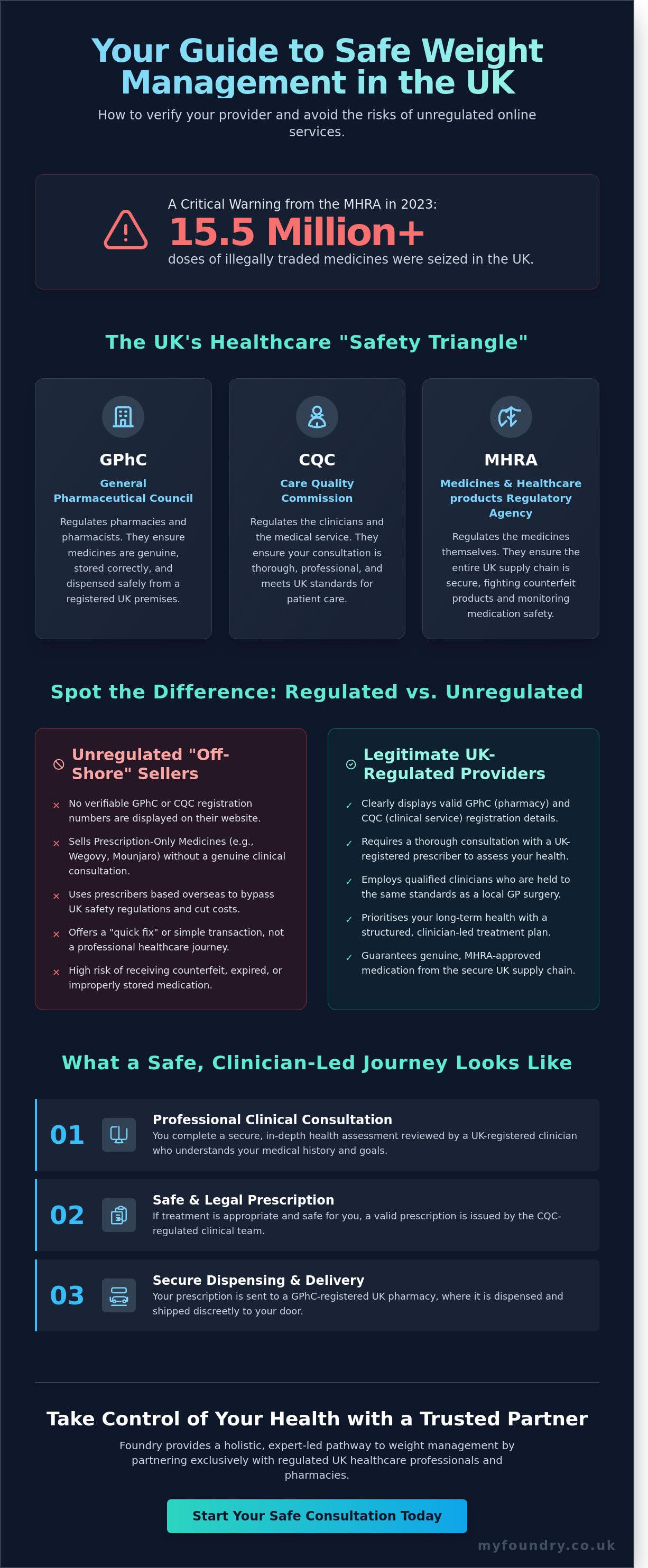
Did you know that in 2023, the MHRA seized more than 15.5 million doses of illegally traded medicines across the UK? When you're looking for medical support to manage your weight, the risk of encountering counterfeit products or unverified sellers is a genuine concern. Finding a legitimate, regulated pharmacy for weight loss isn't just about convenience; it's about ensuring that every step of your clinical journey is overseen by UK registered prescribers who prioritize your safety over profit.
It's completely understandable to feel anxious about who's handling your health data or whether you're just another number in an automated system. You deserve a weight management plan that's as professional and secure as a face-to-face GP appointment. This guide provides the tools you need to verify a pharmacy's legitimacy, helping you secure a safe, clinician-led treatment path. We'll explain the specific roles of the GPhC and CQC, showing you how to check the official registers in under two minutes to gain total peace of mind for your 2026 health goals.
Key Takeaways
- Learn how to verify the "Safety Triangle" of UK healthcare by ensuring your pharmacy, clinician, and medication are all fully compliant with GPhC, CQC, and MHRA standards.
- Understand why a legitimate regulated pharmacy for weight loss must always be paired with a UK-registered prescribing clinician to ensure your treatment is safe and legal.
- Identify critical red flags and the clinical dangers associated with using unregulated "off-shore" services that bypass essential UK patient safety protocols.
- Discover what a professional, clinician-led consultation looks like in 2026 and why the process is designed to prioritise your long-term health over a simple transaction.
- See how foundry provides a holistic, expert-led pathway to weight management by partnering exclusively with regulated UK healthcare professionals and pharmacies.
Table of Contents
- What is a Regulated Pharmacy for Weight Loss?
- The UK Regulatory Framework: GPhC, CQC, and MHRA Explained
- Identifying Red Flags: Regulated vs. Unregulated Services
- The Patient Journey: What a Regulated Process Looks Like
- Why Foundry Health is Your Trusted Partner for Weight Care
What is a Regulated Pharmacy for Weight Loss?
A regulated pharmacy for weight loss is a facility registered with the General Pharmaceutical Council (GPhC), the independent regulator for pharmacists and pharmacy premises in Great Britain. If you've found managing your weight harder than it should be, you're not alone. The growth of digital healthcare has expanded access to treatment, but it's also increased the need for patient vigilance. For medical weight management, the "pharmacy" is only half the equation; the prescribing clinician must also be regulated by a body such as the Care Quality Commission (CQC) or the General Medical Council (GMC).
Regulation ensures your medication is genuine, stored at the correct temperatures, and prescribed ethically based on your health profile. This level of safety is essential for modern treatments like mounjaro uk, where professional clinical guidance is vital for achieving sustainable results. When a service is regulated, it means every step of your journey, from the initial consultation to the delivery of your medication, follows strict UK safety standards.
The Role of the GPhC in Weight Management
The GPhC plays a critical role in inspecting physical premises and ensuring pharmacists follow rigorous standards of care. They conduct regular inspections, often on a cycle of one to three years, to verify that pharmacies operate safely. You can verify a pharmacy's legitimacy by checking their registration number on the official GPhC website. Every regulated pharmacy must have a "Responsible Pharmacist" on duty for all dispensing activities, ensuring professional accountability for every package sent out. Understanding how Online Pharmacies Explained by regulatory bodies operate helps you distinguish between a legitimate medical provider and an unregulated seller.
Prescription vs. Over-the-Counter Weight Loss
Weight management treatments generally fall into two categories. Pharmacy medicines, known as P-medicines like Orlistat, can often be purchased after a consultation with a pharmacist. Prescription Only Medicines (POM), such as Wegovy or Mounjaro, require a much higher level of regulatory oversight. These treatments must involve a formal clinical review by a UK-registered prescriber to ensure they're safe for your specific medical history and body mass index (BMI). You should avoid any service that offers POMs without a thorough clinical assessment or a valid prescription. These "quick fixes" often bypass the safety protocols that protect your long-term health and wellness.
- GPhC Registration: Ensures the pharmacy meets UK clinical standards.
- Clinician Oversight: Guarantees that prescriptions are issued by qualified professionals.
- Authenticity: Protects you from counterfeit or improperly stored medications.
The UK Regulatory Framework: GPhC, CQC, and MHRA Explained
Your safety isn't guaranteed by a single logo on a website. In the UK, a legitimate regulated pharmacy for weight loss operates within a three-layered ecosystem known as the Safety Triangle. This structure includes the General Pharmaceutical Council (GPhC), the Care Quality Commission (CQC), and the Medicines and Healthcare products Regulatory Agency (MHRA). A trustworthy provider will be transparent about their registration status across all three tiers. This interconnected framework ensures that medical weight loss UK remains a clinical process rather than a simple retail transaction.
CQC Regulation: Why the Prescriber Matters
The Care Quality Commission (CQC) monitors the actual medical consultation and the clinicians who issue your prescription. While a GPhC-registered pharmacy can legally dispense medication, they don't always employ the clinicians themselves. Some platforms use unregulated third-party prescribers based overseas to cut costs, which creates a significant safety gap. You should always verify that the platform is CQC-registered for the "Treatment of disease, disorder or injury." This ensures your clinician is held to the same standards as a local GP surgery. If you're ready to partner with a clinical team that prioritises safety, you can start your consultation with a fully regulated provider today.
The MHRA and Medication Authenticity
The MHRA acts as the final guardian of the pharmaceutical supply chain. They monitor medication safety and manage the distribution of genuine GLP-1 agonists to prevent counterfeit injections from entering the market. Recent MHRA safety warnings highlight the dangers of buying from unregulated sources that lack these rigorous safeguards. The agency also operates the "Yellow Card" scheme, allowing patients to report unexpected side effects directly to the regulator. This data helps maintain high safety standards for everyone using a regulated pharmacy for weight loss.
Regulation isn't a static badge earned once and forgotten. It's an active, continuous process involving unannounced inspections and rigorous audits of clinical practice. These bodies assess everything from patient record-keeping to temperature-controlled storage for sensitive medications. Knowing the specific roles of each body helps you identify a secure service:
- GPhC: Inspects the physical pharmacy premises and the professional standards of the pharmacists.
- CQC: Audits the quality of clinical care, the appropriateness of prescribing, and patient support.
- MHRA: Oversees the legality, safety, and supply chain integrity of the medicines themselves.
Checking these credentials takes less than five minutes but protects your health for the duration of your treatment journey. Always look for the registration numbers in the footer of a provider's website to ensure they're currently active and in good standing with all three regulators.
Identifying Red Flags: Regulated vs. Unregulated Services
Safety is the primary foundation of any medical journey. Choosing a regulated pharmacy for weight loss ensures you receive genuine medication, yet the digital market is increasingly crowded with illegal operators. Identifying these risks requires a keen eye for specific clinical markers. A legitimate service won't just sell you a product; it'll manage your health through a rigorous framework of safety checks and professional accountability.
Common Red Flags to Avoid
Unregulated services often hide behind slick web design, but they lack the legal credentials required by UK law. You should always look for a physical UK address and verifiable registration numbers. If a website doesn't prominently display its General Pharmaceutical Council (GPhC) or Care Quality Commission (CQC) details, it's likely operating outside the law. Be wary of these specific signs:
- Missing Credentials: No visible GPhC green cross logo or CQC registration link.
- Suspicious Pricing: Prices that are significantly lower than the market average often indicate counterfeit stock or diverted medication.
- Instant Approval: The ability to "buy" medication without a comprehensive health questionnaire or a direct review by a UK-registered prescriber.
- Vague Contact Details: A lack of a landline number or a verifiable UK business premises.
Why "Cheap" Can Be Dangerous
The lure of lower costs can lead to severe health consequences. Unregulated "off-shore" pharmacies often bypass UK Pharmacy Regulations, meaning there's no guarantee regarding the medication's origin. These products may contain incorrect dosages, dangerous contaminants, or no active ingredients at all. The MHRA has recently warned of a surge in counterfeit GLP-1 pens, which are often sold through social media or unregulated websites.
Beyond the medication itself, unregulated services offer zero aftercare. If you experience a side effect at 2:00 AM, there's no clinical team to contact. Regulated services include the cost of clinical expertise and ongoing safety monitoring in their pricing. Using a regulated pharmacy for weight loss provides the peace of mind that your treatment is being overseen by professionals who are legally accountable for your care.
Clinical Expertise vs. Automated Approval
Many low-cost providers use "automated approval" systems where a computer algorithm flags basic answers. This isn't healthcare; it's a transaction. Genuine clinician-led weight loss programmes involve a manual review of your medical history by a qualified prescriber. They ensure that the medication is safe for your specific profile and that you've been educated on correct administration.
Furthermore, regulated pharmacies guarantee cold-chain delivery. GLP-1 medications are temperature-sensitive and must be kept between 2°C and 8°C. Regulated providers use specialised, validated packaging to maintain this range. Unregulated sellers often ship via standard post, which can render the medication ineffective or biologically unstable before it even reaches your door.
The Patient Journey: What a Regulated Process Looks Like
By 2026, the standard for a regulated pharmacy for weight loss has evolved into a rigorous medical pathway. It isn't a simple transaction or a "click-to-buy" experience. Instead, it's a clinical intervention designed to protect your health. The entire process is built around patient safety, ensuring that every individual receives treatment that's both appropriate and safe for their specific biological profile. A responsible service prioritises your wellbeing, which often means a clinician will refuse treatment if it isn't clinically suitable. This clinical honesty is the hallmark of a professional service.
Step 1: The Comprehensive Clinical Consultation
Your journey begins with a detailed digital assessment. You'll provide your current BMI, a full medical history, and a list of any medications you're currently taking. To ensure data accuracy, a regulated service often requires a photo ID and a "weigh-in" photo. These steps prevent misuse and confirm you meet the specific criteria for treatments like wegovy uk. Clinicians look for contraindications, such as specific gastrointestinal issues or a family history of rare thyroid conditions, that could make injections unsafe for you. Precision at this stage is vital for your long-term health.
Step 2: Clinician Review and Prescription Issuance
Once you submit your details, a UK-registered prescriber manually reviews your file. These are qualified Doctors, Pharmacists, or Nurse Prescribers who assess your risk profile against your health goals. They don't just "rubber stamp" applications. If they're satisfied with the safety profile, they issue a legal prescription. A key part of this joined-up care involves notifying your GP. This ensures your primary healthcare provider is aware of your treatment, which helps prevent potential drug interactions and ensures your medical record remains accurate and complete.
Step 3: Secure Dispensing and Cold-Chain Delivery
After the prescription is issued, a GPhC-registered pharmacy prepares your medication. For injectable treatments, maintaining the "cold-chain" is essential. The pharmacy uses specialized temperature-controlled packaging to keep the medication between 2°C and 8°C during transit. Delivery is always conducted via a tracked, secure courier. This ensures the package reaches the intended recipient promptly and in perfect clinical condition. Using a regulated pharmacy for weight loss ensures these logistical standards are met every single time, protecting the integrity of the medicine.
If you're ready to begin a safe, clinician-led journey, start your clinical consultation today with our expert team.
Why Foundry Health is Your Trusted Partner for Weight Care
Choosing a regulated pharmacy for weight loss involves more than just finding a provider; it requires finding a medical partner dedicated to your long-term health. Foundry Health exceeds basic regulatory requirements by offering a clinician-led, holistic approach to weight management. We understand that managing weight is a complex biological challenge, not a lack of willpower. Our service is built on medical integrity, ensuring you receive professional guidance rather than a simple transaction. We prioritise your safety and privacy at every stage, moving away from "quick fix" solutions toward sustainable, health-focused outcomes.
Our commitment to excellence is reflected in our partnerships. We work exclusively with UK-registered clinicians and GPhC-regulated pharmacies to ensure every prescription is handled with the highest level of clinical care. This professional framework provides a secure digital process where your health data is protected and your treatment is overseen by experts who understand the nuances of medical weight loss.
Expert-Led Care and Ongoing Support
Foundry Health provides a comprehensive weight management ecosystem rather than just a prescription service. We believe that effective treatment requires ongoing support and expert oversight. Our UK-registered clinicians are available to answer your questions throughout your treatment journey, providing the reassurance you need to progress confidently. This access ensures that any concerns regarding side effects or dosage are addressed by a qualified professional promptly.
We focus on sustainable wellness markers that go beyond the numbers on a scale. Our clinicians help you monitor improvements in metabolic health, energy levels, and overall physical well-being. By framing your journey in a positive, long-term health context, we help you achieve a better way to wellness. This personalised approach ensures the treatment is designed for you, supporting your body as it adapts to new health milestones.
Transparency and Regulation at Our Core
Transparency is the foundation of trust in healthcare. Foundry Health operates with total clarity regarding our regulatory status and the partners we work with. Our prescribing partner, ABSM Healthcare Ltd, is registered with the Care Quality Commission (CQC), and our dispensing pharmacies are regulated by the General Pharmaceutical Council (GPhC). These credentials ensure that our clinical reviews and medication dispensing meet the strict standards set by UK health authorities.
We invite all users to verify our credentials through the links provided on our website. We maintain rigorous compliance with the MHRA to ensure all medications are authentic and safe for patient use. By choosing a service that values medical evidence and strict regulation, you are choosing a safer path to achieving your health goals. Don't settle for less than professional clinical oversight when it comes to your weight care journey.
Start your clinical consultation with Foundry Health today and take the first step toward a medically supervised weight management plan.
Securing Your Medical Path to Weight Wellness
Managing your weight is a significant medical journey that requires more than just a prescription. It demands a clinical framework where safety is the priority. By choosing a regulated pharmacy for weight loss, you're ensuring that every step of your care is overseen by UK-registered clinicians who adhere to strict GPhC and CQC standards. The UK regulatory framework, including MHRA oversight, exists to protect patients from the risks associated with unregulated services that often bypass essential health checks.
Foundry Health provides this essential security through GPhC regulated pharmacy partners and CQC regulated prescribing services. We manage the complexities of medical weight care so you don't have to. Every treatment involves a thorough clinical review and arrives via secure cold-chain delivery to maintain medication integrity. It's about moving away from temporary solutions and toward a sustainable, expert-led approach to your health that's designed for you.
Start your clinician-led weight loss consultation
You're capable of reaching your health goals, and having the right professional support makes all the difference in your long-term success.
Frequently Asked Questions
Is it legal to buy weight loss injections online in the UK?
Yes, it's legal to purchase weight loss injections online in the UK provided the provider is a UK-registered pharmacy and the medication is prescribed by a qualified clinician. The Medicines and Healthcare products Regulatory Agency (MHRA) oversees the sale of medicines in the UK to ensure they meet strict safety standards. You must complete a medical consultation to ensure the treatment is suitable for your clinical needs before any dispensing occurs.
How can I check if a pharmacy is properly regulated by the GPhC?
You can verify a pharmacy's status by checking the General Pharmaceutical Council (GPhC) online register using their seven-digit registration number. Every legitimate regulated pharmacy for weight loss will display a green pharmacy logo that links directly to their entry on the official register. This ensures the premises and the pharmacists meet the standards set by the Pharmacy Order 2010, providing you with a secure and professional service.
What is the difference between a CQC-registered service and a GPhC pharmacy?
The Care Quality Commission (CQC) regulates the medical consultation and prescribing process, while the GPhC regulates the pharmacy and the dispensing of medication. In England, the Health and Social Care Act 2008 requires providers of "regulated activities" to be CQC registered. A GPhC pharmacy focuses on the safe storage and supply of drugs, whereas the CQC ensures the clinical advice you receive is safe, effective, and patient-led.
Can I get a weight loss prescription online without seeing a doctor in person?
Yes, you can obtain a prescription through a secure digital consultation without a face-to-face appointment. UK-registered clinicians use comprehensive medical questionnaires to assess your Body Mass Index (BMI) and health history. This process follows the same clinical guidelines as an in-person visit, ensuring that any treatment prescribed is clinically appropriate for your specific weight management journey and overall health profile.
Why do regulated pharmacies ask for so much personal health information?
Regulated pharmacies require detailed health information to ensure your safety and to confirm that weight loss medication is clinically suitable for you. Clinicians must screen for contraindications, such as a history of pancreatitis or specific thyroid conditions, before issuing a prescription. This thorough clinical review process is a legal requirement designed to protect your health and prevent adverse reactions to the medication during your treatment.
What should I do if I think I have bought counterfeit weight loss medication?
If you suspect your medication is counterfeit, stop using it immediately and report the incident to the MHRA via the Yellow Card scheme. Authentic medication from a regulated pharmacy for weight loss will have a batch number and an expiry date that can be verified with the manufacturer. Using unregulated products is dangerous, as the WHO reported in 2023 that falsified weight loss injections often contain incorrect or harmful ingredients.
Does a regulated pharmacy need to contact my GP?
A regulated pharmacy will ask for your consent to share information with your GP to ensure continuity of care. While you can sometimes opt out, the GMC guidelines state that clinicians should keep a patient's GP informed about any ongoing treatments. This practice ensures that your primary care physician has a complete record of your medical history, which is vital for managing potential drug interactions or long-term health monitoring.
Are online weight loss consultations as safe as face-to-face appointments?
Online consultations are as safe as face-to-face appointments when conducted by UK-registered clinicians following strict regulatory protocols. Digital platforms use structured assessments to gather the same clinical data a GP would collect in person. Because these services are audited by the CQC, they must demonstrate that their decision-making processes are robust, evidence-based, and focused entirely on patient safety, providing a professional alternative to traditional clinics.