

A Clinical Guide to Mounjaro Side Effects: What to Expect and How to Manage Them
Editorial TeamStarting a prescribed medication like Mounjaro is a significant step in your weight management journey. While the potential health benefits are encouraging, it's completely normal to have questions about what to expect. Feeling anxious about a new treatment or wondering if a new sensation is 'normal' are common and valid concerns for anyone beginning this process.
This clinical guide is designed to provide that clarity. We will walk you through the potential Mounjaro side effects, from the most common gastrointestinal issues to the less frequent but more serious signs to watch for. Knowledge is key to feeling in control of your health and treatment plan.
Here, you will learn clinician-approved strategies for managing discomfort and gain a clear understanding of the red flags that require medical attention. Our goal is to ensure you feel supported, informed, and confident as you begin your treatment, knowing that many side effects can be managed and often improve over time.
Key Takeaways
- Understand why Mounjaro’s effect on your digestive system is the primary reason for its most common gastrointestinal side effects.
- Learn clinician-approved strategies for managing the most common Mounjaro side effects, which typically appear when starting treatment or increasing your dose.
- Recognise the symptoms of rare but serious side effects and know exactly when it is essential to seek immediate medical advice.
- Discover how a gradual, medically supervised dose schedule helps your body adapt over time, often reducing the intensity of side effects.
Understanding Why Mounjaro (Tirzepatide) Causes Side Effects
When starting any new prescribed medication, it’s important to understand how it works within your body. The most common mounjaro side effects are directly linked to the medication's intended mechanism of action. Rather than being a sign of a problem, these effects are often an indication that the treatment is functioning as designed to support your weight management journey.
Mounjaro is a novel medication known as a dual GIP and GLP-1 receptor agonist. It works by mimicking two natural gut hormones that regulate blood sugar and appetite. Understanding this dual action is key to understanding both its effectiveness and its side effect profile.
The Role of GLP-1 and GIP Hormones
Glucagon-like peptide-1 (GLP-1) and glucose-dependent insulinotropic polypeptide (GIP) are incretin hormones that your body naturally releases after you eat. They play a crucial role in managing blood sugar levels and signalling a feeling of fullness to your brain. As a dual GIP and GLP-1 receptor agonist, Tirzepatide (Mounjaro) enhances the body's natural response to food, amplifying these signals to help reduce appetite and food intake.
How Slowed Digestion Impacts Your Body
A primary function of GLP-1 and GIP is to slow down gastric emptying-the rate at which food leaves your stomach. By keeping food in your stomach for longer, Mounjaro helps you feel fuller for an extended period, which is fundamental to its success in weight management. However, this same process is responsible for the most frequently reported gastrointestinal side effects. When your digestion is slower, it can lead to:
- Nausea and vomiting: A feeling of being overly full or unwell.
- Bloating and gas: A result of food processing more slowly in the digestive tract.
- Acid reflux or indigestion: Stomach contents may be more likely to cause discomfort.
While these initial mounjaro side effects can be challenging, they are an expected part of the body's adjustment to the medication and a direct result of the mechanism that makes it effective.
The Most Common Mounjaro Side Effects and How to Manage Them
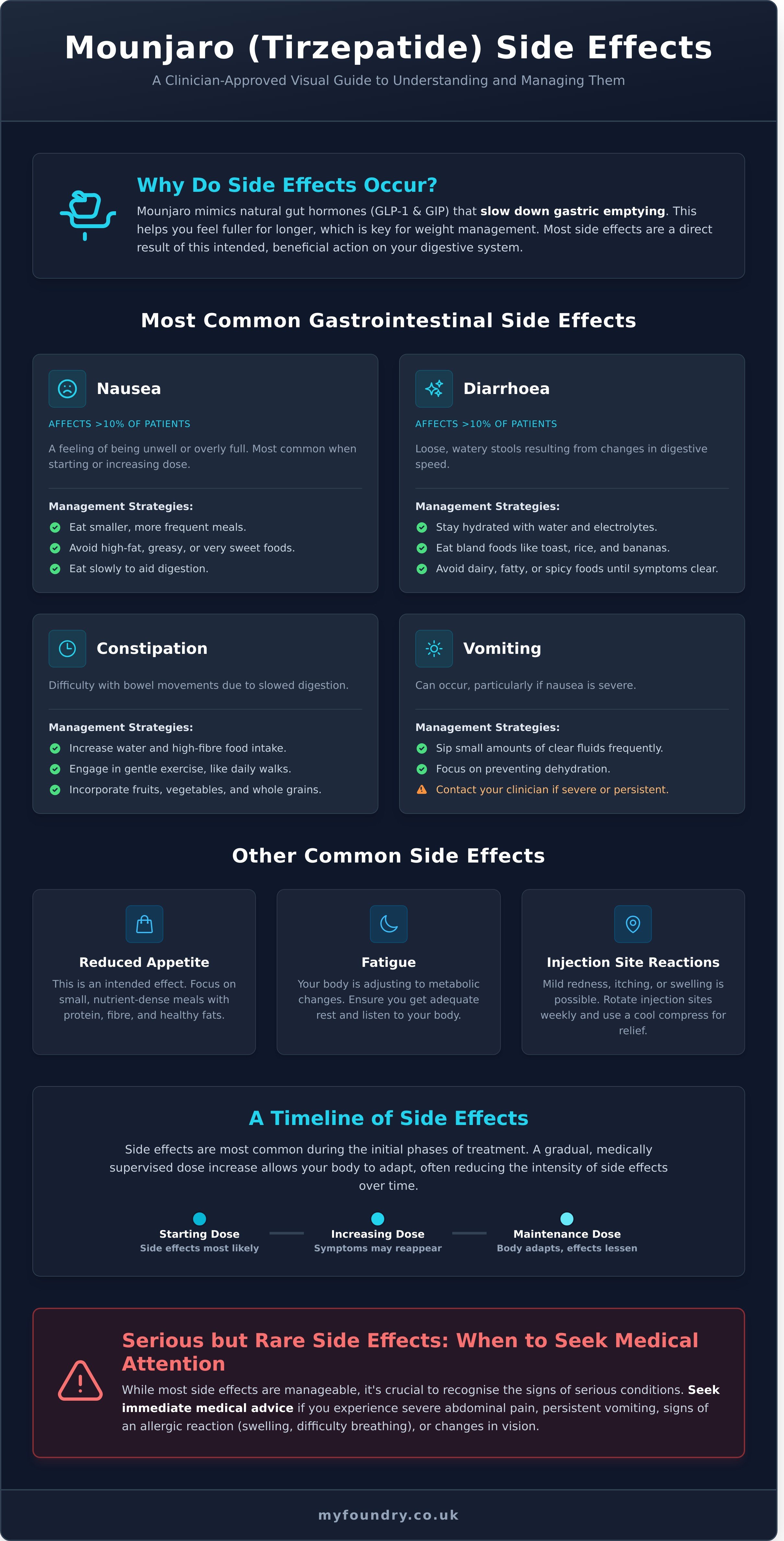
When starting any new medication, it is important to understand the potential side effects. For Mounjaro (tirzepatide), the most frequently reported issues are gastrointestinal (GI) in nature. These are typically mild to moderate and are most common when you first begin treatment or after a dose increase, as your body adjusts. According to FDA clinical trial data, over 10% of patients experience side effects like nausea and diarrhoea. Fortunately, these common mounjaro side effects can often be managed with simple, practical strategies advised by clinicians.
Managing Gastrointestinal Issues
The following tips can help you manage the most common GI-related side effects as your body adapts to the medication:
- Nausea: Try eating smaller, more frequent meals throughout the day. Avoid high-fat, greasy, or very sweet foods, and eat slowly to aid digestion.
- Diarrhoea: Staying hydrated is crucial. Drink plenty of water, and consider beverages with electrolytes. Stick to bland foods like toast, rice, and bananas until symptoms subside.
- Constipation: Increase your intake of water and high-fibre foods, such as fruits, vegetables, and whole grains. Gentle exercise, like a daily walk, can also help stimulate digestion.
- Vomiting: If you experience vomiting, focus on sipping small amounts of clear fluids frequently to prevent dehydration. If vomiting is severe or persistent, it is important to contact your prescribing clinician for guidance.
Other Common Side Effects
Beyond digestive issues, you may notice other changes as you begin your Mounjaro treatment. These are also typically temporary and manageable.
- Reduced Appetite: This is an intended effect of the medication that contributes to weight management. To ensure you receive adequate nutrition, focus on eating smaller, nutrient-dense meals packed with protein, fibre, and healthy fats.
- Fatigue: Feeling more tired than usual can occur as your body adjusts to the medication and changes in your metabolism. Ensure you are getting adequate rest.
- Injection Site Reactions: You might notice mild redness, itching, or swelling at the injection site. To minimise this, rotate your injection sites each week. A cool compress can provide relief if needed.
- Acid Reflux/Indigestion: To manage heartburn, try to avoid common trigger foods like spicy, acidic, or fried items. It can also be helpful to wait at least two hours after eating before lying down.
Serious but Rare Side Effects: When to Seek Medical Attention
While most people tolerate Mounjaro well, it is vital to be aware of the more serious, though uncommon, mounjaro side effects. This information is provided for your safety and is not intended to cause alarm. The potential for these adverse reactions is detailed in Mounjaro's official prescribing information. If you experience any of the following symptoms, it is essential to contact your clinician or seek urgent medical care immediately.
Pancreatitis (Inflammation of the Pancreas)
Pancreatitis is a rare but serious condition that requires prompt medical evaluation. Do not ignore severe abdominal pain, as it is a primary symptom. Seek immediate medical advice if you experience:
- Severe, persistent pain in your stomach (abdomen) that may radiate to your back.
- Vomiting and nausea that does not subside.
- A high temperature (fever) or a rapid pulse.
Gallbladder Problems
In some cases, Mounjaro and the rapid weight loss it can facilitate may lead to gallbladder issues, such as gallstones. Contact your clinician if you notice symptoms including:
- Pain in the upper right side of your abdomen.
- Nausea and vomiting, particularly after eating fatty foods.
- Fever or chills.
- Jaundice (yellowing of the skin or the whites of the eyes).
Kidney Problems and Hypoglycaemia
Severe vomiting or diarrhoea can lead to dehydration, which may cause or worsen kidney problems. It is crucial to stay hydrated. Separately, while the risk is low, low blood sugar (hypoglycaemia) can occur, especially if you take Mounjaro with other diabetes medications like sulphonylureas or insulin. Symptoms include dizziness, sweating, confusion, and blurred vision.
Severe Allergic Reactions (Anaphylaxis)
Although extremely rare, a severe allergic reaction is a medical emergency. Call 999 or go to your nearest A&E if you experience any signs of anaphylaxis, such as:
- Swelling of your face, lips, tongue, or throat.
- Severe difficulty breathing or swallowing.
- A severe rash, hives, or intense itching.
- Feeling very dizzy or fainting.
A Timeline of Side Effects: What to Expect as Your Dose Increases
A primary concern for patients beginning a new medical weight management programme is whether side effects will be permanent. For the vast majority of people using Mounjaro, the answer is no. The treatment protocol is specifically designed to manage and mitigate these effects through a process called dose titration.
Your clinician will prescribe a low starting dose of 2.5mg and increase it gradually, typically every four weeks, as needed. This carefully managed escalation allows your body to acclimate to the medication at a steady pace. The goal is to reach an effective maintenance dose while keeping side effects as minimal as possible, improving your comfort and adherence to the treatment.
Your First Few Weeks on Mounjaro
It is most common to experience side effects during the first few weeks after starting the initial 2.5mg dose. This is your body’s first encounter with tirzepatide, the active ingredient. We strongly advise being proactive with management strategies right from the start. Simple adjustments, like eating smaller, low-fat meals and ensuring adequate hydration, can make a significant difference during this initial adjustment period as your system gets used to the medication.
Navigating Dose Increases
When your clinician determines it is time to increase your dose, you may find that some mounjaro side effects temporarily reappear or feel more intense for a short period. This is a normal physiological response to a higher concentration of the medication. It is a sign that your body is adjusting once again. If any side effect feels severe or unmanageable, it is essential to communicate with your clinical team. They can provide expert advice and may recommend staying at your current dose for longer.
Long-Term Adaptation
Clinical data and patient experiences consistently show that for most individuals, side effects significantly improve or resolve completely over time. Your gastrointestinal system, where most common side effects originate, learns to adapt to the medication's effects. While disruptive side effects like nausea and diarrhoea tend to fade, some intended therapeutic effects, such as a reduced appetite and increased satiety (feeling full), will continue. These are key to how Mounjaro supports your long-term weight management goals.
How a Clinician-Led Programme Supports You Through Side Effects
While understanding potential mounjaro side effects is a crucial first step, navigating them safely is what leads to successful, long-term treatment. This is where the structure and support of a clinician-led programme become indispensable. Attempting to manage a potent prescription medication like Mounjaro alone can be challenging and introduces unnecessary risks. A regulated medical programme provides a framework of safety, ensuring your health is the primary focus at every stage.
Personalised Dosing and Adjustments
Your treatment journey is unique, which is why a one-size-fits-all approach is not effective. A key benefit of clinical supervision is a personalised dosing schedule that adapts to you. If you experience persistent side effects, our UK-registered clinicians can adjust your treatment plan. This might involve slowing down the dose titration or maintaining a lower dose for a longer period to give your body more time to acclimate. This tailored approach ensures the treatment is working for you, maximising effectiveness while prioritising your comfort.
Expert Advice and Ongoing Monitoring
With a programme like foundry's, you are never left to guess. You have direct access to our clinical team to ask questions and report any concerns. Regular, scheduled check-ins are a core part of our proactive approach, allowing us to monitor your progress and manage any emerging side effects before they become significant. We also support the UK's MHRA Yellow Card scheme, encouraging the reporting of any side effects to help ensure medication safety for everyone.
Holistic Support for Better Outcomes
Effective weight management involves more than just medication. Our clinicians provide holistic support to help you achieve the best possible outcomes. This includes practical, evidence-based advice on lifestyle adjustments that can minimise common issues. For example, we can offer dietary guidance-such as eating smaller, more frequent meals or avoiding high-fat foods-to help manage gastrointestinal symptoms. This comprehensive care model is designed to support your overall wellness on your journey.
By integrating medical expertise with personalised care and continuous monitoring, a clinician-led programme provides the safest and most effective path forward. Start your safe, clinician-led consultation today to learn how our expert team can support you.
Your Partner in Managing Mounjaro Side Effects
Navigating a new medical treatment comes with questions, but being informed is the most effective way to approach your weight management journey with confidence. As we've explored, many of the most common side effects of Mounjaro are temporary and can be managed with proactive strategies. Understanding what to expect as your dose increases and knowing when to seek professional advice are crucial for ensuring your safety and success.
You do not have to manage potential mounjaro side effects alone. A structured, clinician-led programme is designed to provide continuous support. At Foundry Health, our UK-registered clinicians offer personalised care every step of the way, with medication prescribed from a GPhC-regulated UK pharmacy. This ongoing medical oversight ensures your treatment is both safe and tailored to your individual needs.
If you are ready to take control of your health with expert medical guidance, we are here to support you. Start your safe, clinician-led consultation with Foundry Health today.
Frequently Asked Questions About Mounjaro Side Effects
How long do the initial side effects of Mounjaro typically last?
Initial side effects, such as nausea or diarrhoea, most commonly occur when you first start Mounjaro or after a dose increase. For many individuals, these symptoms are mild and temporary, often resolving within a few days to a couple of weeks as your body adjusts to the medication. Following your clinician's advice on diet and hydration can help manage these initial effects and support your transition onto the treatment.
Do Mounjaro side effects get better or worse over time?
In most cases, common Mounjaro side effects improve over time. As your body becomes accustomed to the medication, gastrointestinal symptoms typically lessen in intensity and frequency. Side effects may temporarily reappear when your dose is increased, but they should subside again. If your symptoms persist or worsen, it is important to consult with your prescribing clinician for a medical review of your treatment plan.
What foods should I avoid while taking Mounjaro to reduce nausea?
To help manage nausea, it is advisable to avoid foods that are high in fat, greasy, or heavily fried, as they can slow digestion. Very sweet or sugary foods and drinks may also worsen symptoms. Opting for smaller, more frequent meals consisting of bland foods like plain rice, toast, or crackers can be beneficial. Staying well-hydrated by sipping water throughout the day is also a key part of managing this side effect effectively.
Is it safe to drink alcohol while using Mounjaro?
It is recommended to exercise caution when consuming alcohol while prescribed Mounjaro. Alcohol can affect blood sugar levels and may exacerbate certain side effects, particularly nausea and indigestion. It can also add extra calories, which may counteract your weight management goals. For personalised medical advice based on your health profile, you should discuss alcohol consumption directly with your clinician before starting treatment.
Can Mounjaro cause fatigue or make you feel tired?
Yes, fatigue is a reported side effect for some individuals using Mounjaro. This tiredness may be a result of your body adjusting to the medication or changes in your caloric intake as your appetite decreases. Ensuring you get adequate rest, stay properly hydrated, and maintain a balanced diet with sufficient nutrients can help to manage feelings of fatigue. If tiredness becomes persistent or severe, please consult your clinician.
When should I contact my clinician about Mounjaro side effects?
You should contact your clinician if you experience side effects that are severe, do not improve over time, or prevent you from carrying out your normal daily activities. It is crucial to seek immediate medical attention if you develop symptoms of a serious condition, such as severe abdominal pain that won’t go away (a sign of pancreatitis), signs of an allergic reaction, or vision changes. Always prioritise your safety and seek professional medical advice.
Are there any long-term side effects of Mounjaro I should be aware of?
While most side effects are short-term, Mounjaro has been associated with some rare but serious long-term risks identified in clinical studies. These include a potential increased risk of pancreatitis, gallbladder problems, and a specific type of thyroid tumour (medullary thyroid carcinoma). Your clinician will conduct a thorough review of your medical history, including any personal or family history of these conditions, to ensure Mounjaro is a safe and appropriate treatment for you.