

Are Online Weight Loss Clinics Safe? A UK Patient Safety Guide (2026)
Editorial TeamClinical Safety Notice
Before choosing a provider for medical weight loss, it is vital to verify their regulatory credentials. Read our 2026 Guide to Safe UK Online Pharmacies to understand GPhC, CQC, and MHRA compliance standards.
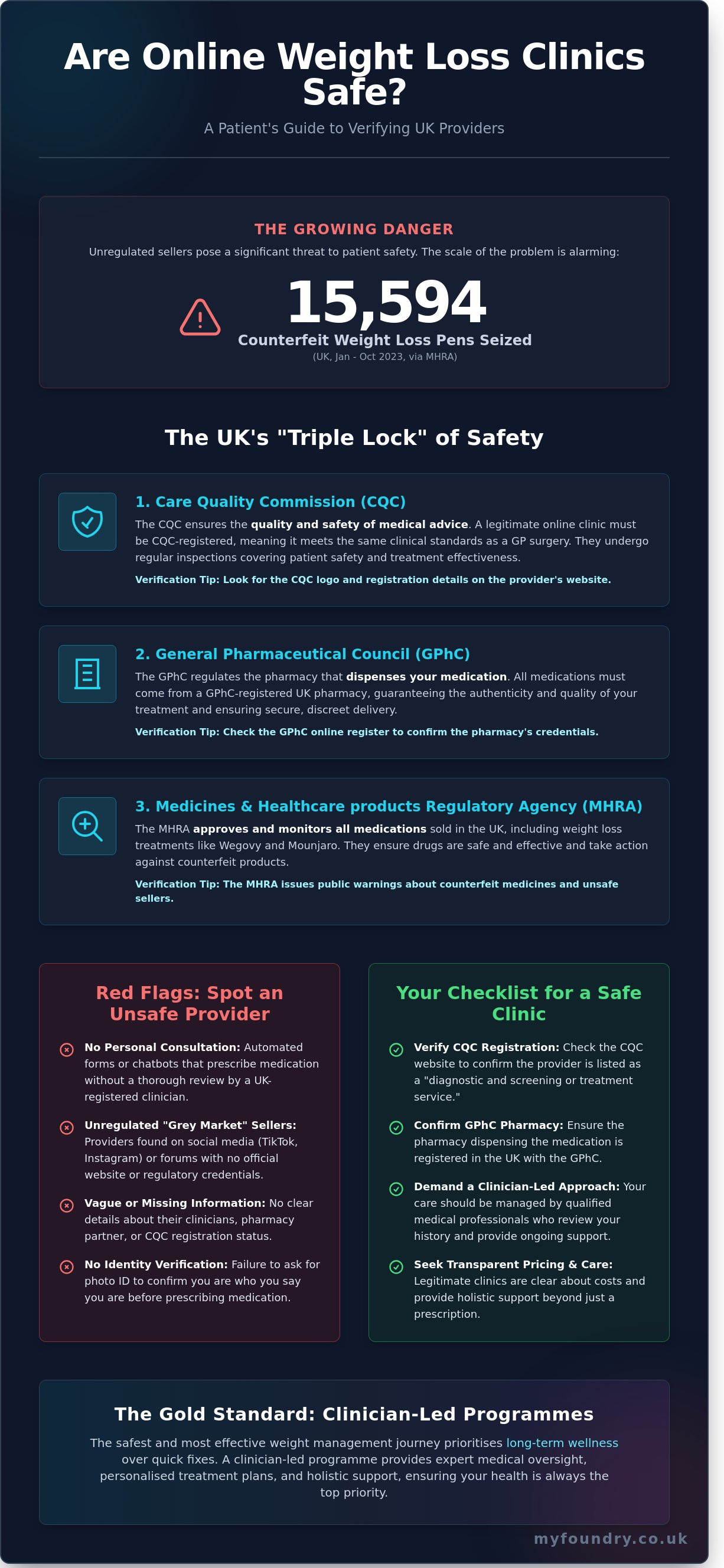
Between January and October 2023, the MHRA seized 15,594 counterfeit weight loss pens in the UK, a statistic that highlights the significant risks within the digital health market. If you've found managing your weight harder than it should be, you're not alone. However, the shift toward remote care often brings anxiety about medication quality and the lack of face-to-face supervision. It's entirely right to ask are online weight loss clinics safe when you're confronted with conflicting prices and bold claims from unknown providers.
You deserve a weight management journey that prioritises clinical safety and long-term wellness over a quick fix. This guide provides a clear method to verify a clinic’s legitimacy using official UK regulatory databases, ensuring your care is led by qualified medical professionals. We'll examine the specific roles of the Care Quality Commission (CQC) and the General Pharmaceutical Council (GPhC) so you can identify regulated services with confidence. You'll gain the peace of mind needed to start your treatment knowing your health is in expert hands.
Key Takeaways
- Learn why the "Triple Lock" of UK regulation—comprising the CQC, GPhC, and MHRA—is essential for ensuring your medical weight management is handled safely.
- Identify the critical red flags that help you determine are online weight loss clinics safe, including how to spot unregulated "grey market" sellers and automated prescription risks.
- Follow our professional checklist to verify a provider’s CQC registration and confirm their pharmacy premises are fully regulated within the United Kingdom.
- Discover the benefits of a clinician-led programme that prioritises long-term health outcomes over "quick fixes" through expert medical oversight and holistic support.
Understanding the Rise of Online Weight Loss Clinics in the UK
The landscape of weight management in Britain has undergone a fundamental transformation. A decade ago, support was largely found in community halls or through lifestyle apps focused on calorie counting. Today, digital-first medical providers offer a clinical alternative. These platforms connect patients directly with UK-registered clinicians who specialise in metabolic health. People choose these pathways because they offer a level of privacy and specialist access that traditional GP surgeries, often stretched by high demand, struggle to provide. As these services become the primary route for many, the central question remains: are online weight loss clinics safe? Balancing the convenience of a smartphone app with the rigour of a clinical review is the defining challenge for the modern Weight loss industry.
The Evolution of Medical Weight Management
The shift from simple willpower-based models to pharmacology represents a major milestone in UK healthcare. Since the MHRA approved Wegovy in 2023 and Mounjaro shortly after, the focus has moved to GLP-1 receptor agonists. These medications treat obesity as a chronic medical condition rather than a failure of discipline. With NHS Tier 3 weight management wait times often exceeding 18 months in many regions, digital clinics provide essential accessibility. They bridge a gap for those who require medical intervention but cannot access it through traditional routes. These services don't just provide prescriptions; they offer a structured medical pathway designed to manage a long-term health condition with expert oversight.
Why Safety Concerns Exist for Digital Patients
As demand for medication grows, so does the prevalence of unregulated sellers. This is why patients must ask, are online weight loss clinics safe before starting any treatment. Legitimate services operate under the strict oversight of the Care Quality Commission (CQC) and use GPhC-registered pharmacies. This contrasts sharply with "pill mills" or unregulated social media sellers. In 2024, the MHRA issued warnings regarding counterfeit GLP-1 pens sold through non-medical channels on platforms like TikTok and Instagram. A robust clinical consultation process is non-negotiable. It ensures that prescription treatments are only issued after a thorough medical history review and identity verification. Safety in the digital space relies on several factors:
- Verification of UK-registered clinicians and prescribers.
- Transparent regulatory credentials from the CQC and GPhC.
- A requirement for a comprehensive medical consultation.
- Secure, discreet delivery from a regulated UK pharmacy.
Choosing a regulated provider ensures that your health journey is managed by professionals who prioritise safety over quick results. By 2026, the distinction between high-quality clinical providers and unregulated sellers has become the most critical factor for patient safety in the UK.
The UK Regulatory Shield: How GPhC and CQC Keep Patients Safe
When asking are online weight loss clinics safe, the answer lies in the UK's rigorous "Triple Lock" of healthcare regulation. This system ensures that digital providers aren't just websites, but legitimate medical practices held to high clinical standards. The framework consists of the Care Quality Commission (CQC), the General Pharmaceutical Council (GPhC), and the Medicines and Healthcare products Regulatory Agency (MHRA). Together, these bodies ensure your treatment is clinically appropriate, your medication is genuine, and your care is supervised by qualified professionals.
CQC Regulation: Ensuring Clinical Excellence
The CQC monitors the quality and safety of the medical advice you receive. For a clinic to legally prescribe weight loss medication in England, the provider must be registered with the CQC as a diagnostic and screening or treatment service. This means the provider undergoes regular, transparent inspections to check that their clinicians follow evidence-based guidelines. These inspections, many of which were updated with stricter digital healthcare criteria in 2024, look at patient safety records and the effectiveness of clinical outcomes. Always look for the CQC logo on a provider's homepage; it's your primary evidence that the service is held to the same standards as a local GP surgery.
GPhC Oversight: The Pharmacy Standard
While the CQC oversees the clinical advice, the GPhC regulates the pharmacy that dispenses your treatment. It's a legal requirement that all weight loss medications are dispensed by a registered UK pharmacy. You should always verify the green GPhC pharmacy logo and the associated seven-digit registration number. According to the latest GPhC patient safety guidance, legitimate pharmacies must now perform robust identity checks to ensure are online weight loss clinics safe for every individual patient. Using international pharmacies outside UK jurisdiction is a significant health risk, as these sites often bypass safety checks and may supply counterfeit products that haven't been stored at the correct temperatures.
MHRA and Medication Integrity
The MHRA is responsible for licensing the medications themselves, such as Semaglutide and Tirzepatide. They ensure these drugs meet safety and efficacy standards before they ever reach a patient. Since Tirzepatide received its UK weight loss approval in November 2023, the MHRA has closely monitored its rollout through the Yellow Card scheme. This scheme allows you to report any unexpected side effects directly to the regulator, creating a continuous loop of safety data that protects the entire UK population.
Beyond licensing, the MHRA works to keep the supply chain secure from the manufacturer to your door, preventing the entry of unverified or dangerous substances into the market. If you're looking for a secure, expert-led way to manage your health, you can start your clinical review with our regulated team today.
Red Flags: How to Spot an Unsafe Online Weight Loss Provider
The digital healthcare sector offers unprecedented access to treatment, but the surge in demand for GLP-1 medications has created a "grey market" of unregulated sellers. When patients ask are online weight loss clinics safe, the answer depends entirely on the provider's adherence to strict UK clinical standards. Identifying a dangerous provider requires looking beyond a polished website to find evidence of genuine medical oversight.
The "Tick-Box" Consultation Trap
A major safety risk occurs when a website allows you to select a medication and checkout without a genuine medical review. In 2024, the General Pharmaceutical Council (GPhC) updated its guidance to ensure that a simple questionnaire isn't sufficient for high-risk prescriptions. Legitimate clinics employ UK-registered clinicians who scrutinise your medical history and check for contraindications. These professionals often refuse treatment if it's unsuitable for your specific health profile. If a process feels too fast or lacks a "no" from a clinician, it's likely bypassing essential clinical safeguards.
Unverified Medication and Counterfeit Risks
The Medicines and Healthcare products Regulatory Agency (MHRA) reported seizing hundreds of counterfeit weight loss pens in 2023. These "off-brand" or compounded medications often lack the active ingredients promised or contain harmful impurities. Legitimate UK pharmacies only dispense MHRA-licensed products like Wegovy or Mounjaro in their original manufacturer packaging. Suspiciously low prices, such as £60 for a month's supply when the market rate is typically £140 or more, often indicate counterfeit or illegally imported stock.
Using unverified GLP-1 medications from unregulated sources carries a high risk of serious infection or toxic reaction due to unknown ingredients and non-sterile manufacturing conditions.
Missing Regulatory Credentials
Transparency is the hallmark of a safe provider. You should easily find the clinician's name and their professional registration number, whether they're with the General Medical Council (GMC) or GPhC. Every legitimate UK clinic must display its Care Quality Commission (CQC) status and provide a physical UK address. If a site lacks clear contact details for post-prescription support or uses expired regulatory logos, it's a significant red flag. Checking the validity of these credentials on the official CQC or GPhC registers is a vital step in determining if are online weight loss clinics safe for your personal health journey.
- Verify the GPhC number: Check the pharmacy's registration on the official GPhC website.
- Check CQC ratings: Legitimate clinics are regularly inspected for safety and effectiveness.
- Avoid "International" sellers: Prescription medications must be dispensed from a UK-registered pharmacy to ensure safety standards.
A Patient’s Checklist for Choosing a Safe Medical Weight Loss Programme
Deciding to start a weight management journey is a significant step for your health. You must be certain that the providers you trust are legitimate and clinically responsible. When asking are online weight loss clinics safe, the answer depends entirely on their regulatory compliance and the rigour of their clinical processes. Use this five-step checklist to verify any provider before you share your clinical data or commit to a programme.
- Step 1: Verify CQC registration. Check the Care Quality Commission (CQC) register to ensure the clinic is licensed to provide "Treatment of disease, disorder or injury."
- Step 2: Check the pharmacy status. Ensure the dispensing pharmacy is registered with the General Pharmaceutical Council (GPhC) and displays the green internet pharmacy logo.
- Step 3: Confirm prescriber credentials. Every clinician must be UK-registered with the General Medical Council (GMC) or the GPhC.
- Step 4: Evaluate the consultation. A safe provider never offers a "click-and-buy" experience; they require a detailed medical assessment.
- Step 5: Review ongoing support. Look for clear protocols on how side effects are managed and how you can contact a clinician after your medication arrives.
Verifying the Professionals Behind the Screen
You can verify the status of any UK clinician in seconds. Doctors are listed on the GMC register, while pharmacist prescribers are found on the GPhC register. If a website doesn't name their clinical lead or prescribing partner, it's a major safety risk. Effective medical weight loss UK programmes rely on a multi-disciplinary team. This structure ensures that your care plan is reviewed by experts who understand the complex metabolic nature of weight management. You should always have access to a named professional who is accountable for your treatment.
Just as finding a trusted clinical team is vital for health, medical professionals themselves often seek out specialised services for other significant life events. For those in the medical field navigating the property market, for example, it can be beneficial to explore Specialist Mortgage Advice designed to understand their unique career and income structures.
Assessing the Quality of the Consultation
A "yes/no" questionnaire isn't enough to determine if are online weight loss clinics safe for your specific needs. Legitimate providers require data on your current BMI, blood pressure, and a full history of existing health conditions. Since the GPhC updated its guidance in 2022, safe providers must also verify your identity using photo ID. This prevents identity fraud and ensures medication isn't misused. Transparency is equally vital. A responsible clinic will ask for your GP's details and offer to share your treatment plan with them. This ensures your primary care doctor is aware of any medications that might interact with future treatments.
Safety is our clinical priority. If you're ready to begin a regulated journey, you can start your clinical consultation today with our expert team.
Why a Clinician-Led Approach is the Gold Standard for Weight Management
When patients ask are online weight loss clinics safe, the answer depends entirely on the clinical framework governing the service. A simple transaction for medication isn't healthcare; it's a risk. Foundry Health provides a medical pathway that prioritises your long-term health over short-term fixes. Our clinicians review every case individually, ensuring that every patient receives a plan designed for them. This medical oversight is what transforms a prescription into a sustainable health journey.
A clinician-led approach moves beyond the initial delivery of medication. It involves a continuous cycle of assessment, adjustment, and support. We understand that your body's needs change as you lose weight. By monitoring your progress, we can adjust dosages safely and ensure the treatment remains effective. This level of care is essential for achieving the best possible health outcomes while minimising risks.
The Foundry Health Commitment to Safety
Our commitment to your safety is built on a foundation of rigorous regulation and partnership. We work alongside ABSM Healthcare Ltd and other regulated healthcare partners to deliver a service you can trust. Every prescription is issued by UK-registered clinicians who adhere to the strict standards set by the General Pharmaceutical Council (GPhC) and the Care Quality Commission (CQC).
- Supervised Treatment: We prioritise weight loss injections as part of a fully supervised programme, never as a standalone product.
- Data Security: Our digital platform uses advanced encryption to protect your sensitive medical data and clinical reviews.
- Clinical Integrity: We don't offer "quick fixes." If a treatment isn't clinically appropriate for you, our prescribers will not issue it.
Long-term Support and Side Effect Management
Managing mounjaro uk side effects requires expert guidance rather than guesswork. While medications like tirzepatide are highly effective, they can cause digestive issues or nausea in some patients. Our clinicians provide specific protocols to manage these symptoms, ensuring you stay comfortable and on track. A DIY approach to weight loss medications lacks this safety net, often leading to discontinued treatment or avoidable complications.
Clinical data from 2024 indicates that patients with regular clinician check-ins are 30% more likely to maintain their weight loss over a 12-month period compared to those using unmonitored services. We position safety as the foundation of a better way to wellness, giving you the confidence to focus on your goals. Don't leave your health to chance with unregulated providers.
Start your safe, clinician-led consultation today and take the first step toward a healthier, more confident you with a team that puts your safety first.
Prioritising Your Health with Regulated Medical Care
Choosing the right support is a vital step for your long-term wellness. Determining are online weight loss clinics safe depends entirely on the regulatory standards a provider maintains. By 2026, UK patients have clearer protections than ever. You must ensure any service you use works alongside a CQC-regulated partner and utilises GPhC-regulated pharmacies for all dispensing. These rigorous standards distinguish legitimate medical pathways from unregulated "quick fixes" that often compromise patient safety.
A clinician-led approach ensures your treatment is supervised by UK-registered experts who understand that weight management is a complex health journey. Foundry Health provides this professional framework, combining clinical expertise with a secure digital process. We've built our service on the foundations of safety and medical integrity; this ensures every patient receives a personalised clinical review before any treatment begins.
Foundry Health offers a supportive environment where your health outcomes come first. Our CQC-regulated partner and GPhC-regulated pharmacy dispensing ensure you're in the safest possible hands throughout your journey.
Start your secure clinical consultation with Foundry Health
You're ready to make a positive change for your health, and we're here to support you every step of the way.
Frequently Asked Questions
Are online weight loss clinics legal in the UK?
Online weight loss clinics are legal in the UK provided they comply with the Health and Social Care Act 2008. To operate legally, the service must be registered with the Care Quality Commission (CQC) if they provide medical advice or prescribing services. You should also ensure the dispensing pharmacy is registered with the General Pharmaceutical Council (GPhC). These regulations protect you by ensuring every clinical review meets national safety standards.
How can I check if a weight loss clinic is CQC regulated?
You can verify a clinic's status by searching the Care Quality Commission (CQC) online register using the provider’s name or registration number. Legitimate UK services often display a live CQC widget on their homepage which links directly to their latest inspection report. If a website lacks this transparency, it may not be operating within UK law. Checking this register is a vital step in determining if online weight loss clinics are safe for your personal health journey.
Is it safe to buy Wegovy or Mounjaro online?
It's safe to purchase Wegovy or Mounjaro online only when the provider is a regulated UK pharmacy that requires a full medical consultation. Legitimate services use UK-registered clinicians to review your Body Mass Index (BMI) and medical history before issuing a prescription. Avoid any site that offers these medications without a prescription; the MHRA seized over 15,000 fake weight loss pens in 2023 alone to protect the public from harm.
What should I do if I suspect a weight loss website is selling fake medication?
If you suspect a website is selling counterfeit weight loss medication, you should report it immediately to the MHRA through the Yellow Card scheme. Fake pens often contain incorrect doses or harmful substances that pose severe health risks. You can also report the site to the Citizens Advice Bureau. Since 2024, the MHRA has actively shut down hundreds of illicit domains to protect UK patients from unregulated sellers and dangerous products.
Do I need a prescription from my own GP to use an online clinic?
You don't need a prescription from your local GP, as online clinics employ their own UK-registered prescribers to handle your care. These clinicians conduct a digital consultation to ensure the treatment is suitable for you. Once approved, they issue a private prescription which is sent directly to a registered pharmacy. It's a secure process designed for your convenience while maintaining the same clinical standards as an in-person appointment.
What happens if I experience side effects while using an online weight loss service?
You should contact the clinic’s clinical support team if you experience side effects like nausea or digestive discomfort. Regulated providers offer ongoing medical guidance and can adjust your dosage or provide advice on managing symptoms. If you experience severe reactions, such as acute abdominal pain, you must seek immediate help from NHS 111 or A&E. Always report side effects through the MHRA Yellow Card portal to help monitor medication safety.
Can I verify the clinicians working for an online clinic?
You can verify any UK clinician by searching their name or professional registration number on the GMC or GPhC online registers. Every doctor, pharmacist, or nurse prescriber working for a legitimate online clinic must be registered to practice in the UK. This transparency ensures that an expert-led team is managing your weight management programme. If a clinic refuses to provide the names of its clinical leads, you should find a different provider.
Why are some online weight loss clinics much cheaper than others?
Lower prices often indicate a lack of clinical oversight or the sale of unregulated, counterfeit products from outside the UK. While a legitimate one-month supply of Mounjaro might cost between £150 and £250, significantly cheaper offers are a major red flag. These bargain sites often bypass safety checks and don't provide access to UK-registered clinicians. Investing in a regulated service ensures you receive genuine medication and professional medical support throughout your journey.